Rural Romania
Romanian villages are living communities, not preserved tourism sets. This guide helps you choose the right rural region for your trip — southern Transylvania, Mărginimea Sibiului, Maramureș, Bucovina or Apuseni — and travel through them with care.
Neli Budeanu
Co-founder, DACO Private Travel · Former hospitality professional in Bucharest
Local travel knowledge based on living in Romania, working in hospitality and helping organise journeys for international visitors.
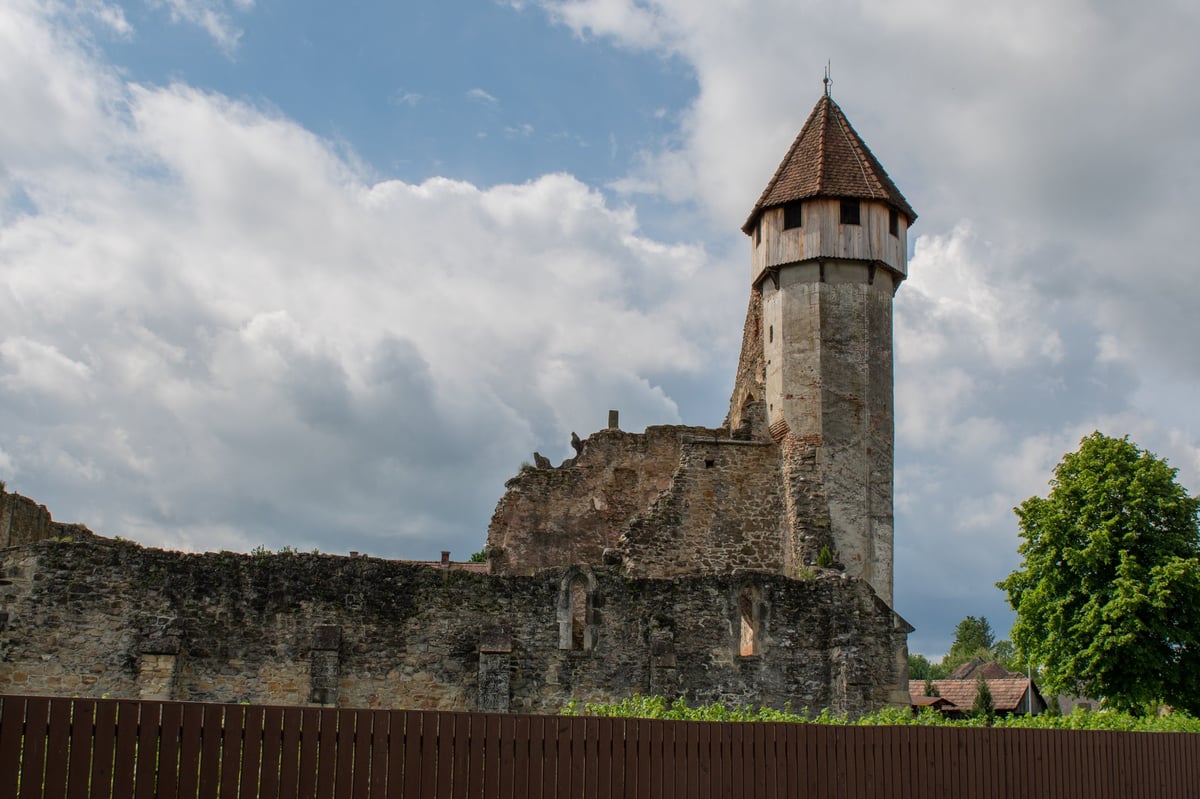
Transylvania — heritage that is part of working rural life
Photograph: iStock. Caption describes the image, not a location claim.
A note on this page's hero
An authentic, location-verified Romanian rural landscape photograph with confirmed commercial rights was not available for this page. Rather than use a foreign Alpine village or a generic "Eastern European village" image, this guide uses a genuine rural Transylvania image and a designed header treatment.
There is one phrase about Romania I would happily remove from travel writing forever:
“Frozen in time.”
It appears everywhere.
A wooden gate.
A horse cart.
Hay in a field.
An old woman walking to church.
Suddenly an entire Romanian village has apparently escaped the twenty-first century.
It has not.
The person driving the horse cart may also own a smartphone.
The house beside a nineteenth-century wooden home may have solar panels.
The guesthouse may have fibre internet.
The farmer you photographed may spend the winter working somewhere else in Europe.
Tradition and modern life can occupy the same village at the same time.
That is not a contradiction.
That is rural Romania.
And once you stop looking for a country that tourism promised had been preserved for you, Romanian villages become much more interesting.
For a first trip, southern Transylvania is usually the easiest choice.
It fits naturally between Brașov, Sighișoara and Sibiu and gives you fortified churches, historic settlement patterns, rural guesthouses and working villages without requiring another journey across the country.
Choose Mărginimea Sibiului if you are already staying in Sibiu and want a rural experience connected with pastoral traditions and the mountain edge.
Choose Maramureș if village culture, wooden architecture and rural landscapes are important enough to deserve several dedicated days.
Choose Bucovina if painted churches, Orthodox religious heritage and northern Moldavian countryside are central to your interests.
Choose Apuseni if you want rural settlements together with mountains, caves, forests and a slower western Romania road trip.
You do not need all of them.
Rural Romania is not another checklist.
Rural Romania at a glance
| Region | Best for | How easily it fits a first trip |
|---|---|---|
| Southern Transylvania | Fortified villages, rural architecture, Saxon heritage | Very easily |
| Mărginimea Sibiului | Pastoral landscape, food, villages near Sibiu | Very easily |
| Maramureș | Wooden heritage, village stays, deeper rural culture | Needs dedicated time |
| Bucovina | Painted churches, religious culture, countryside | Needs dedicated time |
| Apuseni | Mountain villages, karst landscape, road-trip travel | Better on longer trips |
A shortlist for first-time planning, not a claim that these are Romania’s only worthwhile rural areas.
It does not mean one thing.
Romania has thousands of rural communities.
Some are almost suburban.
Some are agricultural.
Some sit in mountain valleys.
Some have become tourism destinations.
Some are losing population.
Some are growing.
Some preserve remarkable historic architecture.
Some were heavily rebuilt during the last thirty years.
Some contain restored guesthouses beside modern villas.
So when travellers ask:
“Where can I see an authentic Romanian village?”
I would change the question.
Ask:
What part of rural Romania do I want to understand?
That produces a much better trip.
This is worth establishing before we discuss destinations.
A village exists primarily for the people who live there.
Not for visitors.
That means:
The village does not stop operating because you arrived.
Good rural travel begins there.
This idea deserves retiring too.
A renovated roof.
A new car.
Satellite television.
Internet.
A modern bathroom.
A supermarket.
A courier van.
None of those things makes a community less culturally legitimate.
People who live in heritage landscapes deserve the same comforts everybody else expects.
The interesting question is not:
“Has modernity arrived?”
Of course it has.
The interesting question is:
What survived, what changed, and how do those things coexist?
For most first-time international visitors, this is where I would begin.
Because the geography already works.
Brașov.
Sighișoara.
Sibiu.
Between and around them sit villages, fortified churches, farms, hills and historic settlement landscapes.
You do not need to create a separate northern-Romania expedition just to include one meaningful rural day.
That makes southern Transylvania extremely efficient.
But efficiency is not the reason it matters.
The region contains centuries of layered history involving Saxon, Romanian, Hungarian/Székely and other communities.
Its villages are not simply pretty backgrounds.
They are cultural landscapes.
Use these guide pages alongside this article
One part of southern Transylvania’s rural heritage is represented by villages with fortified churches.
UNESCO recognises a serial World Heritage property of seven components.
The value is not simply:
seven old churches.
It includes the relationship between:
Our Fortified Churches & Saxon Villages of Transylvania guide goes into the individual sites properly.
There is no need to turn every rural trip into a UNESCO completion project.
No.
And this is exactly why labels need care.
Much of southern Transylvania’s fortified-church heritage is strongly associated with Transylvanian Saxon history.
But the UNESCO group also includes Dârjiu, whose fortified Unitarian church belongs to a Hungarian/Székely cultural context.
This matters because rural Romania is not one ethnic story.
Neither is Transylvania.
The more precisely we describe it, the more interesting it becomes.
Yes.
Viscri can be an excellent introduction to the relationship between:
But please arrive with one expectation removed.
You have not discovered Viscri.
It is one of Romania’s best-known rural destinations.
Guesthouses operate there.
Tourists arrive.
The village has been photographed thousands of times.
That does not make it worthless.
It makes it a living place dealing with tourism.
Park according to current local arrangements.
Walk.
Look beyond the church.
Notice how houses and courtyards relate to the street.
Spend enough time that the village becomes more than a photograph.
And remember:
a gate being beautiful is not an invitation to open it. Private property remains private property in UNESCO villages too.
If a celebrity association with a Romanian village comes up in conversation, treat it as a side note. It does not create the heritage value.
Then do not go.
This is an unexpectedly radical suggestion in modern travel planning.
There are other villages.
Biertan may make more sense between Sighișoara and Sibiu.
Saschiz may fit another route.
Mărginimea Sibiului may fit better if you are already based in Sibiu.
A famous village is not automatically the correct village.
Route before fame.
This is one of the most useful rural regions for travellers who already have Sibiu in the itinerary.
Mărginimea Sibiului comprises a group of 18 villages around the foothills of the Cindrel and Lotru Mountains.
The region has a strong historic relationship with pastoral life and livestock raising.
That history remains visible in:
But please do not arrive expecting every resident to be a shepherd.
History describes a region.
It does not assign jobs to everyone living there today.
Because it solves a common planning problem.
The traveller wants:
Bucharest.
Brașov.
Sighișoara.
Sibiu.
And some countryside.
You do not necessarily need Maramureș as well.
From Sibiu, rural places such as Sibiel, Rășinari, Gura Râului and others in the wider area can add a completely different experience without forcing another major transfer.
City in the morning.
Village in the afternoon.
Or better:
one rural night.
Then continue.
The countryside becomes part of the route instead of an expedition attached to it.
For the city itself, use our Sibiu Travel Guide, and for the surrounding mountain geography, our Carpathian Mountains in Romania guide.
Sometimes.
If your objective is:
see the landscape;
visit a church or small museum;
eat;
walk;
understand the region;
then yes.
But an overnight changes the rhythm.
The tour buses leave.
Dinner matters.
Morning matters.
You see the place before it becomes a sightseeing stop again.
That does not make the overnight more “authentic”.
It simply gives you more time.
Maramureș is a different commitment.
It sits in the north of Romania.
You do not casually add it between lunch in Brașov and dinner in Sibiu.
And that is exactly why I would go only when you are willing to give it proper time.
This is one of Romania’s strongest regions for:
If that list sounds more exciting to you than another castle?
Maramureș may belong in your trip.
UNESCO recognises eight wooden churches of Maramureș, inscribed in 1999.
They are outstanding examples of the region’s vernacular wooden religious architecture.
But those eight are not:
“the eight wooden churches in Maramureș.”
There are many more.
The UNESCO designation identifies a specific serial World Heritage property.
It is not a complete inventory of every church worth seeing.
That distinction will save you from a surprising amount of bad travel information.
Primary source
They are not simply picturesque.
Construction in timber.
Proportions.
Tall towers.
Shingled roofs.
Interior painting.
Craftsmanship.
Community history.
Religious use.
Together they reflect architectural traditions adapted to local materials, beliefs and social life.
And many exist inside cemeteries or active religious landscapes.
Visit accordingly.
A graveyard is not an Instagram set.
Maramureș includes multiple valleys, towns and villages.
A good trip might involve:
Do not try to see everything in one day.
For first-time visitors, Maramureș generally deserves multiple days because of distance and local movement. For the full regional breakdown — bases, church selection, day counts and the important distinction between Bârsana Monastery and the UNESCO wooden church — see our Maramureș Travel Guide.
Yes, for many travellers.
But once again:
not because you found a secret.
Breb is already one of the better-known traditional villages among visitors to Maramureș.
That makes it useful.
Guesthouses exist.
Travellers have infrastructure.
The surrounding region is accessible for further exploration.
You can walk.
Eat.
Slow down.
Use it as a base.
What I would not do is arrive expecting every house to resemble a nineteenth-century photograph.
Breb is a contemporary village with heritage.
Both parts are real.
I would give it at least two nights if you are travelling there specifically.
Three can be better.
Why?
Because distances inside the region still exist.
Churches are scattered.
Roads move through valleys.
You may want Sighetu Marmației.
A rural guesthouse.
A wooden-church route.
Perhaps the Vaser Valley in another part of the county.
Meals.
Actual time in a village.
If you cross half the country for one night, Maramureș risks becoming another road journey with a breakfast attached.
Bucovina solves a different cultural question.
Here the extraordinary heritage focus is not fortified Saxon churches or Maramureș wooden construction.
It is strongly connected with the famous painted churches of northern Moldavia and Orthodox religious culture.
UNESCO’s Churches of Moldavia property includes eight churches celebrated for their exterior mural painting.
The property was first inscribed in 1993 and expanded in 2010 to include Sucevița. It is listed under criteria (i) and (iv).
This is world-class heritage.
But again:
the church is not the entire region.
Primary source
Roads through rolling northern landscapes.
Villages.
Guesthouses.
Forests.
Churches and monasteries.
Religious communities.
Regional food.
Stops that take longer than expected because the buildings deserve more than a photograph.
Bucovina works particularly well when the traveller genuinely cares about:
art;
religion;
architecture;
history;
landscape.
A Bucovina journey can combine painted churches, functioning monasteries, villages, forest and hill landscape, guesthouses, food and religious culture.
The travel rhythm is generally road-based and multi-stop, and it works better with at least one overnight.
If all you want is one rural photograph?
There are easier places to reach.
No.
Another useful distinction.
UNESCO protects a specific serial property of eight churches.
The broader region contains many other important monasteries and religious sites.
Do not use:
“UNESCO monastery”
as a decorative adjective for everything in Bucovina.
Check the actual component. Where the official UNESCO entry is a church, call it a church rather than a monastery.
Precision is part of respecting heritage.
Religious life here is not a tourist performance. Visitors should dress and behave respectfully at active monasteries and churches.
For the full regional breakdown — which churches are actually UNESCO, where to base yourself, how many days the region needs and how Putna fits in — see our Bucovina Travel Guide.
This is a good decision.
Choose Maramureș
If you care more about:
Choose Bucovina
If you care more about:
Both regions offer guesthouses, food, countryside and slower travel.
Neither is “more authentic”.
They are different.
Yes.
On a long enough trip.
But please look at the country before saying:
“They are both in the north.”
Northern Romania is still large.
Road time still exists.
Mountains still exist.
If you have ten to fourteen days and these regions are priorities, the combination can be wonderful.
If you have six days including Bucharest and Transylvania, choose.
The road will make the decision eventually anyway.
The Apuseni Mountains create another form of rural Romania.
Here the countryside is tied strongly to mountain and karst geography.
Forests.
Pastures.
Scattered settlements.
Valleys.
Caves.
Gorges.
Mountain roads.
The village experience therefore feels different from the relatively concentrated settlement patterns you may see in southern Transylvania.
For a longer western Romania journey, this can be excellent.
For a short Bucharest–Brașov–Sibiu trip?
Probably another time.
Our Carpathian Mountains in Romania guide explains the wider mountain geography, and the Apuseni Mountains Travel Guide covers the rural mountain region itself.
For most first-time travellers with around a week:
Transylvania.
Not because it is “better”.
Because it integrates more easily.
You can combine:
Brașov;
village landscape;
Sighișoara;
Sibiu;
fortified churches
without spending several days repositioning.
Maramureș becomes much stronger when:
you have more time;
rural culture itself is one of your main interests;
you want a northern Romania route.
That is itinerary logic.
Not a ranking of heritage.
In practice
For a 7-day first Romania trip: southern Transylvania usually integrates more easily.
For a 10–14 day trip with rural culture as a priority: Maramureș becomes much easier to justify.
No.
You can stay in:
Brașov;
Sibiu;
Sighetu;
Suceava;
another regional base
and make countryside excursions.
But a village overnight can be very worthwhile.
Especially if:
the guesthouse itself interests you;
dinner is available;
walking matters;
you want the evening/morning atmosphere;
return transport would otherwise be inefficient.
Again: time.
Not authenticity points.
A day trip works for
An overnight is better when
Do not assume overnight automatically creates a more “authentic” experience.
It simply gives you more time.
Almost anything.
This is important.
A Romanian rural stay may be:
a restored timber house;
a modern pension;
a converted farm building;
a family home with several guest rooms;
a boutique property;
a substantial hotel-style complex.
The word “guesthouse” does not guarantee rustic, basic, luxury, traditional, a private bathroom, a restaurant, air conditioning or an English-speaking host.
Do not assume:
private bathroom;
air conditioning;
restaurant;
card payment;
English-speaking host;
24-hour reception;
flat access;
luxury bedding.
Check the property.
At the same time, do not assume rural means primitive.
Many guesthouses provide excellent modern comfort.
Of course.
Heritage preservation and comfort are not enemies.
A restored house can have:
good heating;
modern bathroom;
excellent bed;
Wi-Fi;
careful insulation;
beautiful historic structure.
And sometimes it does not.
That is why you read the details.
Do not assume discomfort is evidence of authenticity.
Cold water is not cultural immersion.
Maybe.
Please ask.
Some rural accommodations provide breakfast and dinner.
Others provide meals only when arranged in advance.
Some operate restaurants.
Others expect guests to eat elsewhere.
Food preparation in a small guesthouse requires planning.
If dinner matters, confirm before arriving at 8:30 PM in a village and discovering the nearest restaurant is fifteen kilometres away.
Do not assume you can simply arrive at a private home and request food.
Absolutely.
But not because every countryside table contains an untouched medieval recipe.
Regional food changes.
Family recipes change.
Ingredients change.
Restaurants adapt.
Guesthouses adapt.
What rural stays can offer is:
local cooking;
regional ingredients;
home-style preparation;
seasonal food;
and a better understanding of how Romanian food differs from one part of the country to another.
Use our Romanian Food Explained guide for the larger picture.
Maybe somebody will.
Do not expect it.
Romanian hospitality can be generous.
Coffee.
Food.
Conversation.
A drink.
But hospitality is something people offer.
Not something travellers are entitled to receive because a blog promised:
“Romanians will welcome you like family.”
Nobody owes a stranger an ethnographic experience.
If somebody welcomes you: enjoy it.
If they do not: say hello and continue walking.
Read more in our Romanian Hospitality & Culture guide.
Use ordinary human judgement.
A wide village street? Fine.
Landscape? Fine.
Architecture from public space? Usually straightforward.
A close photograph of an identifiable resident because their clothes or face look “traditional”? Ask.
Children? Ask the responsible adult.
Religious service? Be particularly careful.
The camera does not become invisible simply because you are travelling.
Generally fine
Ask first
Do not use a telephoto lens to bypass consent for an intrusive close-up portrait.
From a public street, exterior architecture is generally part of the landscape.
That does not mean:
walk into the yard;
open the gate;
move someone’s tools;
lean through the window;
arrange their laundry for your composition.
Yes, people actually need reminding of this.
A traditional gate is still a gate.
A courtyard is still private property. A barn is still somebody’s building.
Without permission
“Picturesque” does not change ownership.
Haymaking can look beautiful.
Sheep on the road can look beautiful.
A horse cart can look beautiful.
Someone carrying wood home can look beautiful.
Those things may also mean:
somebody is working.
Do not block the tractor because the light is perfect.
Do not walk through cut hay.
Do not make residents move animals for your photograph.
The rural landscape is functional.
That functionality is part of its value.
Usually not on an ordinary day.
And why would they?
Traditional clothing remains important in many communities and may be worn for:
religious holidays;
weddings;
festivals;
local celebrations;
specific family or cultural occasions.
But people also wear jeans, sneakers, work clothes and jackets.
A village does not fail because nobody arrived in embroidered linen for your breakfast.
If your visit is an ordinary Tuesday, do not expect a folklore performance.
They can be wonderful reasons to travel.
Easter.
Christmas.
Village feast days.
Religious celebrations.
Craft events.
Local festivals.
But verify the event.
Dates, participation and the religious calendar vary, and not every tradition is performed publicly.
Some events that look fascinating to an outsider are first and foremost religious or family occasions.
Attend respectfully. Do not turn participation into invasion.
If a festival matters to your trip, check the current year’s local programme.
Never intrude on a private family ritual because it appears culturally interesting.
This idea deserves retiring.
A renovated roof. A new car. Satellite television. Internet. A modern bathroom. A supermarket. A courier van.
None of those things makes a community less culturally legitimate.
People who live in heritage landscapes deserve the same comforts everybody else expects.
The interesting question is not: “Has modernity arrived?”
Of course it has.
The interesting question is: what survived, what changed, and how do those things coexist?
This is worth establishing before we discuss destinations.
A village exists primarily for the people who live there.
Not for visitors.
That means:
a beautiful gate may lead to someone’s home;
a barn may still be used for farm work;
a field may be private;
the tractor in your photograph is probably trying to get somewhere;
the church may be holding an actual service;
the person in traditional clothing may be attending a wedding rather than performing heritage for tourists.
The village does not stop operating because you arrived.
Good rural travel begins there.
Yes
Romania has strong telecommunications infrastructure overall.
But
That tells you nothing about one specific property.
If remote work matters, do not book a 300-year-old rural house and assume Zoom quality from national broadband statistics.
It depends.
At tourism-focused guesthouses, quite possibly.
Among younger residents, often.
Among older residents or in businesses that primarily serve local customers, perhaps not.
This is normal.
A few Romanian words help. A translation app helps. Smiling and patience help.
Limited English is not a cultural deficiency. You are the person travelling in Romania.
Read more in Do You Need to Speak Romanian?
Remember first:
it is a church.
Not heritage inventory number 904-006.
Our Romanian Etiquette guide covers the wider cultural context, and Romanian Hospitality & Culture explains more about social behaviour.
Do not impose one dress-code sentence on every denomination and site. Current local rules and signage matter more than a general rule.
There is no single answer.
Spring
Green landscapes, agricultural activity returning, flowers, unpredictable rain. Religious traditions around Easter depending on calendar and region.
Summer
Long days, walking, active farms, events. Popular rural areas busier. Good for combining villages with mountain regions.
Autumn
One of the most beautiful countryside periods. Harvest, colour, cooler nights, shorter days.
Winter
Potentially wonderful. Christmas traditions, snow in some regions, wood smoke. Short days, road conditions and heating become important.
Sometimes. Especially in higher or northern regions.
Not always.
Climate and altitude matter. Weather varies year to year.
If snow is essential to your holiday, go somewhere where snow reliability is much higher.
Do not build Christmas emotion around a forecast that does not exist yet.
For rural Romania, a car or private road transport becomes very useful very quickly.
Not everywhere. But often.
It lets you connect villages, churches, guesthouses, small museums, mountain areas and regional towns.
This is particularly useful in Maramureș, Bucovina and Apuseni. Southern Transylvania can sometimes be easier because established city bases and shorter transfers exist.
Yes. Just more selectively.
A possible pattern:
train to a regional city;
taxi or local transfer;
guesthouse pickup;
one village stay;
return transfer.
That can work perfectly.
What becomes difficult without road transport is trying to collect five villages, two churches, a rural lunch, a mountain viewpoint, your luggage and a hotel on the other side of the region.
Public transport does not need to fail. Your itinerary can simply demand too much from it.
See Romania by Train and Getting Around Romania.
When rural logistics begin consuming the holiday.
Several villages.
Churches with local access arrangements.
Luggage.
A one-way journey.
A guesthouse in one valley and the next hotel in another city.
Nobody wants to drive.
That is where private transport can be practical.
Not because villages require luxury, but because roads and timing require coordination.
If that is the problem you have, Plan My Trip is usually the right starting point.
Some are. Many are not.
Romania has invested substantially in rural infrastructure. You will find villages with excellent paved roads. You will also find narrow lanes, gravel access, mountain roads, temporary works and mud after heavy weather.
Check the exact final access to the accommodation.
The phrase “Romanian roads are bad” is about as useful as “European weather is rainy”.
Which road? Which day?
See Driving in Romania.
It can be excellent. Animals. Fields. Gardens. Space. Food. Walking. A slower rhythm.
But rural does not mean childproof. Check:
dogs;
farm equipment;
stairs;
streams and open wells where relevant;
road traffic;
room configuration;
heating and cooling;
meals.
And ask before children approach animals.
A sheepdog may look fluffy. It has a job.
Property-specific planning becomes essential.
Traditional houses may contain steps, high thresholds, uneven floors, narrow doors and upstairs bedrooms. Village streets can also be uneven.
But modern rural pensions may be very accessible.
Ask precise questions. Not “Is it accessible?” but:
Where is the parking?
How many steps to the room?
Is the bathroom level-access?
Where is breakfast served?
Specificity solves more than labels.
Perfect for adding countryside to an existing city route — Sibiu plus Mărginimea, or Brașov/Sighișoara plus a fortified village.
Enough to change the rhythm without redesigning the trip.
Excellent for Maramureș, Bucovina or a deeper Transylvanian rural experience.
Makes sense when rural culture itself is one of the main themes of the journey.
What I would not do: Transylvania Monday, Maramureș Tuesday, Bucovina Wednesday.
That is not rural travel. That is a nationwide commute.
Four days do not exist to collect four regions. One region well is better.
Do not build a separate “village tour” unless you need one. Instead, let the countryside connect what you already wanted to see.
Example A
Brașov → rural southern Transylvania → Sighișoara → Biertan area → Sibiu
Now the villages belong to the journey. You are not repeatedly driving out of cities and returning to them simply because every hotel booking was made independently. This is the planning principle behind our Transylvania Travel Guide.
Example B
Sibiu → Mărginimea Sibiului → Sibiu or onward
Good for limited time. City, food, mountain-edge countryside and Romanian village context without another cross-country transfer.
Example C
A dedicated Maramureș stay — better than trying to “add Maramureș” as a one-night detour from central Transylvania.
Example D
A Bucovina multi-night cultural route — painted churches, villages and a regional base.
Example E
Apuseni within a longer western Romania road trip.
Do not turn these into rigid itineraries.
Calling them frozen in time. They are living communities.
Treating modern houses as cultural failure. Residents are allowed to live in the present.
Walking through private gates. No.
Photographing residents as scenery. People are not architecture.
Expecting traditional clothing on demand. This is not a costume park.
Assuming old houses mean uncomfortable accommodation. Sometimes they are beautifully restored.
Assuming new houses mean no heritage remains. Also false.
Expecting every church to be open. Small heritage sites may require local arrangements.
Trying to visit too many villages. They begin to blur.
Treating hospitality as an entitlement. It is something offered.
Romanticising agricultural work. Work remains work.
Adding Maramureș and Bucovina to an already full one-week trip. Distances remain real.
If this is your first visit to Romania and you have around a week, do not create a separate nationwide rural itinerary.
Use southern Transylvania. Perhaps one fortified village. Perhaps a countryside night. Perhaps Mărginimea from Sibiu.
That is enough to introduce the rural landscape without sacrificing the rest of the trip.
If you have ten to fourteen days and rural culture matters strongly, now consider Maramureș or Bucovina. Choose one first.
If you have longer, Romania keeps opening. That is a better problem than trying to close the entire country in one holiday.
Romanian village life is worth experiencing precisely because it is not the romantic fiction sometimes sold to visitors.
The old wooden house may have Wi-Fi. The farmer may drive a German car. The guesthouse owner may speak three languages. The church may be six hundred years old. The hay may still need cutting. The teenager may want to move to Bucharest. The grandparents may want them to stay. The village may preserve remarkable architecture while building entirely new homes next door.
That tension is the reality. And reality is more interesting than “frozen in time”.
Stay somewhere. Walk. Buy something locally when it makes sense. Eat well. Ask before photographing people. Leave private gates closed. Do not require residents to perform tradition for you.
And if the village looks different from the photograph you saw online?
Good. You have arrived in a place rather than an image.
Neli Budeanu
Co-founder, DACO Private Travel · Former hospitality professional in Bucharest
Local travel knowledge based on living in Romania, working in hospitality and helping organise journeys for international visitors.
Romania, Privately Arranged.
Continue Planning Rural Romania
Start with the Romania by Region guide to decide which part of the country fits your itinerary. For the easiest first rural route, use the Transylvania Travel Guide. For the UNESCO village landscape, continue with Fortified Churches & Saxon Villages of Transylvania.
Related reading
If you know the regions and villages that interest you but do not want to solve every transfer, rural guesthouse and one-way route yourself, Plan My Trip can turn them into a privately arranged journey.
Primary sources
Heritage facts on this page reference the following primary sources. Access arrangements, opening times and local conditions can change, so always confirm current information.
Romania, privately arranged.