Leaving Bucharest
Early departure from your Bucharest hotel. The road heads south
through the Wallachian Plain: flat farmland, wide skies and the
gradual sense that you are leaving one country behind and heading
towards another. Your guide sets the scene for the day: southern
Romania, then the Danube, then Bulgaria.
The journey south is the transition, from the familiar rhythms of
Romania towards a different landscape, language and history.
Crossing into Bulgaria
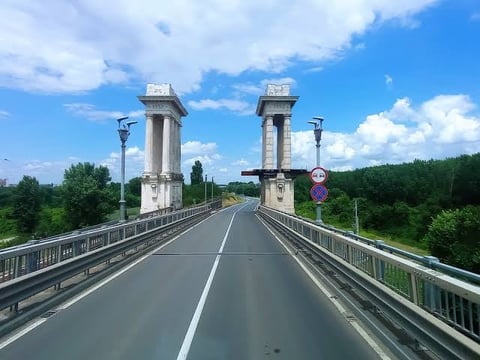
The Danube appears, wide and slow, marking one of Europe's oldest
natural borders. After crossing the bridge at Ruse, the scenery
shifts: the flat plain gives way to rolling hills, vineyards and the
first signposts in Cyrillic script. The road climbs gently towards
the Rusenski Lom river valley and the day's first proper stop.
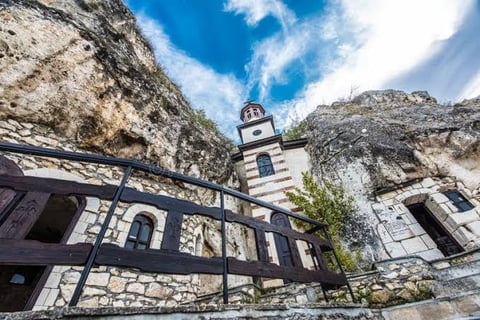
Basarbovo Monastery
Carved directly into a limestone cliff above the Rusenski Lom River,
Basarbovo is the only active rock monastery in Bulgaria. Its
chambers and chapels are hollowed out of the rock face, and the
setting, quiet, green, largely unvisited, feels a long way from any
capital city. This is Orthodox heritage in its most elemental form.
Local Insight
Rock monasteries like Basarbovo were built by monks seeking
solitude. Bulgaria has over 30 such sites scattered across its
river valleys.
Arbanasi Village
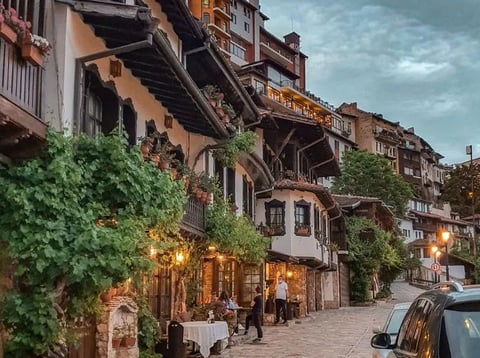
Perched on a plateau above Veliko Tarnovo, Arbanasi is a beautifully
preserved 17th-century village. Stone-built houses with heavy wooden
gates line quiet lanes, and the Church of the Nativity conceals
extraordinary frescoes behind an unassuming exterior. The pace here
is slow, the atmosphere distinctly Bulgarian.
Photo
Tip
The best views of Veliko Tarnovo are from the Arbanasi plateau
lookout: the town spills dramatically across the valley below.
Veliko Tarnovo
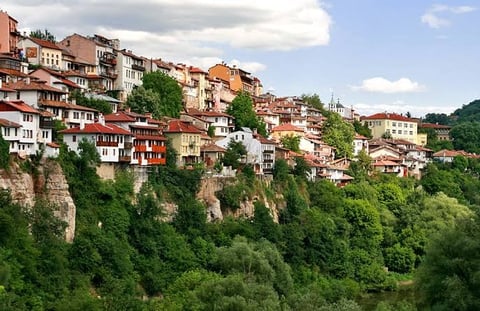
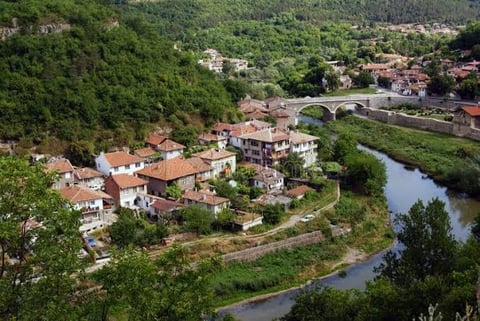
Once the capital of the Second Bulgarian Empire, Veliko Tarnovo
climbs steeply up the sides of the Yantra River gorge. Houses appear
stacked one above the other, cobbled lanes wind between them and at
every turn the city reveals why medieval rulers chose this natural
fortress. It is one of the most dramatically sited cities in the
Balkans.
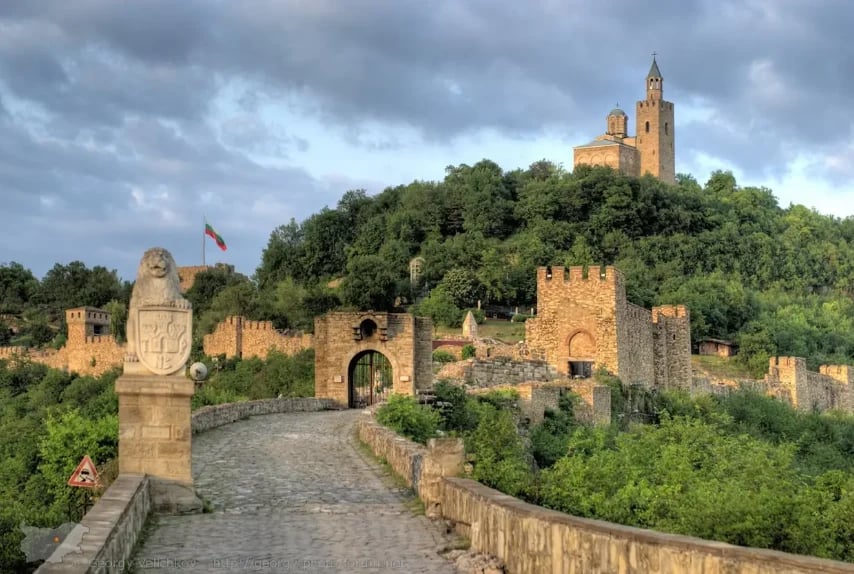
Tsarevets Fortress
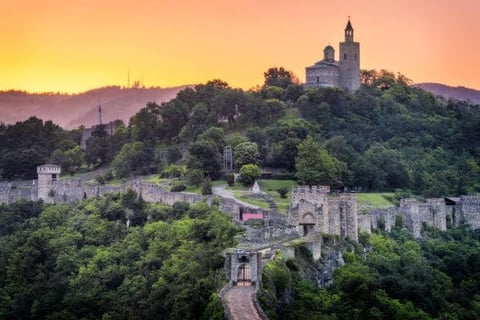
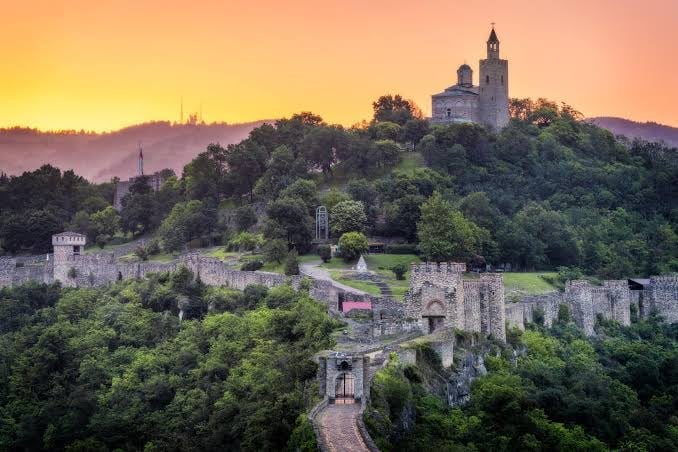
Crowning the hill above the Yantra, Tsarevets was the seat of
Bulgarian tsars from the 12th to the 14th centuries. Its restored
walls and towers enclose the ruins of a royal palace, a patriarchal
church and fortifications that once made this one of the most
formidable strongholds in medieval Europe. The views from the
battlements stretch across the entire river valley.
Did
You Know
At its height, the Second Bulgarian Empire stretched from the
Black Sea to the Adriatic. Tsarevets was its political and
spiritual heart.
Lunch & free time
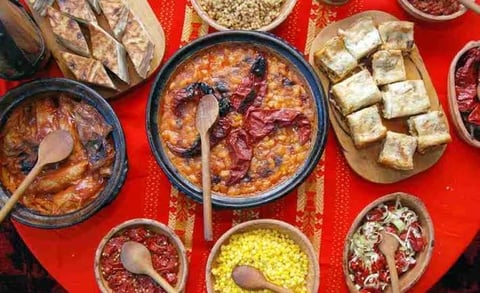
After the fortress, the afternoon opens up. Veliko Tarnovo's old
town offers terraced restaurants overlooking the river, craft shops
along Samovodska Charshia street and quiet corners for coffee. Your
guide knows the best lunch spots: Bulgarian cuisine, Balkan
hospitality and a view that makes the meal part of the experience.
Journey back to Bucharest
The return follows the same route but feels different. Afternoon
light softens the Danube, the hills of northern Bulgaria recede and
by early evening the Wallachian Plain leads you back to the capital.
A day that began in Romania and reached into the heart of medieval
Bulgaria, across a river, a border and centuries of shared Balkan
history.
This is the only DACO tour that crosses an international border in
a single day. Two countries, two cultures, one unforgettable
journey.