Hotel Pickup & Introduction
Private pickup from your Bucharest hotel. As you set out, your
driver-guide introduces the city's layered history: from medieval
trade post to royal capital, from communist reconstruction to
contemporary European hub. Bucharest is a city that rewards those
who look past first impressions.
Parliament Hill
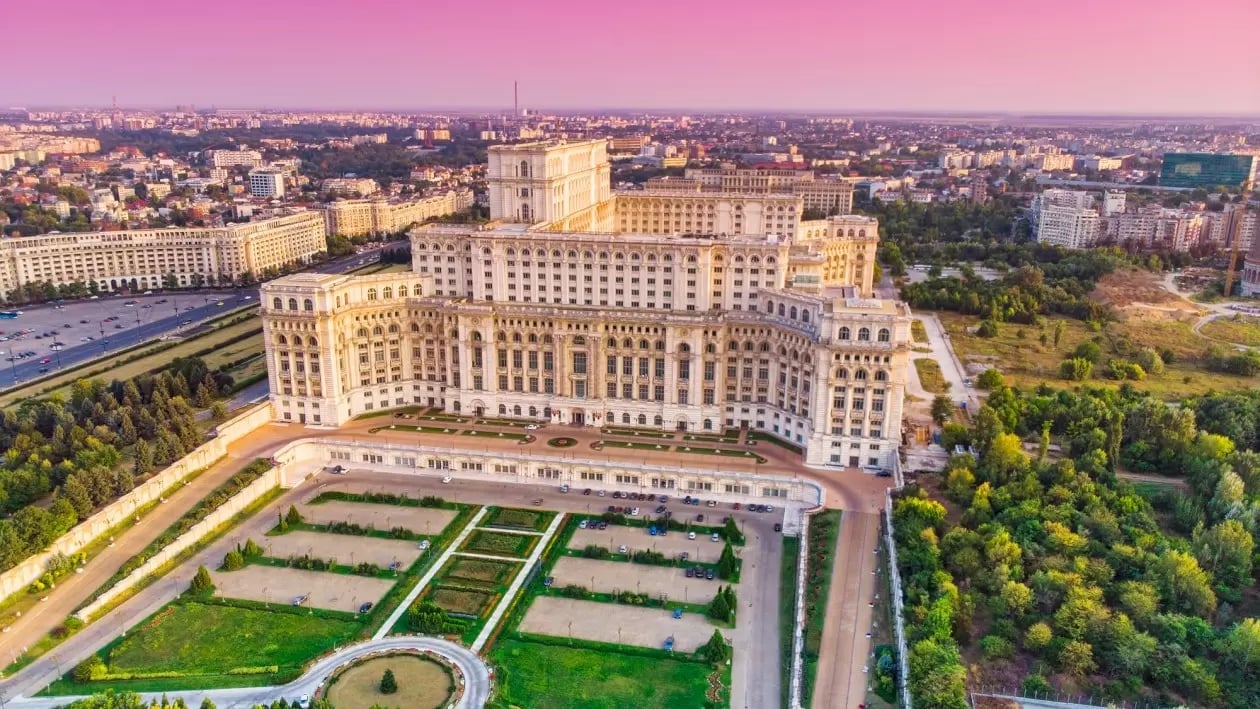
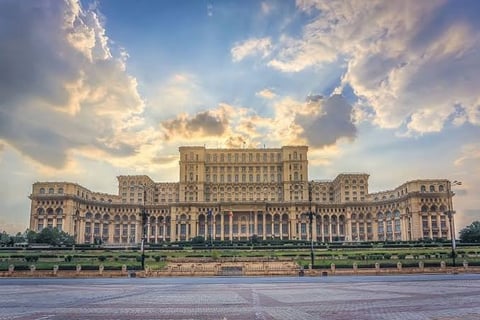
The Palace of Parliament, the world's heaviest building and
Ceaușescu's most visible legacy, dominates the skyline. Nearby, the
Tomb of the Unknown Soldier in Carol Park honours Romania's war
dead. Together they frame the tension between totalitarian ambition
and national sacrifice.
Did
You Know
The Palace contains over 1,000 rooms and is the largest civilian
building with a nuclear bunker in Europe.
Historic & Spiritual Bucharest
Radu Vodă Monastery, founded in the 16th century by Prince Radu
Mihnea, stands on a hill overlooking the Dâmbovița River. One of
Bucharest's oldest Orthodox sites, it survived centuries of wars,
fires and communist demolition to remain an active place of worship
and a quiet counterpoint to the city's intensity.
The Heart of the Capital
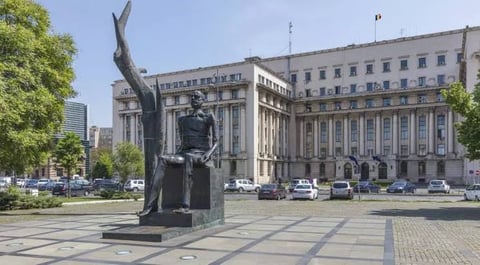
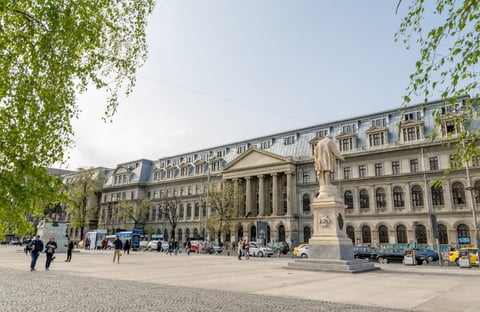
University Square, the epicentre of the 1989 Revolution. Victory
Square, where the first post-communist government took power. The
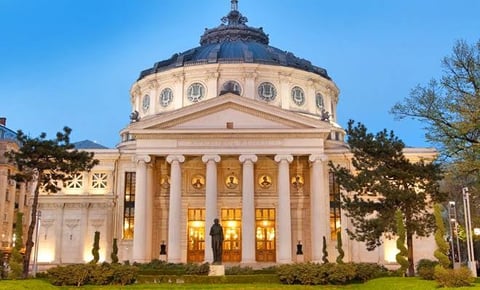
Romanian Athenaeum, Bucharest's neoclassical concert hall and
cultural symbol. Revolution Square, where Ceaușescu gave his final
speech. Four places that tell the story of modern Romania in
succession.
Local Insight
The Athenaeum's fresco frieze wraps 360 degrees around the main
hall, one of Europe's finest concert hall interiors.
The Ceaușescu Era
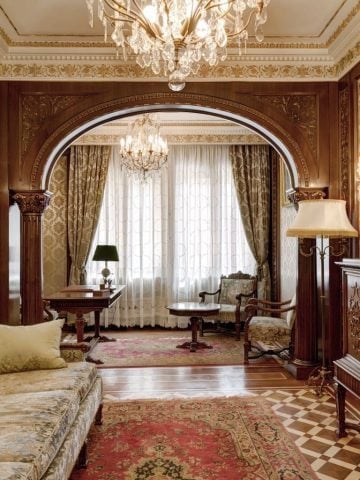
Primăverii Palace, the private residence of Nicolae and Elena
Ceaușescu for nearly 25 years, sits in Bucharest's most exclusive
neighbourhood. Behind its unassuming exterior lie interiors of
striking opulence, a preserved window into the personal lives of
Romania's last communist rulers and the contradictions of their
regime.
Northern Bucharest
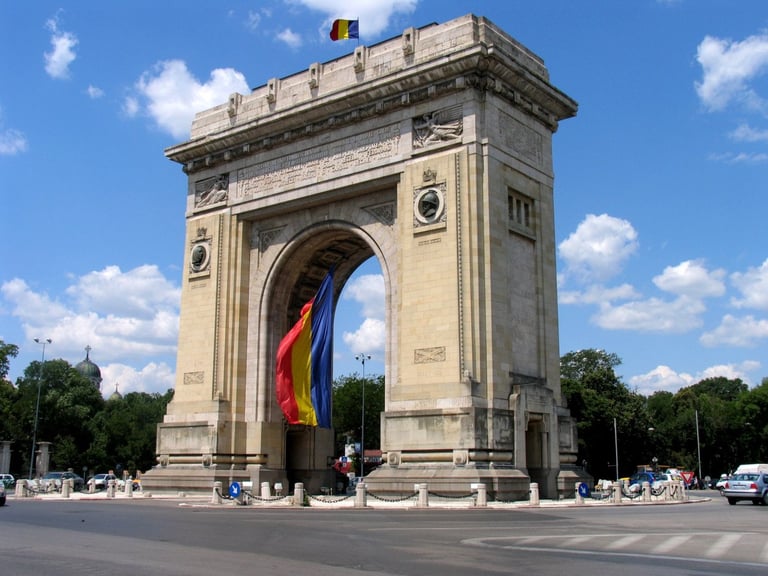
Three landmarks in close succession. The Arch of Triumph, a granite
tribute to Romania's Great War soldiers, modelled on its Parisian
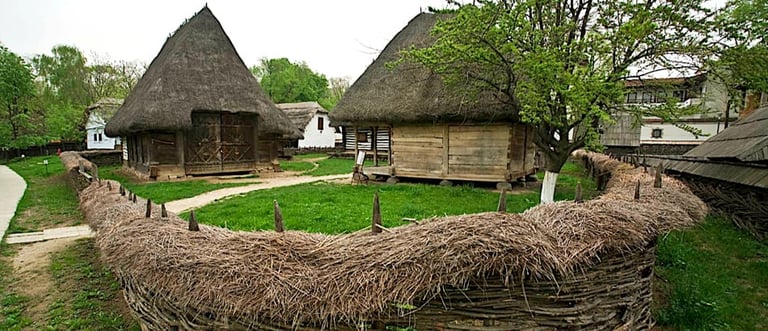
namesake. The Village Museum, an open-air collection of traditional
houses from every Romanian region. The House of the Free Press, a
towering Stalinist structure that once housed the communist
propaganda machine.
Photo
Tip
The Village Museum's wooden churches and watermills photograph
beautifully in morning light; your guide times the stop
accordingly.
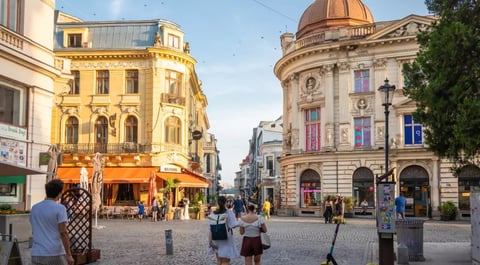
Old Bucharest
The National Museum of Romanian History, housed in the former Postal
Palace, traces Romania from prehistory to the modern state. A short
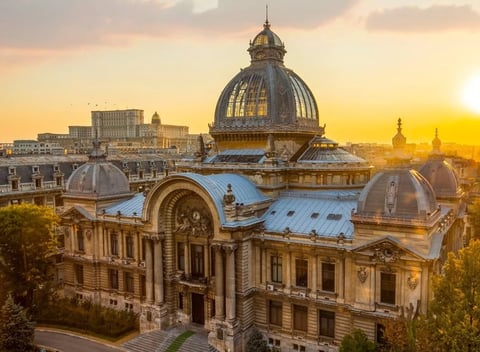
walk away, CEC Palace, with its distinctive glass dome and Belle
Époque façade, embodies the commercial ambition of late 19th-century
Bucharest, when the city was known as "Little Paris."
The contrast between these two buildings, one monumental, one
ornate, captures the duality of Bucharest itself.
Return to Your Hotel
Your guide returns you to your Bucharest hotel. In a single half-day
you have traced the arc of the city: medieval monastery, royal
avenue, Stalinist colossus, Ceaușescu's private world, revolutionary
square and a living village museum. Four centuries of Romanian
history, experienced in sequence.
The best city tours don't just show you landmarks; they leave you
seeing the city differently for the rest of your stay.