
Romania Travel Knowledge Hub

How to Plan a Romania Itinerary Without Trying to See Everything

By DACO Team

Local travel knowledge from DACO Private Travel, Bucharest.

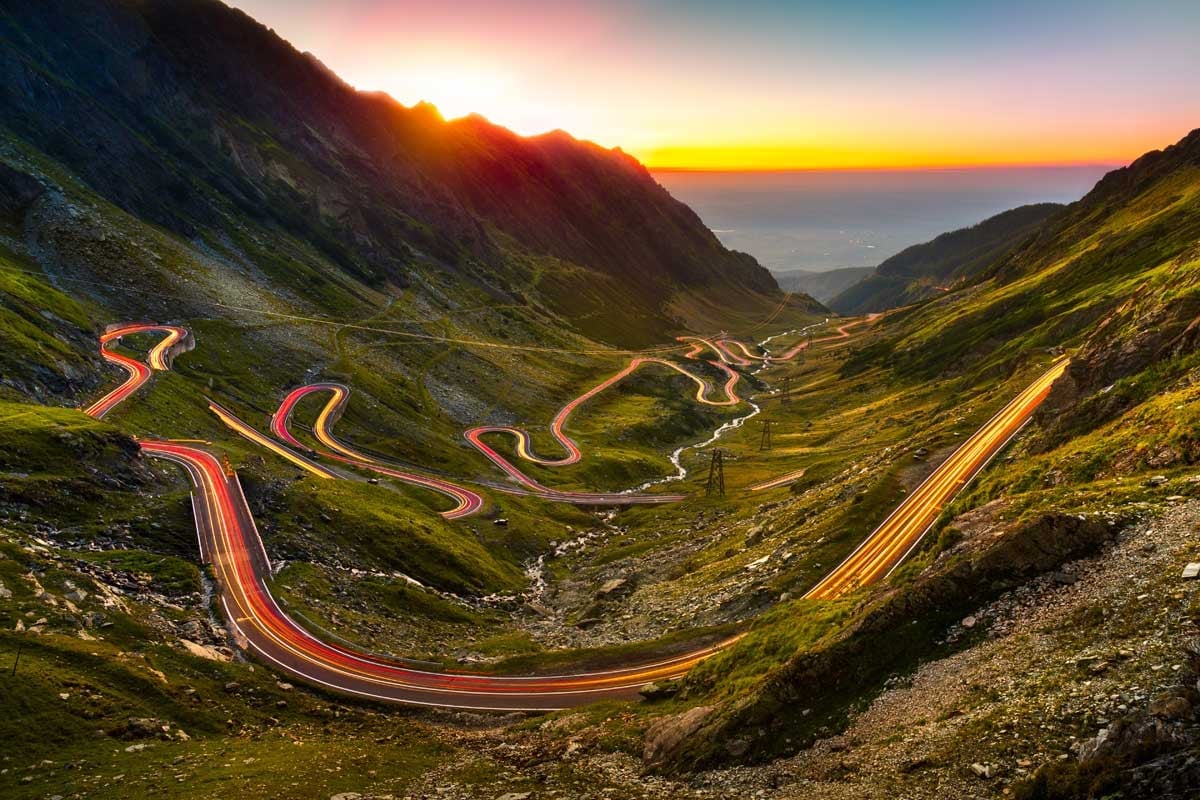
Winding mountain road with long exposure car light trails at sunset in green valley landscape

Romania looks very manageable on a map.

That is one of the reasons people over-plan it.

Bucharest.

Brasov.

Bran.

Sibiu.

Sighisoara.

Maramures.

Bucovina.

The Danube Delta.

The Black Sea.

They all fit comfortably on the screen.

Then the journey begins.

You pack.

Check out.

Drive.

Stop.

Check in.

Walk.

Eat.

Sleep.

Repeat.

And somewhere around the third hotel change, the itinerary that looked efficient begins to feel like work.

This is why we do not think a good Romania itinerary is the one that contains the most places.

We think it is the one that leaves enough room for those places to mean something.

Start with the number of days. Then reduce your ambition slightly.

This is not very exciting advice.

It is useful anyway.

If you have seven days, you do not have seven full sightseeing days.

You have arrival.

Departure.

Transfers.

Meals.

Check-ins.

Weather.

Traffic.

Fatigue.

And the occasional moment when you simply want to sit somewhere for another thirty minutes.

The first planning mistake is to allocate every hour before the trip begins.

The second is to assume you will enjoy using every allocated hour exactly as planned.

Leave some margin.

You are planning a journey, not a military exercise.

Seven days can be a very good Romania trip

Seven days are enough to have a meaningful experience.

They are not enough to understand the entire country.

Those are different goals.

A strong seven-day trip usually works because it chooses a clear geographical logic.

Bucharest + southern Transylvania.

Bucharest + Prahova Valley + Brasov.

A focused Transylvania route.

A Bucharest stay with carefully chosen day trips.

A Danube Delta-focused journey with appropriate time around it.

What usually weakens a seven-day trip is not the number of days.

It is the number of ambitions.

If every region is treated as equally urgent, the traveller spends too much of the holiday leaving places.

Ten days give you more options. They do not remove geography.

Ten days can open the itinerary considerably.

You may be able to connect more than one region with a reasonable pace.

You may have room for a longer road journey.

You may be able to stay two nights somewhere instead of arriving at dinner and leaving after breakfast.

But ten days do not magically shrink Romania.

Adding three days should not automatically mean adding three destinations.

Sometimes the best use of those extra days is simply to make the existing route breathe.

Fourteen days do not mean you need the whole country

This is where planning often becomes ambitious again.

Two weeks sounds generous.

It is.

But Romania is varied enough that fourteen days can still become rushed very quickly.

A two-week journey can support a substantial multi-region itinerary.

It can also support something better:

a trip where you occasionally stay still.

One of the strange things about travel is that people often measure value through movement.

More roads.

More cities.

More hotels.

More pins on the map.

But movement is not the same as experience.

You do not understand a country more deeply because you changed hotels twelve times.

Every hotel change costs more than one hour

This is one of the most underestimated parts of itinerary design.

You may calculate:

Hotel A to Hotel B: two hours.

So the move costs two hours.

Not quite.

You need to pack.

Check the room.

Check out.

Carry luggage.

Load the car or reach the station.

Travel.

Find the new place.

Park or unload.

Check in.

Take luggage upstairs.

Orient yourself.

Then begin the next part of the day.

Even when everything works smoothly, the transition occupies mental space.

And if you repeat it every morning?

The suitcase becomes a participant in the trip.

Local DACO Note

If you cannot remember which hotel you are waking up in tomorrow, the itinerary may be trying too hard.

Two nights often feel very different from one

One-night stops have their place.

Sometimes geography requires them.

Sometimes a route genuinely works that way.

But there is a big difference between:

arrive → dinner → sleep → leave

and:

arrive → sleep → wake up → experience the place → sleep again.

The second allows familiarity.

You learn where the street goes.

You find the café again.

You stop looking at the map every five minutes.

The place begins to feel less like a stop and more like somewhere you have actually been.

This matters more than many itineraries admit.

The itinerary should have white space

Not necessarily an empty day.

White space means room that is not already committed.

A lunch can take longer.

A viewpoint can become a stop.

Traffic can exist without destroying the entire afternoon.

You can walk another street.

You can sit down.

You can decide that you do not want to leave yet.

The itinerary still has structure.

It simply does not punish you for being human.

We think good planning creates exactly this kind of freedom.

Poor planning fills every line.

Good planning knows which lines should remain empty.

A beautiful road is not dead time

This matters a lot in Romania.

Travel planning often divides a day into:

attractions

and

transport between attractions.

That can be misleading.

Sometimes the road is part of the experience.

A mountain route.

A village sequence.

A valley.

A drive through changing landscapes.

A road that makes you stop.

If you treat every kilometre as something to eliminate as quickly as possible, you may be designing the wrong trip.

Romania rewards journeys where the road is allowed to matter.

Do not plan mountain driving like motorway driving

This is the same principle we discuss in our Driving in Romania guide.

Distance alone is not enough.

Road type matters.

Weather matters.

Traffic matters.

Season matters.

And so does the fact that you may actually want to stop.

If the road is one of the reasons you came, give it time.

A spectacular mountain route squeezed between two strict reservations becomes surprisingly stressful.

The problem is not the road.

The problem is the timetable.

Bucharest does not need to be included just because your plane lands there

Many Romania trips begin in Bucharest.

That does not mean every traveller needs to spend several days here.

Some should.

Bucharest deserves time if you are curious about the city.

It has history, architecture, museums, food, contemporary life and contradictions worth understanding.

But if your real purpose is a regional journey elsewhere, you are allowed to leave.

The airport is not a cultural obligation.

And the reverse is also true.

Do not treat Bucharest only as a runway between you and Transylvania if the city actually interests you.

The itinerary should reflect your priorities.

Not travel convention.

If the city does interest you, our Bucharest for First-Time Visitors guide is the natural place to start.

Transylvania is not one stop

This becomes important very quickly.

People often say:

“We want to see Transylvania.”

Good.

But what does that mean?

Brasov?

Sibiu?

Sighisoara?

Bran?

Villages?

Fortified churches?

Countryside?

Mountains?

All of them?

Transylvania is a region.

Not an attraction.

And when it is planned as a single item on a checklist, travellers often end up moving too quickly through the very thing they came to experience.

Our Romania by Region guide goes deeper into this, but the practical principle is simple:

choose what version of Transylvania matters to you.

Bran, Brasov, Sibiu and Sighisoara do not need to become a race

All are popular.

All are different.

The problem begins when popularity becomes an itinerary instruction.

A traveller sees four names repeatedly and concludes:

I should see all four.

Perhaps.

But not necessarily in the same compressed sequence.

If you have enough time, they can fit beautifully.

If not, removing one may improve the others.

This is a difficult lesson in travel planning:

sometimes the itinerary becomes more valuable when it contains less.

Maramures should not be a detour you apologise to

Maramures has a strong identity.

Landscape.

Villages.

Wooden architecture.

Religion.

Local life.

History.

It deserves more than a fast appearance at the top of the itinerary because somebody said it was authentic.

If you include Maramures, give it room.

If you cannot, leave it for another journey.

That is better than travelling a long distance simply to prove you went.

Bucovina also deserves to be treated as a destination

The painted monasteries are one reason people travel there.

But Bucovina is not a decorative add-on to Transylvania.

Geographically and culturally, it asks for its own time.

When someone tries to combine Bucharest, southern Transylvania, Maramures and Bucovina in a short trip, the problem is rarely whether the route is physically possible.

It often is.

The question is whether the traveller wants to experience Romania mainly through a windscreen.

Possible and enjoyable are not synonyms.

The Danube Delta changes the logic of the itinerary

This is especially important.

The Delta is not simply another stop on a road trip.

Its geography works differently.

Its transport works differently.

Its rhythm works differently.

You do not casually add it after Sibiu because there appears to be space on the calendar.

A good Delta experience needs appropriate time for arrival, water transport and the environment itself.

If you want the Delta, let the itinerary acknowledge that you are changing travel modes.

Our Danube Delta — Wild Waterways experience exists because this part of Romania needs to be approached on its own terms.

The Black Sea can be easy to add. That does not mean it should always be added.

Constanta and the coast are accessible enough that they can appear tempting on a Bucharest itinerary.

And for the right traveller, they can make perfect sense.

But again:

what do you want from the coast?

History?

A sea day?

Constanta?

A resort?

A seasonal break?

If the answer is:

“It was nearby enough on the map,”

that is not always a strong reason.

Every destination should earn its place in the journey.

One region explored well can be a complete trip

This is something travel culture occasionally forgets.

A traveller can spend a week largely in Transylvania and have a complete Romania experience.

Someone can build a meaningful journey around Bucharest and southern Romania.

Someone can focus on the Delta.

Or Maramures and Bucovina.

A country does not need to be sampled evenly.

You are not preparing a national audit.

Travel has permission to be selective.

Do not make every day a “big day”

Another common itinerary pattern:

Day 1: major city.

Day 2: famous castle.

Day 3: long drive + medieval city.

Day 4: mountain road.

Day 5: three villages.

Day 6: major attraction.

Day 7: transfer.

Every day carries expectation.

That can become exhausting.

A good journey has rhythm.

A larger day.

A quieter day.

A road day.

A city day.

A slower evening.

Energy matters.

Not only geography.

The first day is often not a full day

Flights arrive.

Luggage appears.

Sometimes slowly.

You reach the accommodation.

Check in.

Eat.

Orient yourself.

A 14:00 arrival does not necessarily mean half a sightseeing day.

It may.

But do not make the entire itinerary depend on it.

Especially after a long journey.

We would rather give a traveller a pleasant first evening than turn the arrival into a race against closing times.

The last day is not automatically available either

The same mistake happens at departure.

An evening flight can create useful time.

But there is still:

check-out;

luggage;

airport transfer;

traffic;

security;

the fact that international travel requires margin.

Do not build a critical attraction into the final hours unless the logistics genuinely support it.

Your holiday should not finish with:

“Run.”

Arrival and departure points should influence the route

If you fly into and out of Bucharest, a circular or returning route may make sense.

If your transport arrangement allows different endpoints, another structure might work.

The point is to think about the full journey before filling the middle.

Sometimes an itinerary looks excellent until you realise the final day requires reversing several hundred kilometres.

Start with the beginning.

Then the end.

Then connect them intelligently.

You do not need to sleep everywhere you visit

This is one of the easiest ways to reduce hotel changes.

Some places make excellent day trips.

Some are better as bases.

Some deserve overnight stays.

Do not automatically convert every destination into another hotel.

A strong base can give you access to several places without requiring you to relocate every morning.

This can be particularly useful around Brasov, Bucharest and other well-positioned areas.

Choose bases before choosing every attraction

This is a planning technique we like.

Instead of:

attraction → attraction → attraction → hotel somewhere nearby,

try:

Where would it make sense to stay for two or three nights?

Then ask what can be experienced naturally from there.

This changes the psychology of the itinerary.

The hotel stops being where you collapse after sightseeing.

It becomes a base.

And the trip begins to feel more coherent.

A good base reduces invisible work

You unpack.

You know where breakfast is.

You know where the car is.

You know the street.

You know how long it takes to reach the centre.

You know what the room feels like.

That familiarity has value.

Travellers often optimise for visible experiences and ignore invisible effort.

Good itinerary design reduces the invisible effort.

That leaves more attention for Romania.

Restaurants need time too

Not every meal needs to be an experience.

Sometimes lunch is simply lunch.

But if food matters to you, give it room.

A Romanian meal can take time.

A good restaurant may be somewhere you want to sit rather than refuel.

Our Romanian Food Explained guide talks about this more deeply.

The itinerary should not treat eating as a technical interruption.

Especially if food is part of why you travel.

A 47-minute lunch is usually a planning problem

This is one of those precise itinerary lines that looks impressive in a spreadsheet.

12:30 lunch.

13:17 depart.

Why 13:17?

Because the next stop begins at 14:00.

Then somebody wants coffee.

The food takes longer.

The restaurant is busy.

And suddenly lunch feels like operational failure.

We prefer a different approach.

Give meaningful parts of the day enough room to behave naturally.

The goal is not to execute Romania.

Travelling with children changes the correct itinerary

Not necessarily by reducing ambition.

By changing rhythm.

Children need breaks.

Meals.

Bathrooms.

Movement.

Sometimes naps.

Sometimes twenty minutes staring at something adults do not understand.

A family itinerary should be designed around actual family energy.

Not around the maximum number of attractions technically reachable.

The same applies to older travellers, mobility considerations and anyone who simply prefers slower travel.

The correct pace is personal.

Travelling as a couple can also become over-planned

Couples often have more flexibility.

That can create the opposite problem.

“We can fit it.”

Yes.

But do you want to?

A spontaneous coffee.

A longer dinner.

A walk after check-in.

A morning where you do not set an alarm.

These may become some of the best parts of the trip.

If every hour is committed, spontaneity exists only in theory.

Private travel should create more freedom, not more stops

This matters to us directly.

A private car or private tour can make an itinerary more efficient.

You do not wait for groups.

You can adjust timing.

You can reach places more directly.

But efficiency should not become an excuse to add another three attractions.

The purpose of private travel is not:

“Now we can fit more.”

It can also mean:

“Now we can experience the same day better.”

That is a very different product.

And, in our view, a better one.

The itinerary is there to help the traveller

Not the other way around.

This sounds obvious until the plan begins defending itself.

“We have to leave now because the itinerary says so.”

“We cannot stop because the next place is scheduled.”

“We cannot stay longer because we already booked everything.”

At some point the plan has become the client.

The traveller is serving it.

That is backwards.

A good itinerary gives structure.

It does not demand obedience.

Remove one thing and see what happens

This is one of the most useful exercises in itinerary design.

Take the draft route.

Remove one destination.

Do not replace it.

Look again.

Does the trip become worse?

Sometimes yes.

Put it back.

But often something interesting happens.

The road becomes easier.

A two-night stay appears.

Lunch has room.

A late arrival disappears.

The traveller gets a morning.

The entire trip becomes calmer.

Removing something can create more experience.

If everything is a priority, nothing is

This is not only a travel principle.

But it works very well here.

Ask each traveller:

What are the three things you would genuinely regret missing?

Not twelve.

Three.

Then protect those.

Everything else becomes flexible.

Once the priorities are clear, itinerary design gets much easier.

You know what can move.

You know what can go.

You know where to spend time.

That is real flexibility.

Build around the things that cannot move

Flights.

Specific reservations.

Seasonal access.

Events.

Opening constraints.

These are anchors.

Place them first.

Then allow the more flexible pieces to organise around them.

The mistake is to treat every attraction as equally fixed.

Most are not.

When everything is rigid, one delay affects the whole trip.

When only the important things are anchored, the itinerary can absorb reality.

Weather needs somewhere to go in the plan

Weather happens.

Not every trip needs a rain plan written in a binder.

But if the itinerary contains a weather-sensitive mountain day, it helps to know what could move.

Perhaps a city day swaps with it.

Perhaps a museum becomes useful.

Perhaps the route adjusts.

Flexibility works best when imagined before it is needed.

Otherwise every change feels like something went wrong.

Sometimes nothing went wrong.

It rained.

Do not make a seasonal road the foundation of an inflexible itinerary

This is especially relevant for mountain routes such as the Transfagarasan.

Seasonal roads and high-altitude conditions require current information.

If the road is important to you, plan with flexibility.

Do not build a whole chain of non-refundable timing assumptions around something nature has a vote in.

When it works, enjoy it properly.

When conditions change, let the itinerary change too.

The best itinerary is not necessarily the most efficient one

Efficiency has a place.

Nobody wants unnecessary backtracking.

Poor connections waste time.

Bad route design creates frustration.

But maximum efficiency can also produce a strange trip.

Every journey becomes optimised.

Every stop becomes calculated.

Every hour needs productivity.

Travel is not logistics alone.

Sometimes the slower route is more interesting.

Sometimes the second night is worth more than the extra destination.

Sometimes the best decision on paper is not the best decision for the person travelling.

Your itinerary should know why you came

This is where planning should begin.

History?

Nature?

Food?

Photography?

Castles?

Villages?

Cities?

Family time?

Wine?

A road trip?

Rest?

Curiosity?

The answer matters.

A photographer may want completely different timing from a traveller focused on museums.

A family may want different bases from a couple.

A person interested in rural culture should not spend most of the trip in large cities simply because they are famous.

The itinerary should reflect the traveller.

Not a template.

Do not copy someone else's Romania

Itinerary examples are useful.

They show what may fit.

They reveal route logic.

They generate ideas.

But somebody else's perfect ten-day trip may be completely wrong for you.

Perhaps they love driving.

You do not.

Perhaps they wake at 06:00.

You consider 08:30 an act of aggression.

Perhaps they care deeply about castles.

You care about food and landscapes.

Do not inherit preferences along with the route.

Use itineraries as references.

Not instructions.

“Must-see” is one of the least useful planning categories

If everything on the internet is a must-see, the phrase stops meaning anything.

Instead ask:

Does this fit our route?

Does it fit our interests?

Is the time worth it?

What are we removing to make space for it?

That last question is important.

Every addition has a cost.

Not always money.

Often time.

Leave a place while you still like travelling

This is another rhythm principle.

If the day has been full and good, you do not always need one final attraction.

There is no medal for arriving at the hotel exhausted.

Some of the best itineraries finish the day while people still have energy to:

walk;

eat;

talk;

look around;

or do absolutely nothing.

Tomorrow will benefit.

A slower itinerary does not mean a passive trip

This distinction matters.

Slow does not mean idle.

It can mean:

more time walking;

more conversations;

more photography;

more local streets;

more meals;

more attention.

The itinerary contains fewer named attractions but more actual experience.

This is why we are cautious with counting.

Five places are not automatically better than three.

When a standard tour stops being the right answer

A standard tour works beautifully when the traveller's needs align with it.

Clear route.

Clear duration.

Clear experience.

But once someone begins combining multiple regions, specific interests, unusual pacing, different transport modes or several accommodation bases, the question changes.

It is no longer:

“Which tour should I book?”

It becomes:

“How should this journey work?”

That is where DACO Concierge can become useful.

Not because every complex trip needs a concierge.

Because some journeys need to be looked at as a whole.

The service should follow the journey.

Not force the journey to follow the service.

Sometimes we would tell you to remove one of our own services

If the train makes better sense for one section, use the train.

If you do not need a rental car in Bucharest, do not rent one.

If a day is already full, do not add another private tour because it fits technically.

If your itinerary needs a quiet afternoon, keep it.

The objective is not to maximise the number of DACO products inside the holiday.

It is to make the holiday work.

We think those two things align much better over time than aggressive selling ever could.

How we would think about seven days

Not as a template.

As a level of ambition.

With seven days, we would usually prioritise one primary travel logic.

For example:

Bucharest + Prahova Valley + Brasov/nearby Transylvania;

or

a concentrated Transylvania route;

or

Bucharest combined with carefully selected experiences around southern Romania;

or

a dedicated Delta/coastal structure with enough time for the logistics involved.

The exact route depends on the traveller.

The principle does not:

choose depth before national coverage.

How we would think about ten days

Ten days allow more layering.

Perhaps:

Bucharest + Transylvania + another coherent regional extension.

Or:

a more relaxed Transylvania route with multiple bases.

Or:

city + countryside + a specific nature component.

You have more space to combine.

But keep the same discipline.

Do not spend all three extra days buying additional destinations.

Spend some of them buying time.

Time is one of the most valuable upgrades in travel.

How we would think about fourteen days

Fourteen days can support a substantial Romanian journey.

Several regions may become realistic.

A larger road trip may work beautifully.

But we would still resist the urge to “complete” Romania.

Choose a route with geographical logic.

Protect two-night stays where they improve the journey.

Give distinct regions enough room to feel distinct.

Allow the itinerary to change rhythm.

A two-week trip should feel richer than a one-week trip.

Not simply longer.

What we would look for before approving an itinerary

We would ask:

Where are the longest driving days?

How many one-night stays are there?

Does every major destination have enough time?

Are arrival and departure realistic?

Is there any day where one delay destroys everything after it?

Are the mountain elements flexible?

Does the traveller have any room to stop?

Are the activities aligned with what they actually care about?

Is the route geographically coherent?

Is there anywhere we are visiting simply because everybody else does?

And perhaps most importantly:

Does this look enjoyable?

A technically possible itinerary can still fail that test.

The itinerary should become quieter as it gets better

Early drafts often contain too much.

That is normal.

You begin with possibility.

Then you edit.

Remove.

Combine.

Change bases.

Reorder.

Add margin.

Eventually the itinerary stops shouting.

There is space.

You can see the journey.

The traveller no longer needs to understand a complicated diagram just to know what happens on Thursday.

That is usually a good sign.

Good planning often looks simpler after a lot of thinking.

If we could give you one itinerary rule

Do not ask:

“How much Romania can we fit?”

Ask:

“How much Romania can we actually experience?”

Those are not the same question.

Leave enough time for the road.

For lunch.

For check-in.

For weather.

For the place you did not expect to like.

For the morning when nobody wants to leave at 08:00.

For the extra coffee.

For changing your mind.

A good itinerary should give shape to the journey without becoming the reason the journey feels rushed.

The itinerary is there to help the traveller. Not the other way around.

And if removing one place makes everything else better?

Remove it.

Romania will still be here.

DACO Team

Local travel knowledge from DACO Private Travel, Bucharest.

Romania, Privately Arranged.

Common questions

Frequently Asked Questions

Planning a Romania journey that needs to make sense as a whole?

Tell us how many days you have, what matters most to you and how you prefer to travel. We can help you shape the journey around those priorities — including knowing when less will make the trip better.

Plan My Trip