
Romania Travel Knowledge Hub

Driving in Romania for the First Time: What Actually Matters

By DACO Team

Local travel knowledge from DACO Private Travel, Bucharest.

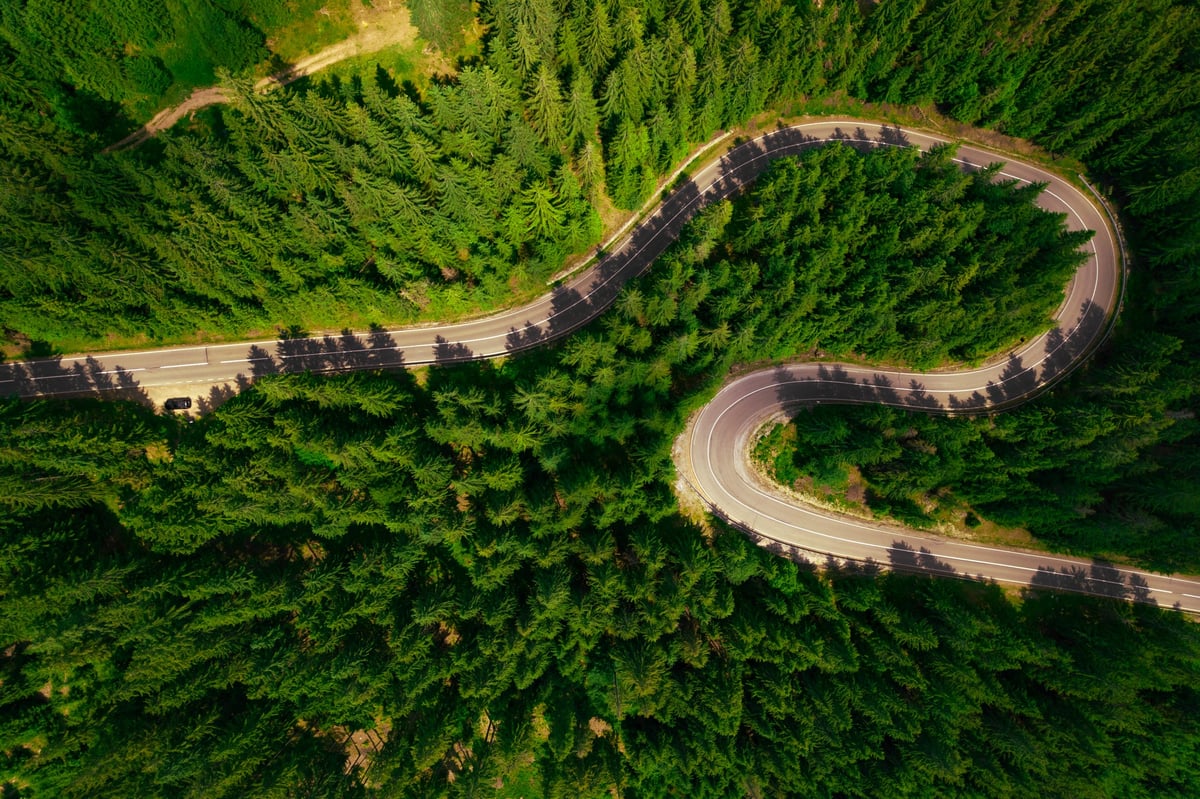
A road passing through a green mountain forest

A rental car can give you enormous freedom in Romania.

It can also give you a problem you did not need.

That is the first thing we would tell someone deciding whether to drive here.

Because the right question is not:

“Is renting a car in Romania a good idea?”

The better question is:

“Will having a car make this particular journey easier?”

Sometimes the answer is clearly yes.

You want to stop in small villages.

You want to explore rural Transylvania.

You want to follow a mountain road.

You have several places to reach in one day.

You want the freedom to change direction because somewhere looked interesting from the road.

In those situations, having your own car can completely change the trip.

But if you are spending two days in central Bucharest, travelling directly between well-connected cities or arriving exhausted after a long flight with no interest in driving, the same car may simply become another thing to manage.

Parking.

Traffic.

Navigation.

Fuel.

Responsibility.

The car should solve a problem.

Not become the problem.

The real advantage of driving in Romania is not speed

It is freedom.

Freedom to stop.

Freedom to leave when you want.

Freedom to take a smaller road.

Freedom to spend another hour somewhere because you are enjoying it.

Freedom to reach places that do not fit neatly around a train schedule.

That freedom is especially valuable outside the larger cities.

Romania contains many places where the journey between destinations matters almost as much as the destination itself.

A village.

A roadside view.

A small restaurant.

A landscape you did not expect.

A church you had not planned to visit.

You cannot schedule all of that.

A car gives you room for it.

But freedom only has value when you actually want to use it.

Before renting a car, look at the trip rather than the country

Romania is too varied for one transport rule.

Imagine three travellers.

The first arrives in Bucharest for a weekend.

The second wants Bucharest, Brasov and Sibiu.

The third wants villages, fortified churches, mountain roads and several nights across rural Transylvania.

All three are visiting Romania.

Only one of them very clearly needs a car from the beginning.

This is why we are cautious with blanket advice.

“You need a car in Romania.”

No.

“You should use trains in Romania.”

Also no.

Transportation should follow the itinerary.

Not the other way around.

If you are staying in central Bucharest, we would usually not rent a car

This is one of those occasions where we are perfectly comfortable telling someone not to use one of the services DACO offers.

For a short central Bucharest stay, a rental car may add very little.

You can walk.

The metro is useful.

Taxis and ride-hailing services cover journeys that are inconvenient on foot.

And you do not spend part of the day thinking about where the car is parked.

If the purpose of the trip is:

hotel → Calea Victoriei → Old Town → museum → restaurant → hotel,

the car may spend most of its holiday waiting for you.

That is not freedom.

That is parking.

Rent the car when you are ready to leave the city, if the next part of your journey actually benefits from having it. If you would like a clearer picture of the place before deciding, Bucharest for First-Time Visitors explains how the city actually works on foot, by metro and by local transport.

Local DACO Note

A car is useful when it gives you access. It is much less useful when it spends the day sitting somewhere while you worry about whether you are allowed to leave it there.

Bucharest traffic is not a reason to fear driving in Romania

Visitors sometimes hear stories about Bucharest traffic before they arrive.

Yes, the city can be busy.

Yes, driving styles and traffic density may feel different from what you know at home.

But Bucharest is not the whole Romanian driving experience.

Driving through a central Bucharest junction and driving through rural Transylvania are almost different activities.

The mistake is assuming one tells you everything about the other.

If you are comfortable driving in a large European city, Bucharest is manageable.

If you dislike urban traffic everywhere, Romania will not magically make you enjoy it.

Both are reasonable.

The useful question is not:

“Can I drive in Bucharest?”

It is:

“Do I need to?”

Two hundred kilometres does not automatically mean two hours

This is one of the most useful things to understand before planning a Romanian road trip.

Distance is only part of the journey.

Road type matters.

Mountains matter.

Towns matter.

Traffic matters.

Season matters.

Weather matters.

And sometimes the road itself is the reason the drive takes longer.

A navigation application might give you an estimate.

Treat it as useful information.

Not as a promise.

If an itinerary depends on arriving at every stop at exactly the most optimistic estimated time, it is probably too tight.

This becomes particularly important when you have:

  • a castle entry;
  • a train;
  • an airport;
  • a restaurant reservation;
  • or anything else that does not care whether the scenery was beautiful.

The same road can be a different road tomorrow

Road travel has rhythm.

A route on a quiet weekday morning may feel very different on a Friday afternoon.

A mountain corridor in normal conditions may behave differently during a busy weekend.

A road that feels easy in clear summer weather may require much more attention in rain, fog or winter conditions.

This is local knowledge at its least glamorous.

And perhaps its most useful.

Nobody plans a holiday because they are excited about traffic patterns.

But ignoring them can change an entire day.

Do not plan a mountain road like a motorway

Romania's mountain roads are one of the strongest reasons to drive here.

They are also a good reason not to build an itinerary around the clock.

A mountain road asks for attention.

  • Corners.
  • Elevation.
  • Weather.
  • Cyclists.
  • Motorcycles.
  • Other vehicles.
  • People stopping for views.
  • Occasionally animals.

And the simple fact that you may want to stop yourself.

If your plan says:

“Drive this spectacular mountain road as quickly as possible so we can reach the next attraction,”

we would question the plan.

Sometimes the road is the attraction.

The Transfagarasan is a road, not a shortcut

This distinction matters.

The Transfagarasan — Road Above the Clouds is internationally famous for a reason.

But we would not treat it as a convenient road between two points.

It is a mountain experience.

Its high sections are seasonal, access can depend on conditions, and the character of the journey changes with weather and traffic.

When it is part of your itinerary, give it time.

Stop.

Look.

Drive carefully.

Let the day belong partly to the road.

A traveller who spends the whole Transfagarasan worrying about being twenty minutes late somewhere else has planned the wrong day.

High-altitude road access and conditions can change, so current official information should always be checked before travel.

Driving is often at its best in rural Romania

This is where a car begins to make very obvious sense.

Small towns.

Villages.

Fortified churches.

Countryside accommodation.

Roadside stops.

Places that would be awkward to connect using public transport alone.

The journey stops feeling like transportation and starts becoming part of the trip.

This is especially true if you like photography or spontaneous stops.

You see something.

You stop.

No timetable needs to approve the decision.

That is one of the best arguments for driving in Romania. Because the practical value of a car changes with the landscape, Romania by Region is a useful companion when you are deciding where a car genuinely earns its place and where it does not.

But rural does not mean empty

Another assumption worth leaving behind.

A rural road is not necessarily a private road.

You may encounter:

  • local traffic;
  • farm vehicles;
  • cyclists;
  • animals;
  • pedestrians;
  • villages where the road passes directly through everyday life.

Drive according to what is actually in front of you, not according to how open the map appears.

Romania rewards drivers who are willing to change rhythm.

Small roads often give you more Romania and less efficiency

There is a trade-off.

The most direct road is not always the most interesting.

The most interesting road is not always the fastest.

Sometimes you choose efficiency.

Sometimes you deliberately choose the slower road because that is where the villages, landscape or experience you came for actually are.

Neither choice is automatically better.

We simply want travellers to know which decision they are making.

A road trip becomes frustrating when you expect scenic travel to behave like motorway travel.

Parking can quietly take over a day if you let it

This is not one of the romantic parts of travel.

But it is real.

A rental car needs somewhere to go when you do not need it.

In smaller places this may be straightforward.

In busy central areas it may require more thought.

Before arriving at accommodation, especially in larger cities or historic centres, check how parking actually works there.

Do not assume that “hotel in the centre” automatically means “easy parking outside”.

And do not spend twenty minutes circling a neighbourhood because you are determined to park five metres from the entrance.

Sometimes the sensible option is slightly further away.

A holiday does not become better because the car can see the hotel.

If parking becomes the main topic of conversation, reconsider the car

This is one of our favourite tests.

You leave the hotel.

Where can we park?

You reach lunch.

Where can we park?

You arrive in the historic centre.

Where can we park?

You reach the next hotel.

Where can we park?

At some point, the car that was supposed to give you freedom has become the most demanding member of the group.

That usually means either the itinerary or the transport choice needs adjusting.

Navigation apps are useful. Local reality still exists.

We use navigation too.

Of course we do.

It is extremely useful.

But an app does not experience the road.

It does not care whether your family has already been sitting in the car for four hours.

It does not care that a theoretically faster route is unpleasant.

It does not know that you are enjoying where you are.

It may suggest a small road because the mathematics work.

That does not automatically make it the road we would choose for a visitor.

Technology can organise information.

The traveller still needs judgement.

You do not have to follow every shortcut your phone suggests

This deserves its own section.

A route suddenly promises to save eight minutes.

You turn.

The road gets smaller.

Then smaller.

Then you begin wondering whether anyone has driven there since Tuesday.

Sometimes the shortcut is excellent.

Sometimes those eight minutes were worth keeping.

If you are unfamiliar with the area, especially in rural or mountain environments, use judgement before blindly following an alternative route.

Saving a few minutes is rarely the most important objective of a holiday.

Driving style matters more than confidence

Confident driving is useful.

Aggressive driving is not.

You do not need to prove that you can keep up with the fastest vehicle around you.

Drive predictably.

Leave room.

Understand that local drivers may occasionally behave differently from what you are accustomed to.

Do not allow another person's impatience to become your decision.

This advice works almost everywhere in the world.

Romania is not special in that respect.

Let people overtake if they are in more of a hurry than you are

There will almost always be someone in more of a hurry.

They may know the road.

They may believe they know the road.

It does not matter.

You are on holiday.

You do not receive points for arriving before them.

Keep your attention on your own journey.

We consider a calm driver far more impressive than a fast one.

Weather should change your confidence, not your mood

Rain does not ruin Romania.

Fog does not ruin Romania.

Winter does not ruin Romania.

But conditions should change the way you drive.

Particularly in mountain areas.

If visibility changes, slow down.

If the road changes, respond to the road you have — not the road you hoped for.

Winter driving also carries specific legal and equipment requirements. Romania requires appropriate winter tyres when roads are covered with snow, ice or black ice; current rules and vehicle equipment should be checked before travelling in winter.

If you are renting, ask what the vehicle is equipped with.

Do not discover this on the mountain.

A rental car should fit the journey, not your ego

The biggest car is not automatically the best car.

Nor is the most expensive.

Think about:

  • How many people?
  • How much luggage?
  • Are you spending most of the time on normal roads?
  • Are you travelling through cities?
  • Do you actually need a large vehicle?
  • Will parking become harder?
  • Are you comfortable driving it?

A car that suits the itinerary is better than a car chosen for the photograph.

We believe this across DACO.

The purpose of a vehicle is to make the trip work.

Luggage changes the correct car very quickly

Four people without luggage and four people arriving from another continent are not the same transport requirement.

Suitcases need real space.

Not theoretical space.

If everyone has to travel with luggage between their knees because the vehicle looked spacious in a photo, something was planned incorrectly.

When renting, be honest about luggage.

It makes choosing the correct category much easier.

Manual or automatic?

This is less philosophical.

Drive what you are comfortable driving.

If you normally drive automatic, your Romanian holiday does not need to become the week you rediscover manual transmission.

If you are comfortable with either, fine.

But unfamiliar roads are not improved by adding an unfamiliar car simply because it was slightly cheaper.

Mental space has value too.

Fuel should not become an adventure

For normal Romanian road travel, fuelling the car is straightforward.

But the broader principle is worth remembering:

do the simple things before they become urgent.

Do not wait until the fuel warning appears in an unfamiliar rural area before beginning to think about the next petrol station.

Do not return the rental car unsure what fuel it takes.

Check.

Ask.

Then forget about it and enjoy the journey.

Good travel contains a surprising amount of boring competence.

Road charges and driving rules are worth checking before departure

There are practical legal requirements for driving in Romania, including rules around road use, vehicle documents and the national road-vignette system.

If you rent locally, clarify with the rental provider what is already covered by the vehicle and what remains your responsibility.

If you are bringing another vehicle into Romania, check the current official requirements before using national roads.

Romania's official e-vignette system provides validity checking for the road vignette.

The important part is not memorising regulations months before your holiday.

It is knowing which things should be confirmed before you drive.

Foreign driving licences: check your own situation, not someone else's forum answer

Requirements depend on the country that issued the licence. Check current official Romanian requirements and the rental provider's conditions before travelling.

Do not rely on a travel forum answer written for somebody from another country.

Confirm the current requirement for your licence before renting.

That is one of those five-minute checks that is much more enjoyable at home than at a rental desk.

When renting a car is the wrong choice

This is important enough to say clearly.

We offer rental cars. And there are trips for which we would tell you not to rent one.

If you are:

  • spending only a short stay in central Bucharest;
  • uncomfortable driving abroad;
  • planning mostly direct city-to-city travel;
  • arriving exhausted and travelling immediately to one destination;
  • not interested in rural exploration;
  • or simply wanting somebody else to deal with the road,

a rental car may not improve the journey.

There is no prize for driving yourself.

Independence is useful when you want independence.

Otherwise it can become responsibility disguised as freedom.

When a private transfer makes more sense

Imagine landing after an overnight flight.

Two children.

Several suitcases.

Your destination is not Bucharest.

You do not want to navigate.

You do not want to discuss insurance at a rental desk.

You do not want to drive for several hours.

You want to sit down.

In that situation, private transport may be the better decision.

Not because private transport is universally better.

Because it solves the actual problem.

You arrive.

Someone else drives.

You recover.

That can be worth much more than having access to a car immediately.

Train first, car later can be surprisingly intelligent

Transport does not need loyalty.

You are allowed to use more than one kind.

For example, a traveller might use public transport or rail for one part of the journey and rent a car only when the itinerary becomes rural.

This can remove unnecessary urban driving while preserving freedom exactly where it becomes valuable.

Sometimes:

train + car

is smarter than:

car from day one.

Sometimes:

airport transfer + rental later

works better.

Sometimes the rental car is absolutely the right answer from the airport.

The point is not to find the best mode of transport.

It is to find the best combination for the journey. Our guide to Getting Around Romania: Train, Car or Private Transfer? goes into this in more detail.

A road trip across several Romanian regions is a different project

Once you start talking about:

  • Transylvania.
  • Maramures.
  • Bucovina.
  • Mountain roads.
  • Several accommodation bases.
  • Different arrival and departure points.

the question is no longer only:

“Should I rent a car?”

It becomes:

“How should this journey actually work?”

That is a different planning problem.

Perhaps you drive the entire route.

Perhaps part of it is private transport.

Perhaps you rent from one point rather than another.

Perhaps some sections make more sense through an existing tour.

This is where DACO Concierge can help look at the journey as a whole rather than forcing one transport solution across every day.

The service should follow the trip.

The trip should not be redesigned around the service.

The best road trip contains time you have not assigned yet

This may sound inefficient.

We think it is one of the most useful things you can do.

Leave some space.

Not a completely empty day necessarily.

Just enough time that stopping somewhere does not immediately create stress.

A viewpoint.

Coffee.

Lunch that takes longer.

An unexpected place.

The entire point of having your own car is weakened if every minute is already committed.

Freedom requires somewhere to go.

Local DACO Note

If your itinerary allows spontaneous stops but every stop makes you late, the itinerary does not actually allow spontaneous stops.

Do not measure a Romanian road trip only in kilometres

A short distance can contain a full day.

A longer motorway section can feel simple.

A mountain route may demand more attention than its distance suggests.

A sequence of villages may invite stops.

The traveller may be tired.

The weather may change.

The road may simply be beautiful.

This is why we think in terms of days, not just kilometres.

What should this day feel like?

How much driving is enjoyable?

What else is happening?

Where does the traveller need to end up?

Those questions produce better routes than:

“How many places can technically fit?”

Sometimes the right answer is to stop driving early

You reach the town.

You check in.

The next place is technically only another hour away.

The light is still good.

You could go.

Do you need to?

Not every available hour needs to be converted into distance.

Park the car.

Walk.

Eat.

Have a drink.

Let the day finish.

Tomorrow's road will still be there.

Driving should make Romania larger, not your itinerary fuller

This distinction matters.

Having a car gives you access to more places.

That does not mean you need to visit more places.

Use the car to make the journey deeper.

Not necessarily bigger.

Stay in a smaller place.

Take a road you would otherwise miss.

Spend more time somewhere.

Stop because you want to.

That is the kind of freedom worth paying for.

What we would want a first-time driver to feel

Not fearless.

You do not need to feel fearless.

Just informed.

You know that road times can vary.

You know mountain driving needs space.

You know Bucharest does not represent every Romanian road.

You know where the car genuinely helps.

You know you can combine transportation.

You know you do not need to drive simply because you can.

Then the decision becomes much easier.

And once the decision is made, stop debating it.

Travel.

If we could give you one piece of advice

Do not rent a car because you think Romania requires one.

Rent it because your journey becomes better with it.

Use it to leave the obvious road.

Use it to stop.

Use it to make the country more accessible.

But do not allow it to dictate where you sleep, where you eat, how long you stay or how much of your holiday you spend thinking about parking.

A rental car should give you freedom.

If the itinerary makes you spend the whole journey managing the car, it is solving the wrong problem.

And if you decide that someone else driving would make the journey better?

That is not giving up freedom.

Sometimes it is how you get it back.

DACO Team

Local travel knowledge from DACO Private Travel, Bucharest.

Romania, Privately Arranged.

Common questions

Frequently Asked Questions

Not sure which way to travel?

Tell us where you are going, how many days you have and how you prefer to travel. If a rental car gives you the right freedom, we can help with that. If a transfer, train or a more tailored combination makes better sense, we would rather tell you that.

Plan My Trip DACO Concierge