
Romania Travel Knowledge Hub

What Travellers Often Underestimate About Touring Romania

By Iulian

Co-founder, DACO Private Travel · Tours & Operations

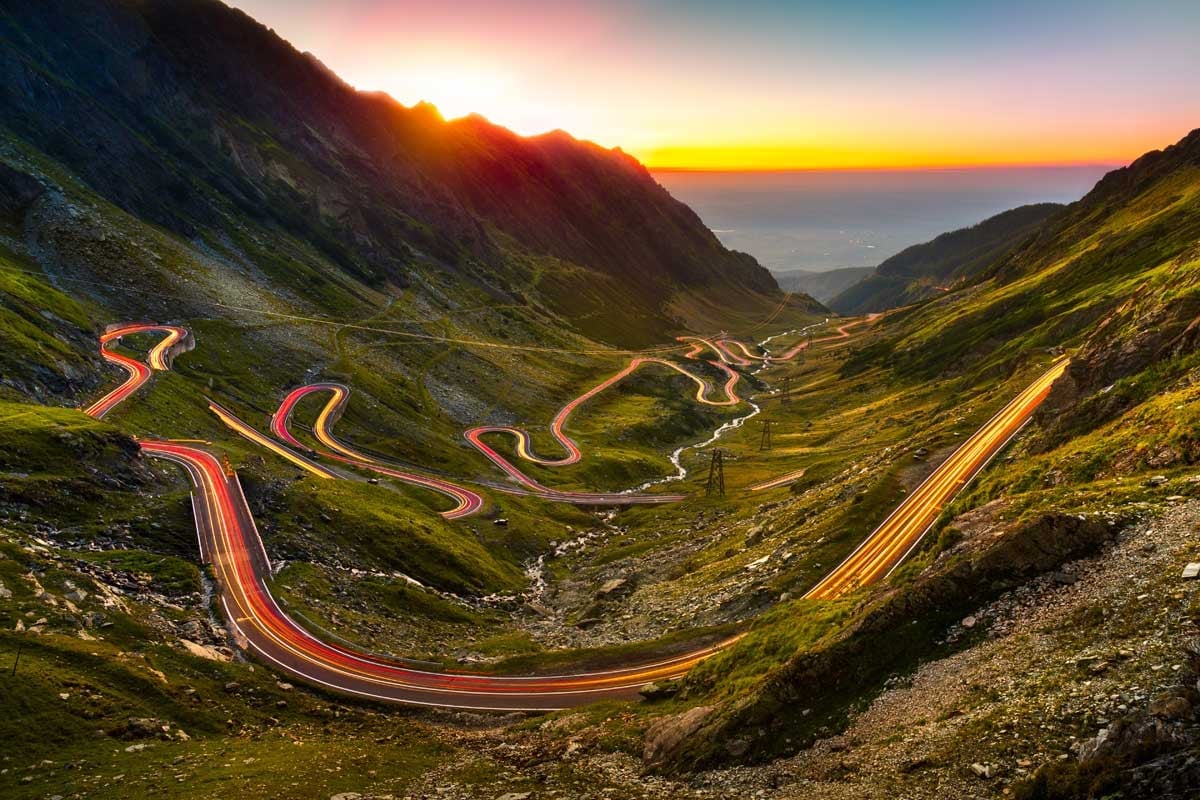
Winding mountain road with long exposure car light trails at sunset in a green valley landscape

I spend a lot of time on the road.

Some days it is Bucharest to Brasov. Other days it is Bran, Peles, the Transfagarasan, the Black Sea or somewhere completely different.

I meet people from different countries, different ages and with very different ideas about what they want from Romania.

Some arrive with a carefully prepared itinerary.

Others know almost nothing beyond Bucharest and Dracula.

And some simply tell me:

“Show us Romania.”

Over time, I have noticed that the things travellers underestimate are rarely the famous places.

They usually underestimate the spaces between them.

The roads.

The timing.

The weather.

How long a lunch can become when everyone is enjoying themselves.

How different the mountains feel from Bucharest.

How quickly a planned stop can become the part of the day people remember most.

And how often a good tour becomes better when you stop trying to follow the plan too perfectly.

Romania looks smaller on a map than it feels on the road

This is probably the first thing I would tell someone planning a trip here.

Romania is not impossible to travel around.

Far from it.

But the distance shown on a map does not always tell you what the journey will feel like.

A road can pass through towns.

A mountain section can slow everything down.

A Friday afternoon can be different from a Tuesday morning.

Weather can change.

Traffic can change.

And sometimes you simply see somewhere worth stopping.

That is why I am careful with itineraries that look perfect to the minute.

When I see:

10:15 arrive here

11:40 leave

12:25 arrive there

13:10 lunch

I already know there is a good chance the day will have other ideas.

That is not a problem.

It is travel.

Leaving earlier can change the whole day

People sometimes think that leaving thirty or sixty minutes earlier is a small detail.

On certain routes in Romania, it can completely change the experience.

You arrive before larger groups.

Parking is easier.

The roads are calmer.

The temperature may be better in summer.

And suddenly there is no pressure to hurry through the first stop because the day is already behind schedule.

I have learned that a relaxed day often begins before the traveller notices.

Sometimes it begins with the departure time.

Local DACO Note

When we suggest an early departure, it is rarely because we want to make the day longer. Usually, we are trying to make it easier. An hour in the morning can sometimes save much more than an hour later.

A good itinerary needs space

When people come to Romania for the first time, they naturally want to see as much as possible.

I understand that.

You have limited days.

You may not know when you will return.

So the temptation is to keep adding.

Another castle.

Another town.

Another viewpoint.

Another restaurant.

But there is a point where adding something stops improving the day.

I have seen this many times.

A traveller can visit six places and remember three.

Or visit four places, have time to enjoy them properly and remember the whole day.

I would choose the second version.

Every time.

Sometimes removing a stop is good planning

One of the hardest things to explain before a tour is that changing the itinerary does not always mean something went wrong.

Sometimes it means we are paying attention.

Maybe traffic has become heavier.

Maybe the weather has changed.

Maybe a family is tired.

Maybe everyone is having a great time somewhere and leaving just because the schedule says so would make no sense.

A private journey should have room for these decisions.

I do not believe the traveller should spend the day chasing the itinerary.

The itinerary is there to help the traveller.

Not the other way around.

That principle is central to the way DACO thinks about private travel too: the itinerary should adapt to people, pace, weather and unexpected discoveries rather than forcing the traveller to adapt to it.

People travel at very different speeds

Two people can book the same tour and need completely different days.

A couple may want to spend twenty minutes taking photographs from one viewpoint.

A family with children may need a break much sooner.

Someone interested in history might want to spend longer inside a castle.

Someone else sees the same castle and is ready to leave after forty minutes because what they really enjoy is the landscape.

This is why I never think there is one perfect pace.

Part of doing this job well is noticing the people in the car.

Are they still interested?

Are they tired?

Do they want stories?

Do they want silence?

Do they want another stop?

Sometimes the best thing I can do is explain something.

Sometimes the best thing I can do is stop talking and let them look out of the window.

Silence is part of a good tour

This may sound strange coming from someone who takes people on tours.

But I do not believe a guide needs to fill every minute with information.

People need time to see where they are.

If we are driving through the Carpathians and the view is beautiful, I do not need to compete with it.

There will be time for history.

There will be time for questions.

There will also be time when nobody needs to say anything.

I think good guiding is knowing the difference.

The DACO philosophy says something similar: guiding is not performing, and the amount of information given matters less than whether the traveller feels more connected to the place.

The famous place is not always the favourite place

This is something I really enjoy seeing.

People arrive excited about Bran Castle.

Or Peles.

Or the Transfagarasan.

And of course these places matter.

But sometimes, at the end of the day, the thing they talk about most is something else.

A restaurant.

A view from the road.

A dog they met outside a village.

A conversation.

A small church.

A plate of food they had never tried before.

A stop that was not supposed to be important.

Those moments remind me why I like this work.

You can organise the day.

But you cannot manufacture the memory.

Romania becomes easier once you stop comparing it

International travellers naturally compare places.

“This reminds me of Italy.”

“This looks like Austria.”

“This feels like somewhere in Greece.”

It is normal.

We all understand a new place partly through places we already know.

But Romania becomes more interesting when that comparison starts to disappear.

The Carpathians are not trying to be the Alps.

Brasov is not trying to be Prague.

Bucharest is not trying to be Paris.

And Romanian villages do not need to look like somebody else's idea of Europe.

They make more sense when you allow them to be themselves.

Not everything needs a story about Dracula

I have nothing against Dracula.

It brings people here.

And Bran Castle is an interesting place to visit.

But Romania has a much bigger story.

Royal history.

Communism.

Village life.

Orthodox traditions.

Architecture.

Food.

Mountains.

Wine.

The Danube.

People.

If somebody arrives knowing only Dracula and leaves understanding even a little more about the country, I consider that a successful day.

Romania has often been marketed through either Dracula or the idea of being a “hidden gem”, but the DACO philosophy deliberately avoids both extremes. The country is more interesting when it is interpreted rather than exaggerated.

Food can change the mood of a day

Never underestimate lunch.

I mean this seriously.

A good meal can completely change the rhythm of a tour.

People relax.

They start talking.

Questions appear that would never come up during a formal explanation at a landmark.

And Romanian food is often one of the easiest ways for visitors to connect with the country.

That does not mean every meal needs to become a “traditional experience.”

Sometimes people want Romanian food.

Sometimes they want a good steak.

Sometimes they want something light because they have already eaten too much.

Again, it comes back to the same idea.

Pay attention to the people.

Not the template.

The restaurant matters more than the word “traditional”

There are many restaurants that know how to advertise themselves to tourists.

That does not always mean they are where I would choose to eat.

When I recommend somewhere, my question is usually simple:

Would I be happy to bring friends or family here?

If yes, then I am comfortable suggesting it.

If not, a sign saying “traditional Romanian cuisine” does not change my mind.

This is also one of the rules behind DACO recommendations: popularity is not the standard; whether we would confidently recommend somewhere to someone we care about is.

Weather is part of the itinerary

The weather forecast is not just something to check before choosing clothes.

It can change the order of the day.

This matters particularly in the mountains.

A beautiful road in clear weather and the same road in heavy fog are two very different experiences.

Sometimes leaving earlier helps.

Sometimes changing the order helps.

Sometimes another route makes more sense.

And occasionally the right answer is simply:

Not today.

I prefer that answer to pretending every plan works perfectly in every condition.

The Transfagarasan teaches this very quickly

People understandably get excited about the Transfagarasan.

It is one of Romania's most famous roads.

But it is also a mountain road.

That means conditions matter.

Season matters.

Visibility matters.

Traffic matters.

When everything comes together, it can be an extraordinary day.

But I would never promise someone exactly what the mountain is going to give them.

We can plan carefully.

Nature does not read the itinerary.

Traffic is not interesting, but understanding it matters

Nobody comes to Romania to learn about traffic.

But someone organising tours has to think about it constantly.

The Prahova Valley is the obvious example.

Depending on the day and the hour, the same road can behave very differently.

The traveller should not need to spend the day thinking about this.

That is our job.

If I can leave earlier, change the order or avoid creating unnecessary waiting, I will.

The best logistics are often the ones nobody notices.

Logistics should be invisible to the traveller

This is probably the part of the work people see least.

Before a tour starts, there are already questions.

Where is the pickup?

What time should we leave?

What is traffic likely to look like?

Is the attraction open?

Where can we park?

What happens if something changes?

Where should lunch fit?

How long does the return realistically take?

If all of that is organised properly, the guest should not spend much time thinking about any of it.

They should simply feel that the day works.

For me, that is one of the most satisfying parts of the business.

When something complicated feels simple to the traveller, the organisation has done its job.

That is very close to DACO's internal definition of hospitality: the visible service is only part of the value; reducing uncertainty and cognitive load is what the traveller actually feels.

Punctuality matters more than people think

Being on time is a small thing.

Until somebody is standing outside a hotel wondering where their driver is.

Then it becomes a very big thing.

I believe reliability is built through ordinary details.

Being where you said you would be.

Knowing the route.

Having the car ready.

Answering when somebody needs you.

Not making the traveller solve a problem you should already have solved.

These things are not exciting.

But they create trust.

And that matters more than impressive promises.

The reviews published by DACO repeatedly mention this side of Iulian's work: punctuality, politeness, precision, professionalism and the quality of the journey itself.

Knowing history is useful. Knowing when to explain it is better.

I enjoy Romanian history.

And when someone is genuinely interested, there is a lot to talk about.

But a good tour is not an exam.

I do not want somebody getting out of the car at the end of twelve hours feeling as if they attended a lecture.

History should help the place make sense.

If we are at Peles, royal history matters.

If we are in Revolution Square, recent Romanian history matters.

If we are around Bran, Vlad Țepeș and the Dracula story matter — including the difference between the two.

Context should make the place more interesting.

It should not overwhelm it.

One Google review specifically praised Iulian's knowledge of the history of his own country, alongside his customer service.

Travellers remember how you make them feel

This may be the biggest lesson.

People will forget details.

They may forget the name of a king.

They may forget exactly what year something happened.

They may even forget the name of a restaurant.

But they remember whether the day felt easy.

Whether they laughed.

Whether they felt comfortable asking questions.

Whether anyone rushed them.

Whether they felt welcome.

Whether somebody cared if they were having a good time.

One of the reviews about me says that I love my work and that my happiness is contagious.

I smiled when I read that.

Because I do enjoy this.

Not every day is easy.

There is traffic.

There are long hours.

Plans change.

Running the logistics behind the tours is work.

But I still enjoy seeing Romania through somebody else's eyes.

You can drive the same road many times.

Then someone in the car sees the mountains for the first time and suddenly you notice them again too.

That part never gets old.

The published reviews reflect this warmth directly: one guest wrote that Iulian clearly loves his work and passes that joy on, while another described a day through the Carpathians and Transylvania as fantastic and praised him as professional, precise and kind.

I still learn from travellers

Being local does not mean knowing everything.

Travellers notice things we stop noticing.

They ask questions I have never thought about.

They compare Romania with countries I have never visited.

They sometimes become fascinated by things I considered completely ordinary.

That is useful.

It reminds me not to decide in advance what someone should find interesting.

My job is not to tell people what they must enjoy.

It is to give them enough context and enough space to discover what they enjoy for themselves.

There is no perfect tour

I do not think there should be.

A perfect tour sounds like something that was designed once and repeated forever.

Real days do not work like that.

There are good plans.

There is preparation.

There is experience.

And then there are people.

Weather.

Traffic.

Energy.

Curiosity.

That is where flexibility comes in.

The goal is not to make every day identical.

The goal is to make every day work for the people who are actually living it.

What I would tell someone coming to Romania for the first time

Do your research.

But leave some room.

Choose the places that genuinely interest you.

But do not worry if you cannot see everything.

Give yourself realistic travel times.

Try Romanian food.

Ask questions.

Do not judge Bucharest after one street.

Do not judge Transylvania only through Dracula.

Look outside the window while you are travelling.

And occasionally put the phone down.

Some of the best parts of Romania are difficult to search for because they are not really attractions.

They are moments.

Common questions

Frequently Asked Questions

One last thought from the road

Running tours has taught me something simple.

People do not come all this way because they want transportation between attractions.

They come because they want to experience somewhere different.

Our responsibility is to organise everything around that experience without letting the organisation become the experience.

When we do the job properly, the traveller remembers Romania.

Not the traffic we avoided.

Not the parking space we found.

Not the timing we changed.

Not the phone calls behind the scenes.

Just the day.

And, for me, that is exactly how it should be.

Planning a day on the road in Romania?

Tell us where you would like to go, how much time you have and what kind of day you want to experience. We can help shape the route around realistic timing, local conditions and your pace.

Plan My Trip

Iulian

Co-founder, DACO Private Travel · Tours & Operations

Romania, Privately Arranged.