
Romania Travel Knowledge Hub

How Many Days Do You Need in Romania? A Practical Guide for First-Time Visitors

By DACO Team

Local travel knowledge from DACO Private Travel, Bucharest.

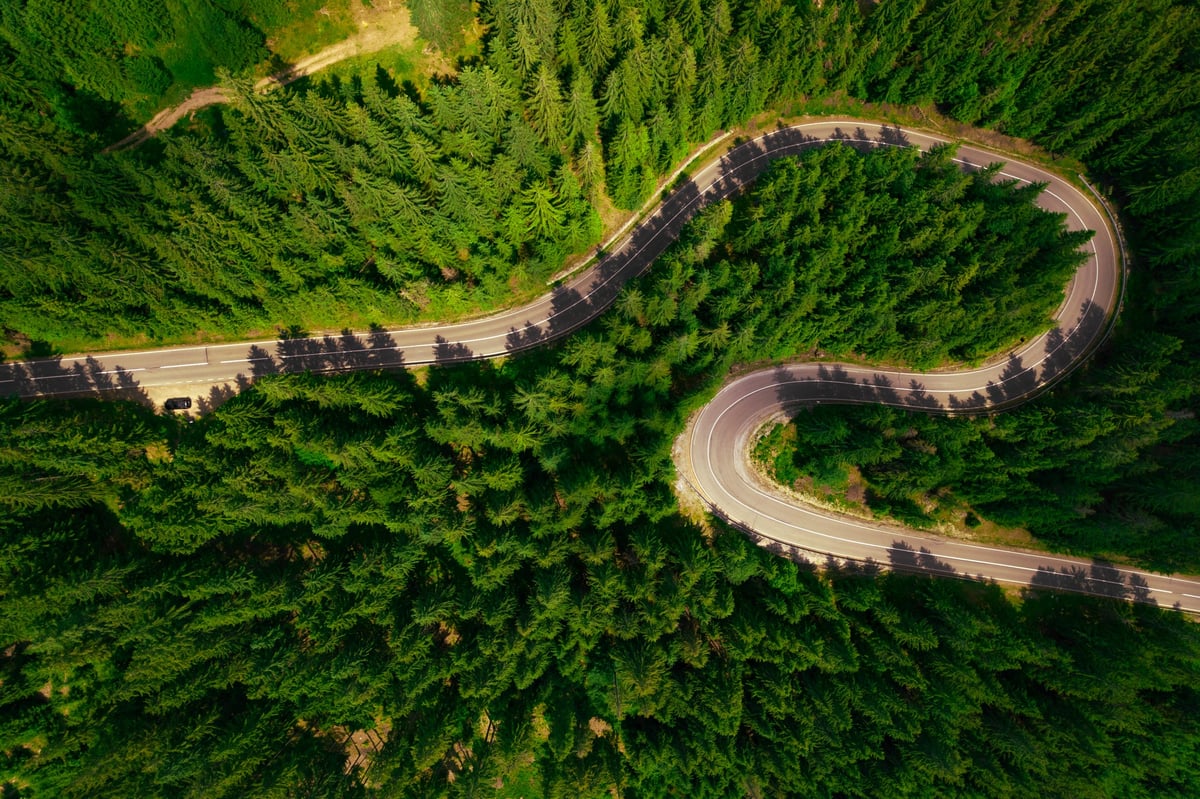
Aerial view of a road passing through mountain and green forest in summer

For most first-time visitors, 7 to 10 days is a very good starting point for Romania.

That is enough time to understand Bucharest, experience part of Transylvania and include one or two additional places without turning the trip into a sequence of hotel changes and long drives.

But the real answer depends on something more important than the number of days.

It depends on how much of Romania you are trying to experience at once.

Romania is larger and more varied than many first-time visitors expect. Bucharest, Transylvania, the Danube Delta, the Black Sea and the mountain regions may all look reasonably close on a map, but travelling between them takes time.

A good first trip is therefore not about fitting the maximum number of places into the available days.

It is about choosing a route that still feels like a journey when you are actually living it.

The short answer: 7–10 days works well for a first trip

If this is your first visit and you want a balanced introduction to Romania, we would usually start with 7 to 10 days.

That gives you enough time for:

  • Bucharest;
  • Sinaia and Peles Castle;
  • Brasov and Bran;
  • part of Transylvania;
  • and one additional experience such as wine country, a mountain route or the Romanian countryside.

Seven days works when the route is kept focused.

Ten days gives you more room to slow down.

And that difference matters.

A first visit should leave enough time not only to arrive somewhere, but also to understand why you came.

Romania tends to reward that kind of travel.

What can you realistically see in 3 days?

Three days can make a very good short introduction to Romania.

But we would not describe three days as enough to “see Romania.”

It is better to think of it as one strong base with one carefully chosen extension.

For example:

Day 1 — Bucharest
A full day in the capital gives you time to understand its architecture, history and very different neighbourhoods.

Day 2 — Bucharest or a nearby experience
Depending on your interests, this could remain a city day or become an experience outside Bucharest.

Day 3 — Peles, Bran or Brasov
A well-organised day trip can introduce you to the Carpathian side of Romania before returning to Bucharest.

For travellers with only three days, the biggest mistake is usually not seeing too little.

It is trying to see too much.

If half the trip becomes transport between regions, the itinerary may look impressive on paper but feel much less rewarding in practice.

What can you see in 5 days?

Five days gives you enough room to combine Bucharest and the beginning of Transylvania without rushing through every stop.

A realistic structure might look like this:

Day 1 — Bucharest
Arrival, orientation and a slower first day.

Day 2 — Bucharest
More time for museums, neighbourhoods, markets or a guided introduction such as Bucharest Highlights.

Day 3 — Sinaia and Peles Castle
Travel north through the Prahova Valley and spend time around Sinaia.

Day 4 — Brasov and Bran
Continue into Transylvania rather than treating every place as a separate day trip from Bucharest.

Day 5 — Return or flexible day
This gives you room for a slower morning, another stop or an easier return journey.

Five days is enough for a satisfying first experience if the route stays compact.

It is usually not the moment to add the Danube Delta, Black Sea and Sibiu simply because they also appear on a map of Romania.

Seven days in Romania

Seven days is where a first trip begins to feel properly balanced.

You can combine the capital, part of Transylvania and one additional experience without every day becoming a transfer day.

A seven-day journey might include:

  • Bucharest;
  • Sinaia and Peles Castle;
  • Bran;
  • Brasov;
  • one or two nights in Transylvania;
  • and either wine country, countryside or a seasonal mountain route.

This is also where flexibility becomes valuable.

If the weather is excellent, you may decide to spend more time outside.

If traffic is heavier than expected, you still have room to adjust.

If you discover somewhere you would like to stay longer, the itinerary is not so tight that one extra hour creates a problem.

A good private journey should work this way.

The itinerary is important.

But the traveller is more important.

That principle sits at the centre of the DACO approach to travel.

Ten days in Romania

Ten days is one of the strongest options for a first visit.

At this point, you are no longer simply visiting a few famous places.

You can begin to experience how the country changes as you move between regions.

A ten-day trip can comfortably combine:

Bucharest
Two days give you enough time to see more than the Old Town.

Prahova Valley and the castles
Sinaia, Peles and the route towards Brasov.

Transylvania
Brasov, Bran and potentially another town or rural area.

A different Romanian landscape
Depending on the season, this could mean Dealu Mare wine country, the Transfagarasan, countryside or another area connected naturally to your route.

The additional days also make the journey feel less transactional.

You are not simply arriving, photographing and leaving.

You have time for meals, conversations, changing plans and moments that were never written into the itinerary.

Those are often the parts people remember.

Two weeks in Romania

With around fourteen days, Romania starts to open up much more.

You can go beyond the classic Bucharest–Brasov–Bran corridor and begin to add regions that deserve more time of their own.

Depending on the season and your interests, this might include:

  • Sibiu;
  • Sighisoara;
  • the Danube Delta (which usually deserves at least two or three days rather than a rushed stop);
  • the Black Sea;
  • Bucovina;
  • Maramures;
  • longer road-trip sections;
  • or more time in rural Transylvania.

Two weeks also allows you to travel at a more natural rhythm.

You can spend two nights somewhere instead of constantly packing.

You can stop because a place feels interesting, not because the schedule says you have twelve minutes available.

And you can introduce regions that would feel unrealistic in a five-day itinerary.

For travellers interested in a genuine road trip through Romania, 10 to 14 days is often where the country begins to make much more sense.

Why Romania takes longer than it looks on the map

This is one of the most useful things to understand before planning a Romanian itinerary.

Distance and travel time are not the same thing.

Romania has modern roads and motorways, but many important tourism routes also pass through towns, mountain valleys and sections where traffic naturally slows.

The Prahova Valley between Bucharest and Brasov is a good example.

The distance is not enormous.

But weekend traffic can transform the rhythm of the journey.

Mountain areas introduce another variable.

Weather, road conditions, season and traffic can all matter more than the number of kilometres.

Local DACO Note

A 200-kilometre journey in Romania should not automatically be treated as a two-hour journey. Roads, towns, mountain sections and weekend traffic can change the rhythm considerably. When planning a first trip, we prefer to work with realistic travel time rather than map distance alone.

This kind of local interpretation is one of the things the DACO philosophy treats as essential: technology can organise information, but living here is what allows a local team to interpret it properly.

One region well is better than four regions badly

It is tempting to look at a two-week list of Romanian destinations and start compressing it into seven days.

We would usually recommend the opposite.

Choose fewer regions.

Experience them better.

Romania is not a country we would recommend crossing simply to collect landmarks.

If the choice is between adding another region and having enough time to understand the places already in the itinerary, we would usually choose the second option.

This does not mean travelling slowly for the sake of it.

It simply means leaving enough room for the journey to feel human.

A country is not experienced by counting attractions.

The DACO philosophy deliberately rejects checklist tourism in favour of attention, rhythm and quality of experience.

How many days do you need for Bucharest?

For most first-time visitors, we recommend at least one full day, and ideally two.

One day can cover the main landmarks and give you a first impression.

Two days allows the city to make more sense.

You have time to move beyond the historic centre, see different architectural periods, visit a museum or market and experience Bucharest at a more natural pace.

Bucharest is also a practical starting point for several journeys into southern and central Romania.

That makes it useful both as a destination and as a base.

How many days do you need for Transylvania?

For a first visit, three to five days gives you much more freedom than trying to see Transylvania as a single day trip.

You might combine:

  • Brasov;
  • Bran;
  • Sinaia and Peles;
  • one smaller town or village;
  • and enough time to enjoy the landscape between them.

Transylvania is especially well suited to travellers who prefer road trips, historic towns and countryside.

It also deserves more time than its famous landmarks alone suggest.

Bran Castle may be the international name people recognise first.

But the region becomes much more interesting once the journey stops being only about Dracula.

How many days do you need for the Danube Delta?

If the Danube Delta is an important part of your trip, we would generally give it at least two days, and preferably more depending on the experience.

The Delta is not a place that works particularly well as a box to tick between two long drives.

Travel there, boat logistics and the rhythm of the area all deserve time.

For travellers who love nature, the Danube Delta — Wild Waterways can become one of the most distinctive parts of a Romanian journey.

But it should be planned as a destination in its own right.

How many days do you need for a Romanian road trip?

For a broader road trip, 10 to 14 days is a much more comfortable range.

That does not mean you need two weeks to enjoy driving in Romania.

A shorter trip can work very well.

But if you want to combine several regions, scenic roads, cities and countryside, additional days protect the journey from becoming dominated by the car.

Some travellers prefer the freedom of renting a car in Romania.

Others prefer to travel with a driver so they can focus on the country rather than the road, or use private transfers where it makes the journey easier.

Neither option is automatically better.

The right choice depends on your confidence, route, pace and how much responsibility you want to carry during the journey.

How many days depending on how you travel

Different travellers need different rhythms.

Couples

For couples visiting Romania for the first time, 7–10 days is an excellent range.

There is enough time for cities, landscapes and slower meals without constantly changing hotels.

Families

Families often benefit from fewer bases and slightly longer stays.

A seven-day family trip with three hotels can sometimes feel better than a ten-day trip with six.

Energy matters as much as geography.

Road-trip travellers

For travellers who genuinely enjoy driving, 10–14 days offers far more freedom.

It allows you to explore smaller roads and regions without treating every kilometre as something that must be completed quickly.

Business travellers adding a few leisure days

Even 2–4 additional days can work very well.

Bucharest plus a carefully planned day or overnight trip into the Carpathians can create a very different experience from the business visit itself.

Returning visitors

Returning travellers can do the opposite of a first trip.

Instead of seeing more, choose one region and go deeper.

Romania changes enormously between Transylvania, the Delta, Bucovina, Maramures, the Black Sea and its wine regions.

A second journey does not need to repeat the first.

Should you change hotels every night?

Usually, no.

There are routes where a one-night stay makes perfect sense.

But constantly moving accommodation creates its own kind of travel fatigue.

Check-out.

Luggage.

Driving.

Parking.

Check-in.

Repeat.

When possible, we prefer building a route around a few well-chosen bases.

This gives travellers more time to experience the destination and less time managing the mechanics of moving through it.

It also makes unexpected changes easier.

A rainy afternoon or longer lunch does not become a logistical problem.

Should you take day trips from Bucharest or stay overnight?

Both can work.

The decision depends on the destination.

Some experiences work naturally as day trips from Bucharest.

Others improve considerably when you stay overnight.

For example, Royal Castles & Dracula’s Legend can work well as a private day experience from Bucharest.

But if you want to explore Brasov, Bran and more of Transylvania at a slower pace, an overnight stay creates much more room.

The same principle applies across the country.

The question is not:

Can this technically be done in one day?

The better question is:

Would doing it in one day create the experience you actually want?

What should you leave for another trip?

This may be the most useful question in the entire guide.

You do not need to see all of Romania the first time.

If you have seven days and already plan to see Bucharest and Transylvania, adding the Danube Delta, Black Sea, Sibiu and Maramures may create more movement than experience.

Leave something for another journey.

Romania does not become less valuable because you did not see everything.

Quite the opposite.

Knowing that there is still another region to discover is one of the reasons people come back.

Our recommendation for a first visit

If we were helping a first-time international traveller begin planning Romania without knowing anything else about their preferences, we would generally use this framework:

3–4 days
Bucharest + one carefully chosen experience outside the city.

5 days
Bucharest + a compact introduction to the Carpathians or Transylvania.

7 days
A strong first journey combining Bucharest, Transylvania and one additional experience.

10 days
One of the best balances for a first visit: enough variety without unnecessary rushing.

14 days
A proper multi-region journey with room for the Delta, Black Sea, deeper Transylvania or another region.

These are not rules.

They are starting points.

The right itinerary depends on the season, arrival and departure times, interests, travel style and how much movement feels enjoyable to you.

Planning the number of days around the season

The season can change what is realistic.

Summer brings longer daylight and greater access to mountain routes.

Winter creates a different rhythm.

Spring and autumn can be excellent for city and cultural journeys.

If you are still deciding when to come, our guide Best Time to Visit Romania: A Local Guide to Every Season explains how the country changes throughout the year.

And if this is your first trip, First Time in Romania: What International Travellers Should Know covers the practical details that are useful before building the itinerary. You can also explore the full Romania Travel Knowledge Hub if you would like more guidance.

DACO Team

Local travel knowledge from DACO Private Travel, Bucharest.

Romania, Privately Arranged.

Common questions

Frequently Asked Questions

Not sure how much fits into your trip?

Tell us how many days you have and what you would most like to experience. We can help you understand what fits naturally — and what may be better left for another journey.

Plan My Trip