Romania Travel Knowledge Hub
By Neli Budeanu
Co-founder, DACO Private Travel · Former hospitality professional in Bucharest
Based on my experience living in Bucharest, working in hospitality and helping organise travel for international visitors to Romania.
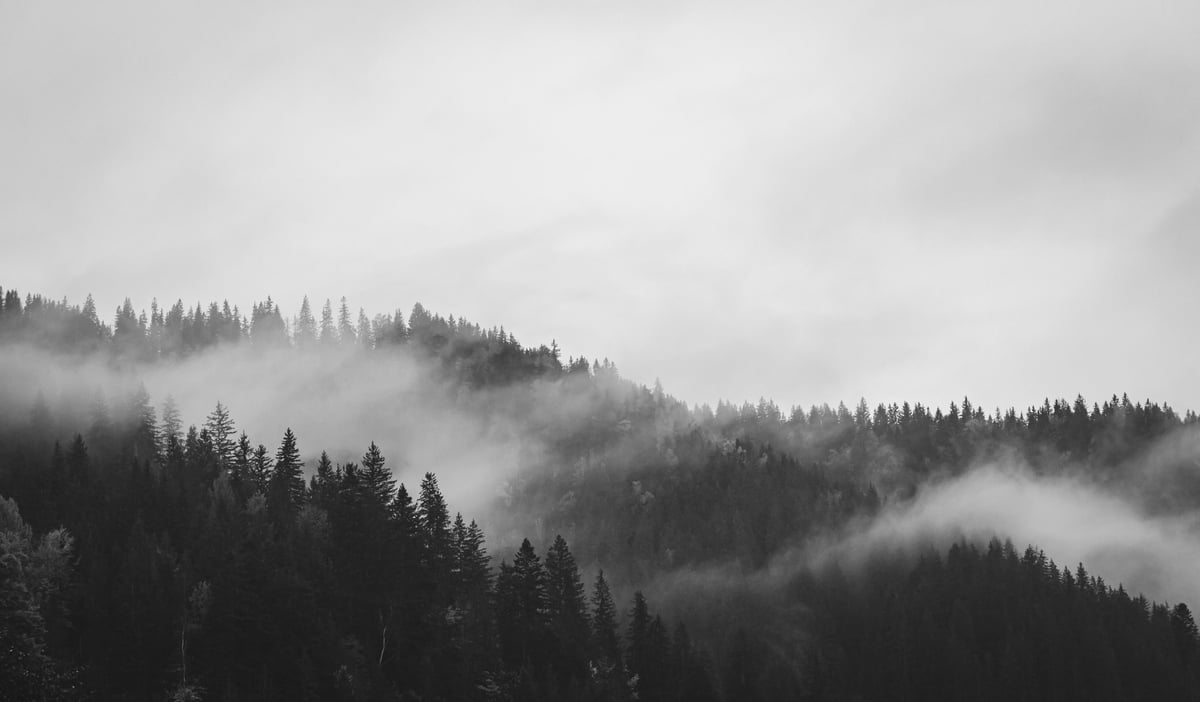
Romania is one of those countries that often looks simpler on a map than it feels once you are actually travelling through it.
Distances can be deceptive. A route that seems short can take longer than expected. A city that looks chaotic at first can become surprisingly easy to understand once someone explains how it works. And some of the places travellers remember most are not necessarily the ones that appear first in a search result.
I grew up in Romania and have spent most of my adult life in Bucharest. I also worked in hospitality, where I learned very quickly that what visitors need most is not more information. They need the right information, at the right moment.
A guest rarely remembers whether you gave them ten recommendations. They remember whether you helped them avoid losing three hours in traffic, whether they knew what to expect at the airport, whether somebody explained that a route was longer than it looked, or whether they felt comfortable asking a question without feeling like they were causing trouble.
That is the perspective behind this guide. It is not a checklist of everything Romania has to offer. It is the practical introduction I would give to someone visiting the country for the first time.
One of the most common mistakes I see in Romania itineraries is trying to fit too much into too little time.
Bucharest, Bran Castle, Peles Castle, Brasov, Sibiu, Transfagarasan, the Danube Delta and the Black Sea may all look relatively close when viewed on a European map. In reality, the geography and road network make travelling between regions slower than many first-time visitors expect.
This is particularly important if you are used to countries with extensive motorway or high-speed rail networks. Romania rewards a slightly slower itinerary.
For a first visit, I would rather see someone spend meaningful time in Bucharest and Transylvania than rush through six places simply to say they were there.
Local DACO Note
From Bucharest, the Prahova Valley is one of the clearest examples. On a quiet weekday, the route towards Sinaia and Brasov can feel straightforward. On a busy weekend or holiday period, traffic can change the entire day. When possible, leave early. In Romania, good timing is sometimes more valuable than adding another stop.
Bucharest tends to divide first-time visitors. Some immediately like its energy. Others need a little time.
It is not a perfectly preserved historic city, and it does not try to be one. You will see Belle Époque buildings beside communist architecture, contemporary restaurants beside neighbourhood markets, wide boulevards beside streets that still feel almost residential. That contrast is part of the city.
If it is your first time here, I would give Bucharest at least one full day, and preferably two.
The Old Town is useful for orientation, but it is not the entire city. Areas around Calea Victoriei, the Romanian Athenaeum, the Village Museum, northern Bucharest and some of the quieter residential neighbourhoods give you a much more complete impression. If you would like a guided introduction, our Bucharest Highlights tour is a comfortable way to cover the essentials with someone local. Bucharest also works well as a base for private day trips, particularly if you do not want to change hotels every night.
Romania is now part of the Schengen Area. Internal land-border checks with other Schengen countries were lifted from 1 January 2025, following the earlier removal of air and sea border checks.
For travellers who require a Schengen visa, Romania applies the standard short-stay framework. The general rule is up to 90 days in any 180-day period across the Schengen Area, subject to the traveller's nationality and individual circumstances.
I would never rely on a travel article alone for visa rules. They change. Before travelling, check the Romanian Ministry of Foreign Affairs E-VISA system for your nationality, passport type and purpose of travel.
A newer point for non-EU travellers: EES. For many non-EU visitors, the European Entry/Exit System is now relevant. Romania participates in EES, and the system became fully operational across participating external Schengen borders on 10 April 2026. It digitally records entries and exits for many non-EU nationals travelling for short stays and uses biometric information such as facial images and fingerprints. This does not make Romania difficult to enter, but it is worth knowing before you arrive so the border process does not come as a surprise.
The currency is the Romanian leu. Romania uses the Romanian leu (RON), not the euro.
Cards are widely accepted in Bucharest, larger cities, hotels, restaurants and most organised tourist locations. I still recommend carrying a modest amount of cash, especially if you are travelling through smaller towns, rural areas, traditional markets or places where card terminals may not always be practical.
A small point from hospitality: avoid changing large amounts of money at the first exchange office you see simply because it is close to the airport or a tourist attraction. Look at the rate and commission first. And when a card terminal asks whether you want to pay in RON or in your home currency, I generally prefer paying in the local currency and letting my own bank handle the conversion.
English is easier than many visitors expect. In Bucharest, hotels, restaurants, tourism businesses and younger generations, English is widely spoken. Outside the major cities, this becomes less predictable.
That does not normally create a serious problem. Romanians are often willing to help even when communication requires a mixture of basic English, gestures and patience.
One thing I have always noticed in hospitality is that international guests sometimes worry too much about "doing something wrong." You do not need to understand every cultural detail before arriving. Basic courtesy goes a long way. A simple bună ziua — good day — is always appreciated.
Romania feels safe to most visitors, but normal city awareness still matters. It is not a place where I would tell a first-time visitor to travel in fear.
As in any European capital or busy tourist destination, use ordinary awareness around crowded transport, nightlife areas and busy public places. Do not leave phones or wallets unattended, and use licensed or recognised transport services. For emergencies, Romania uses the European emergency number 112, which connects callers to services such as police, ambulance and fire response.
For me, the more useful distinction is between danger and inconvenience. Most first-time visitors are far more likely to lose time because of poor planning, traffic or an unrealistic route than because of a serious safety problem.
This is one of the points I would underline twice. Do not plan road travel in Romania using kilometres alone.
Road quality varies, traffic can become heavy around major corridors and mountain routes can be affected by season, weather and congestion. As an example, the Transfagarasan — Road Above the Clouds is a spectacular but seasonal route that demands its own planning. Police publish real-time road traffic information through the national Infotraffic system.
If you are renting a car in Romania, be realistic about how much driving you actually want to do on holiday.
Some travellers genuinely enjoy self-driving and Romania can be wonderful for that. Others discover that spending several hours concentrating on unfamiliar roads makes the journey less enjoyable. There is no universally correct option. For longer private journeys, a driver can sometimes make the difference between merely reaching a destination and actually enjoying the route.
Local DACO Note
In Romania, 200 kilometres do not always mean two hours. Mountain roads, towns along national roads and weekend traffic can change the calculation considerably.
Trains are useful, but they are not always the fastest answer. Romania's railway network connects many important cities and can be a pleasant way to travel when the route suits your itinerary.
But I would not assume that train automatically means faster or easier. For Bucharest to Brasov, for example, rail can make excellent sense. For a day combining several attractions, smaller towns or rural stops, it may not. This is why I prefer to plan transport around the journey, not choose the journey around a transport method.
Airport arrival is usually straightforward, but decide your transfer before landing. Henri Coandă International Airport is north of Bucharest.
My recommendation for a first-time visitor is simple: decide how you are getting into the city before you land. Not because Bucharest airport is particularly difficult, but because arriving tired in an unfamiliar country is the worst moment to start comparing transport options.
Depending on where you are staying and how much luggage you have, train, licensed taxi, app-based transport or a pre-arranged private transfer may all make sense. If you prefer certainty, arrange it in advance. If you prefer flexibility and are travelling light, public transport may be perfectly adequate.
Local DACO Note
If you arrive late or after a long journey, arranging your first transfer before landing removes one decision at exactly the moment most travellers are tired and least interested in solving logistics.
Seasons genuinely change the experience. Romania is not a destination where I would describe one season as universally "best."
Spring is pleasant but variable. Summer is excellent for mountain routes and long days, although Bucharest can become very hot. Autumn is one of my favourite periods, particularly in Transylvania and wine regions. Winter changes the country completely; mountain areas can be beautiful, but some seasonal routes and attractions operate differently.
The Transfagarasan is the obvious example: it should never be treated as a year-round road without checking current access conditions.
The practical lesson is to build your itinerary for the Romania that exists in the month you are visiting, not for the version you saw in somebody else's summer photographs.
Bran and Peles are very different places. First-time visitors often group Bran Castle and Peles Castle together because they appear on the same day-trip itinerary. They are not similar experiences, which is why our Royal Castles & Dracula's Legend tour treats each on its own terms.
Peles is a royal residence with extraordinary interiors and a very different historical context. Bran is associated internationally with the Dracula story, but its real history is more nuanced. I think both are worth seeing for different reasons.
What I would avoid is presenting Romania as if everything here is about Dracula. The legend is part of the attraction, and it is fun, but Romania has much more depth than that.
Romanians are often warmer than the first interaction suggests. This is something I have seen repeatedly in hospitality.
Romanian service can sometimes feel more direct than visitors from the UK or United States expect. Not every interaction comes wrapped in constant smiles and small talk. Do not mistake that immediately for hostility.
Once a conversation becomes personal, Romanians can be remarkably warm, generous and involved. Hospitality here often expresses itself through action: helping, feeding, driving, explaining, making sure you get where you need to go. That is one of the parts of Romania I would most like visitors to notice.
Of course you should see the major places if they interest you. But some of the best moments in Romania happen between them.
A lunch in a smaller town. A road through a village. A conversation with someone local. A market in Bucharest. A vineyard where nobody is trying to move you through in twenty minutes.
My own preference when travelling has always been to leave some space in the day. A completely packed itinerary looks efficient on paper and often feels exhausting in reality.
Romania is a country where a little preparation removes most of the friction.
Keep your itinerary realistic. Carry some RON. Check road conditions if you are driving. Verify visa requirements from official sources. Do not assume every mountain road is open year-round. And if a day matters to you, plan the logistics before you arrive.
The official Romanian E-VISA portal is the right place to check whether your nationality requires a visa and what entry conditions apply. And if you are travelling from outside the EU/Schengen framework, read the current EES guidance as part of your preparation.
For me, Romania is not a polished destination in the conventional sense. That is part of its character.
It can be beautiful and frustrating on the same day. Elegant and rough around the edges. Very modern in one place and deeply traditional an hour later. The mistake is expecting it to behave like somewhere else. The reward comes when you allow it to be itself.
My background in hospitality taught me that good travel is rarely about removing every surprise. It is about removing the wrong surprises — the ones created by confusion, poor information and avoidable logistics — so there is more space for the good ones. That principle is also a large part of why we are building DACO Private Travel — not to make Romania feel manufactured, but to make it easier to experience well.
Neli Budeanu
Co-founder, DACO Private Travel
Former hospitality professional, Bucharest
Common questions
If you would rather spend less time solving logistics and more time experiencing the country, tell us what you have in mind.
Plan My Trip