Romania Travel Knowledge Hub

Romania by Region: What Changes From One Part of the Country to Another

By DACO Team

Local travel knowledge from DACO Private Travel, Bucharest.

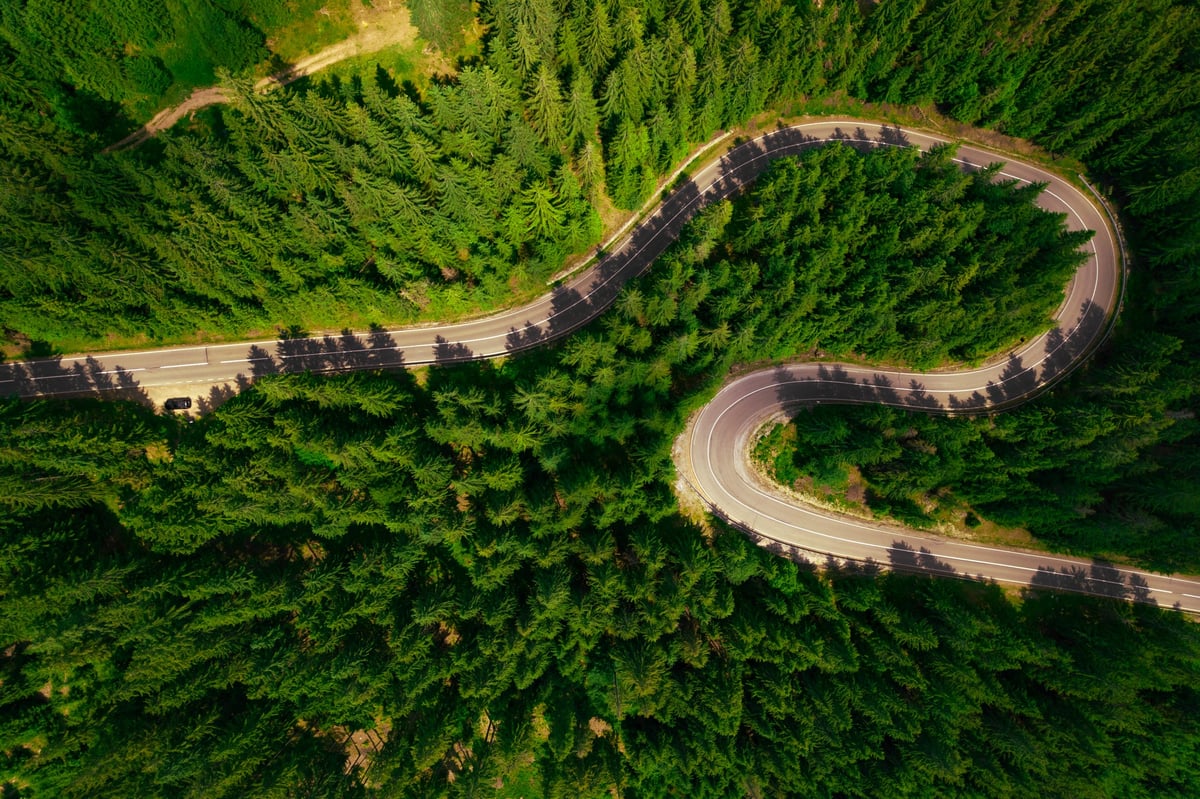
Aerial view of a road passing through mountain and green forest, showing Romania's varied landscape

Romania is one country.

But it rarely feels like one single travel experience.

Drive a few hours from Bucharest and the architecture changes.

Keep going and the rhythm changes.

The food changes.

The landscape changes.

The way villages look changes.

Even the distances begin to feel different.

This is one of the reasons planning a first trip to Romania can be surprisingly difficult.

You open a map and find Bucharest, Brasov, Bran, Sibiu, Sighisoara, Maramures, Bucovina, the Danube Delta, the Black Sea, the Transfagarasan.

Everything looks possible.

Technically, much of it is.

But a good Romanian journey is not created by connecting as many famous names as possible.

It is created by understanding that different parts of the country ask for different kinds of time.

Some regions work beautifully as a day trip.

Some deserve several nights.

Some are about cities.

Others are about roads.

Some reveal themselves through architecture.

Others through landscape, food or ordinary village life.

And some places only begin to make sense once you stop trying to hurry through them.

Before choosing a region, decide what you actually want from Romania

This sounds obvious.

It is not.

Many first-time travellers begin with a list:

Bucharest.

Dracula.

A castle.

Transylvania.

Maybe the mountains.

Maybe the Danube Delta.

Then they try to build a route around the list.

We would begin differently.

Ask yourself:

What would make this trip feel worthwhile to me?

History?

Mountain landscapes?

Slow countryside?

Food and wine?

Cities?

Wildlife?

Architecture?

Road trips?

Local culture?

A few beautiful days without constantly packing and unpacking?

There is no correct answer.

But the answer changes the itinerary completely.

Romania becomes much easier to plan once you stop asking:

“What should I see?”

and start asking:

“What kind of Romania do I want to experience?”

Bucharest and southern Romania: energy, contrast and the beginning of the journey

For many international travellers, Romania begins in Bucharest.

That makes the capital important, but not because it represents the whole country.

It does not.

Bucharest is fast, contradictory and layered.

Wide boulevards.

Interwar houses.

Communist architecture.

Contemporary restaurants.

Busy traffic.

Quiet residential streets.

Large parks.

Old churches almost hidden between newer buildings.

It is a useful introduction precisely because it gives you one version of Romania — and then allows the rest of the country to surprise you.

If you are interested in modern Romanian life, political history, architecture, food, cafés and the way old and new coexist, Bucharest deserves time.

But once you leave it, Romania changes quickly.

Who will enjoy Bucharest most?

Bucharest works particularly well for travellers who enjoy:

  • cities with complicated histories;
  • architecture rather than postcard perfection;
  • restaurants and contemporary urban life;
  • museums and political history;
  • cafés and neighbourhood walking;
  • using one city as the beginning or end of a wider trip.

It is also a practical base for several journeys north from the capital.

But we would not spend an entire Romanian trip only here unless the city itself is the reason you came.

Bucharest explains part of the country.

The road out of Bucharest explains another. If you would like to understand the capital properly before heading north, we have a focused Bucharest guide for first-time visitors and a Bucharest Highlights tour that works well as an orientation.

The Prahova Valley: where the city begins to give way to the mountains

For many first-time travellers heading north, the Prahova Valley is the first major transition.

Bucharest gradually disappears.

The mountains begin.

Sinaia appears.

Peles Castle introduces Romania's royal history.

Further along, mountain towns and the road towards Brasov change the atmosphere again.

This corridor matters because it connects several worlds.

Royal Romania.

Mountain Romania.

Transylvania.

And, depending on the route, some of the country's best-known attractions.

It is also a place where realistic timing matters.

On a map, the journey seems straightforward.

In reality, traffic, weekends, weather and season can change the rhythm considerably.

Local DACO Note

The Prahova Valley is a good example of why we do not plan Romanian road journeys only by kilometres.

The destination may be close enough on the map.

The more important question is what the road is likely to feel like on that particular day.

Transylvania: not one destination, but several different experiences

Transylvania is probably the Romanian region international travellers know best by name.

But it is often misunderstood as one compact destination.

It is not.

Brasov feels different from Sibiu.

Sighisoara feels different from both.

A rural village feels different again.

The mountains create one version of Transylvania.

Its Saxon heritage creates another.

Castles and fortifications add another.

And then there is everyday contemporary life, which does not always resemble the romantic image people arrive with.

This is why we would rarely describe Transylvania simply as “the Dracula region”.

That story exists.

It is part of the tourism landscape.

But it is only one layer.

For a full picture of what the region contains and how long it deserves, see our dedicated Transylvania Travel Guide.

Brasov: an easy first relationship with Transylvania

For many first-time travellers, Brasov works beautifully.

It is approachable.

The historic centre is compact enough to enjoy without complicated planning.

The surrounding landscape gives the city a strong sense of place.

And it connects naturally with Bran, Rasnov, mountain routes and other parts of Transylvania.

Brasov is especially useful for travellers who want a Romanian city that feels clearly different from Bucharest without immediately moving into a deeply rural itinerary.

One night can work.

Two gives the city more space.

If you want to use Brasov as a base for surrounding areas, longer can make sense.

Bran: visit for the place, not only the myth

Bran Castle is one of Romania's most famous international names.

That does not mean you need to approach it cynically.

Nor do you need to accept every Dracula story literally.

The most interesting experience is usually somewhere in between.

Understand the real building.

Understand its history.

Understand how the Dracula association developed.

Then enjoy it for what it is.

If you visit only to prove that the myth is inaccurate, you miss the fun.

If you visit believing the myth is the whole history, you miss the place.

Bran and Peles often work naturally within the same royal castles journey through the mountains, but they deserve to be understood as separate experiences rather than a single blurred stop.

Sibiu: a different Transylvanian rhythm

Sibiu often feels more composed.

Its central architecture, squares and Saxon heritage create a different atmosphere from Brasov.

Travellers who enjoy architecture, walking and spending time in a city rather than moving constantly between attractions may find Sibiu particularly rewarding.

It also works naturally within a longer Transylvanian route. Our Sibiu Travel Guide explains what to see, how many days to allow and where Sibiu fits.

We would usually resist treating Brasov, Sibiu and Sighisoara as interchangeable historic towns.

They are not.

The point of visiting more than one is precisely to notice the differences.

Sighisoara: small scale matters

Sighisoara can be experienced relatively quickly.

That does not mean it should be rushed.

Its scale is part of its appeal.

It is one of those places where the pleasure is not simply in reaching individual sights.

It is in moving slowly through a small historic environment.

If your itinerary has become very aggressive, Sighisoara is a good place to remember that walking without accomplishing much can still be a worthwhile afternoon.

For travellers building a longer Transylvanian journey, Sighisoara often makes more sense as part of a tailor-made route than as a rushed extension from Bucharest. This is the kind of journey that can be shaped through DACO Concierge around the traveller's available time and pace.

Rural Transylvania: where the journey changes again

Outside the better-known towns, Transylvania can become quieter.

Villages.

Fortified churches.

Agricultural landscapes.

Smaller roads.

A different relationship with time.

This is where travellers looking for “authentic Romania” need to be careful with the word authentic.

People here are not living as part of a historical exhibition.

Villages change.

Homes change.

Young people leave and return.

Cars sit beside traditional houses.

Satellite dishes appear on old roofs.

Contemporary life exists alongside older patterns.

That does not make the place less authentic.

It makes it real.

For us, rural travel becomes meaningful when visitors are curious rather than demanding that a village perform the past for them.

Maramures: travel more slowly or you will miss the point

Maramures is one of the regions we would least want to squeeze into a rushed itinerary.

It sits far enough from the standard Bucharest–Brasov route that going there requires intention.

And that is part of its value.

Maramures is known for wooden churches, gates, rural landscapes and traditions that remain visible in everyday life.

But the region is not best understood by arriving, photographing a wooden church and leaving.

The road itself matters.

Villages matter.

People matter.

The distances between individual sights can feel like part of the experience rather than wasted time.

This is a place for travellers who enjoy seeing how a region lives.

Who should prioritise Maramures?

We would particularly consider it for travellers interested in:

  • rural culture;
  • vernacular architecture;
  • wooden churches;
  • photography;
  • traditional crafts;
  • slower road journeys;
  • village landscapes;
  • staying somewhere smaller rather than moving between major cities.

If your priority is seeing Romania's headline attractions in five days, Maramures may not belong in that first itinerary.

That is not a criticism of Maramures.

It is respect for the time it deserves.

For the regional detail — what to see, where to stay, how many days the region needs and how the eight UNESCO wooden churches are distributed across the county — our Maramureș Travel Guide covers it properly.

Because Maramures sits outside the usual Bucharest day-trip pattern, we would normally think of it as part of a wider Romanian journey rather than a single excursion. For travellers who want to include it, DACO Concierge can help shape the route and coordinate the practical parts around the rest of the itinerary.

Bucovina: monasteries, landscape and a quieter kind of attention

Bucovina offers another very different experience.

Its painted monasteries are the obvious draw.

And they deserve the attention.

But what often stays with people is the relationship between the monasteries and the surrounding landscape.

These are not simply decorative historic buildings placed into an itinerary.

They belong to a religious and cultural landscape that still matters.

You do not need to be religious to appreciate that.

You simply need enough curiosity to understand that you are entering places with meaning beyond tourism.

Bucovina is particularly rewarding for travellers interested in art, religious heritage, history and rural landscapes.

Like Maramures, it works much better when given time.

Trying to add it casually between Bucharest and Transylvania can make the geography work against the experience.

Bucovina is another good example of a region that benefits from being designed into the journey from the beginning rather than added at the end. For the regional detail — which churches are actually UNESCO, where to base yourself and how many days the region needs — see our Bucovina Travel Guide.

It can also be considered within a custom Romanian itinerary through DACO Concierge when the wider route supports it.

Moldova: often passed through, rarely understood by first-time visitors

Romania's Moldova region is sometimes overshadowed internationally by better-known Transylvanian destinations.

That does not mean it lacks depth.

Iasi, for example, carries major cultural and historical importance.

The wider region has its own architecture, religious heritage, food traditions and social character.

For a first-time visitor with seven days, Moldova may not be the obvious priority.

For a second or deeper Romanian trip, it can become much more interesting.

This distinction matters.

Not every region needs to be included in the first visit to justify its importance.

Some of the best travel planning comes from accepting:

We will not see this now.

That leaves something worth returning for.

The Danube Delta: Romania stops behaving like a road trip

The Danube Delta changes the logic of travel.

This is one of the clearest regional transitions in the country.

Until this point, you may have been thinking in terms of roads.

Drive here.

Stop there.

Continue tomorrow.

In the Delta, water becomes part of the transport.

Boats matter.

Timing works differently.

Wildlife matters.

Weather matters.

The entire rhythm changes.

It is one of the strongest examples of why Romania cannot be planned as one continuous type of holiday.

If you are still deciding how the Delta fits into your route, our Danube Delta Travel Guide covers where to go, how long to stay and how to plan it.

We offer a Danube Delta — Wild Waterways journey for travellers who want to experience that shift directly rather than simply read about it.

Who should go to the Danube Delta?

The Delta is especially worthwhile for travellers interested in:

  • birdlife;
  • wetlands;
  • nature;
  • photography;
  • fishing culture;
  • boat journeys;
  • landscapes that feel completely different from central Romania.

It is not something we would casually add as another “stop”.

If you go, make it a real part of the trip.

Give yourself enough time to arrive, experience it and leave without feeling as though the entire visit happened in transit.

Dobrogea and the Black Sea: another Romania again

Continue towards the Black Sea and the country changes once more.

The landscape opens.

The climate feels different.

The cultural history of Dobrogea introduces influences that are not always visible in central Romania.

Then you reach Constanta and the coast.

For some travellers, the Romanian Black Sea is about summer.

For others, Constanta is interesting for history, port-city atmosphere and the fact that it reveals a different geographic identity from Transylvania or Bucharest.

We run a Black Sea coastal escape for travellers who want to combine Constanta's history with a day by the water.

The coast is highly seasonal in the way people experience it.

A busy summer weekend and a quiet off-season day can feel like different destinations.

Because the coast is not one destination, our Romanian Black Sea Coast Guide compares Constanța, Mamaia, Eforie, Costinești, Neptun, Mangalia and Vama Veche, so you can decide which part of the coast actually suits your trip.

That is worth considering before you decide whether the Black Sea belongs in your itinerary.

Dealu Mare: Romania through wine rather than landmarks

Not every regional journey needs a famous monument.

Dealu Mare is a good example.

The wine region north of Bucharest creates a different kind of day.

Countryside.

Vineyards.

Longer lunches.

Wineries.

Conversation.

For travellers who have already spent several days moving between castles, cities and museums, a wine-country day can create useful contrast.

This is something we think about often when planning.

The best itinerary is not simply a progression of increasingly famous attractions.

Contrast matters.

A castle after another castle can become less interesting.

A slow lunch in wine country after several busy sightseeing days can reset the entire journey. Our Romanian wine country escape is built around exactly that idea. If you are deciding which wine area belongs in your route, our Romanian Wine Regions guide compares Dealu Mare, Drăgășani, Târnave, Cotnari and Dobrogea.

Oltenia: a region many first itineraries miss

Western southern Romania often receives less attention from first-time international travellers.

Oltenia has monasteries, landscapes, traditional crafts, historic towns and mountain access.

For travellers driving towards western Romania or deliberately exploring beyond the standard route, it can become very rewarding.

But again, we would not add it simply because there is space left on a map.

A region deserves to make sense within the journey.

Not merely fit geographically.

For travellers deliberately exploring beyond Romania's standard first-time route, Oltenia can also be built into a broader tailor-made journey through DACO Concierge.

Banat and western Romania: a different relationship with Central Europe

Move towards western Romania and the country's character shifts again.

Timisoara is one of the clearest examples.

Its architecture, urban planning and historical influences can feel quite different from Bucharest.

The wider Banat region reflects a long history of cultural mixture and Central European influence.

For travellers entering Romania overland from Hungary or Serbia, western Romania may become the natural beginning of the journey rather than an extension added at the end. Inland from here, the Apuseni Mountains offer caves, karst and rural mountain travel as a distinct western Romania experience.

That is another reason we dislike designing every Romanian itinerary from Bucharest outward.

The best route depends partly on where the traveller is actually coming from.

For a west-to-east or multi-region journey, DACO Concierge can help structure the Romanian itinerary around the traveller's actual arrival point rather than forcing every route to begin in Bucharest.

The Carpathians are not one destination either

It is easy to say:

“I want to see the Romanian mountains.”

But the Carpathians stretch across a large part of the country.

Different roads provide completely different experiences.

Some journeys are about viewpoints.

Some about hiking.

Some about mountain towns.

Some about driving itself.

The Transfagarasan is one example.

The Transalpina is another.

Then there are countless smaller mountain routes where the road receives far less international attention.

The important thing is to remember that high-altitude road experiences are seasonal and weather-dependent.

A mountain itinerary needs some humility.

You can plan the route.

You cannot schedule the mountain.

The Transfagarasan: when the road becomes the experience

Some journeys have a destination.

The Transfagarasan is one of those journeys where the road itself can become the destination.

That changes how the day should be planned.

If you spend the entire drive worrying about reaching every planned stop, you may miss the reason you came.

Views change.

Weather changes.

Traffic changes.

People stop.

Sometimes wildlife appears.

Sometimes visibility disappears.

The successful day is not necessarily the one that followed the schedule most accurately.

It is the one where the road had enough space to be experienced.

When seasonal conditions allow, the Transfagarasan road is one of the clearest examples of a day built around the drive itself.

Romania changes through food too

Regional difference is not only geographic.

You begin noticing it on the table.

Ingredients.

Soups.

Cheeses.

Meat dishes.

Influences from neighbouring cultures.

Local wines.

Desserts.

Methods of preserving food.

Even the idea of what constitutes a proper meal can vary.

This is another reason we would not recommend spending an entire Romanian trip eating only in hotel restaurants or internationally familiar places.

You do not need every meal to become a culinary investigation.

But occasionally eating according to where you actually are can help the region become much more memorable.

Architecture tells you where you are

One of the easiest ways to begin recognising regional differences is simply to look at buildings.

Bucharest's grand late-19th and early-20th-century architecture.

Saxon Transylvanian towns.

Wooden churches in Maramures.

Painted monasteries in Bucovina.

Traditional houses.

Communist apartment blocks.

Art Nouveau influences in western cities.

Orthodox churches.

Fortified churches.

Romania's history is visible in its built environment.

You do not need to know architectural terminology.

Just start noticing.

The country becomes easier to read.

Language stays Romanian. The cultural texture still changes.

Most of the country shares the Romanian language.

But that does not mean every region feels culturally identical.

Accents vary.

Local vocabulary varies.

Food traditions vary.

Historical influences vary.

Religious landscapes vary.

The relationship with neighbouring cultures varies.

Modern mobility has blurred some distinctions, especially in larger cities.

But regional identity still matters.

Ask someone where they are from and the answer may tell you much more than simply where they were born.

Which region should you choose for your first trip?

There is no universal answer.

But there are useful patterns.

If you have 3–4 days

Do not attempt Romania.

Choose one piece of it.

For many first-time international visitors arriving in Bucharest:

Bucharest + Sinaia/Peles + Brasov/Bran

can provide a strong introduction without pretending to cover the country.

If you have 5–7 days

You can begin creating a real regional journey.

For example:

Bucharest → Sinaia → Brasov → Transylvania

or

Bucharest → Brasov → Sibiu → return

depending on your priorities.

The temptation will be to add more.

Be careful.

Five good days are better than seven locations.

If you have 7–10 days

Now you have meaningful choices.

You can explore Transylvania with more depth.

You can consider adding Sibiu, Sighisoara or rural areas.

You can build around a mountain road when seasonal conditions allow.

Or you can deliberately choose a completely different direction such as the Danube Delta.

This is where Romania starts to become a journey rather than a collection of excursions.

If you have two weeks

Now regional contrast becomes possible.

Transylvania plus Maramures.

Bucharest and central Romania plus the Delta.

A broader road trip.

Western Romania.

Bucovina.

You still will not see everything.

And you should not try.

Two weeks gives you the privilege of choosing more.

Not the obligation to choose all.

Which Romania fits which traveller?

If you love cities and history, begin with Bucharest, Brasov, Sibiu and perhaps Sighisoara.

If you love mountain roads and landscapes, build around the Carpathians and give seasonal routes enough flexibility.

If you love rural culture, consider Maramures, Bucovina and parts of rural Transylvania.

If you love wild nature, the Danube Delta offers an experience unlike almost anywhere else in the country.

If you love food and wine, allow time for regional restaurants, markets and places such as Dealu Mare rather than treating meals as gaps between attractions.

If you love architecture, Romania can become an extraordinary journey through different historical layers.

If you prefer slow travel, choose fewer bases and explore around them.

And if you still do not know what you want?

That is completely normal.

Sometimes the purpose of the first journey is simply to find out which Romania makes you want to return.

Do not choose regions only by fame

The most famous place is not always the best place for you.

This is worth saying clearly.

A destination may receive thousands of international visitors because it is easy to recognise, easy to market or connected with a famous story.

That does not mean another region would not suit you better.

If you dislike crowds and love rural photography, your Romanian journey may look very different from someone who has three days and wants Bran Castle.

Neither traveller is doing Romania correctly.

They are simply travelling differently.

That is the point of private travel.

The route should follow the person.

Do not confuse distance with difficulty

Some places are geographically far apart but relatively straightforward to combine.

Others look close and can create difficult days.

Mountains.

Road type.

Traffic.

Season.

Parking.

Ferry or boat connections.

Opening hours.

All of these can matter.

This is why the shape of an itinerary on a map can be misleading.

A beautiful line connecting destinations is not necessarily a beautiful journey.

Local DACO Note

When we review a Romanian itinerary, we rarely ask only whether the route is possible.

We ask something more useful:

Will the traveller still enjoy it by the time they reach the final stop?

That question removes many unnecessary kilometres.

A region should change the journey

This is one of our favourite tests.

If you are adding another region, ask:

What does it add that the trip does not already have?

Another historic city?

Perhaps you already have three.

Another castle?

Maybe one excellent castle is enough.

Another long driving day?

Probably not.

But perhaps the new region adds:

Wildlife.

Wine.

A completely different landscape.

Village life.

A slower pace.

A different historical story.

Then it may make sense.

Good itineraries are built through contrast as much as through geography.

You do not need to understand Romania before arriving

Some travellers research so much that the trip begins to feel like an examination.

You do not need to memorise regions.

You do not need to understand every historical influence.

You do not need to know which local dish belongs to which part of the country.

Arrive with curiosity.

The differences become easier to understand once you see them.

The important thing is simply to leave enough space in the itinerary to notice them.

When a standard tour stops being the right answer

Not every Romanian journey fits into a day tour.

And we do not think it should.

A first visit built around Bucharest, Peles, Bran or Brasov can work beautifully through focused private tours. But once a traveller starts asking about Maramures, Bucovina, Sighisoara, Banat or several regions in the same journey, the question changes.

It is no longer simply:

Which tour should I book?

It becomes:

How should the whole trip fit together?

That is where DACO Concierge becomes useful.

Instead of pretending every part of Romania should become another packaged excursion, we can help think through the route, transport, realistic timing, activities and the relationship between one region and the next.

Sometimes the right answer is a DACO tour.

Sometimes it is a rental car.

Sometimes it is private transport.

And sometimes it is a tailor-made itinerary combining several of them.

The service should follow the journey — not force the journey to follow the service.

Local DACO Note

If a Romanian itinerary starts needing several distant regions, multiple transport changes and different kinds of experiences, we stop thinking in terms of individual tours and start thinking about the journey as a whole.

What we would avoid on a first Romanian trip

We would be cautious about any itinerary that tries to combine:

Bucharest.

Brasov.

Sibiu.

Maramures.

Bucovina.

The Danube Delta.

The Black Sea.

And a major mountain road.

in a short trip.

It may be technically possible to draw the route.

That does not make it a good holiday.

You would spend a significant amount of time arriving somewhere just in time to leave again.

Romania rewards a little patience.

Not because the country is difficult.

Because its regions are genuinely different enough to deserve attention.

The best Romanian itinerary is not the one that contains the most Romania

It is the one that allows you to feel the differences.

A morning in Bucharest.

A royal castle in Sinaia.

The mountains beginning to rise.

An evening in Brasov.

A quieter Transylvanian road.

A village.

A completely different meal.

A day when the itinerary slows down.

Those transitions are part of the experience.

If every day is simply:

hotel → attraction → car → attraction → hotel,

eventually even beautiful places begin to feel similar.

Travel needs rhythm.

Romania especially.

Common questions

Frequently Asked Questions

If we could give one piece of advice

Do not try to collect Romania.

Choose a part of it.

Understand it a little.

Then let the next region feel different.

There is something deeply satisfying about leaving Bucharest and watching the mountains appear.

About leaving a city and entering a village.

About exchanging the road for a boat in the Danube Delta.

About seeing one architectural language disappear and another begin.

Those changes are not the inconvenience between attractions.

They are the journey.

And if your first trip ends with parts of Romania still unseen, that is not a planning failure.

It simply means the country has given you a reason to come back.


Planning more than one region?

Tell us how many days you have, where you are arriving and what parts of Romania interest you. If an existing DACO tour fits, we will tell you. If your journey needs something more tailored, DACO Concierge can help shape the route, transport and practical arrangements around the trip as a whole.

DACO Team

Local travel knowledge from DACO Private Travel, Bucharest.

Romania, Privately Arranged.