Romania Travel Knowledge Hub
By DACO Team
Local travel knowledge from DACO Private Travel, Bucharest.
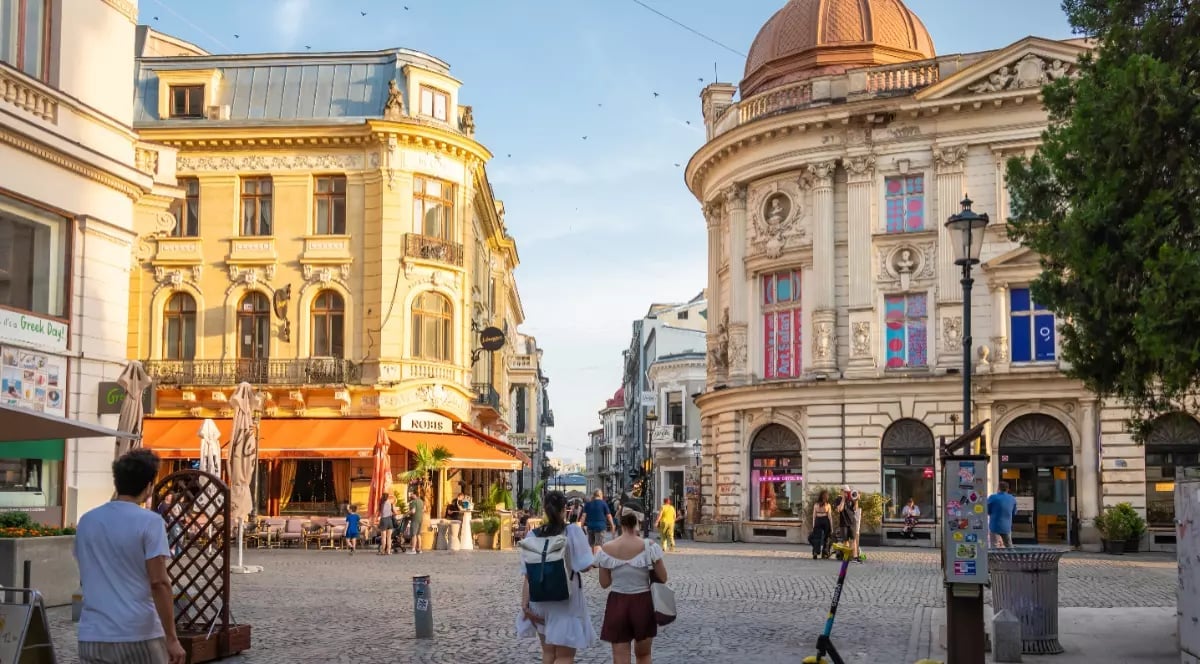
Romania can absolutely be travelled by train.
But that answer is only useful for about three seconds.
The better question is:
Which parts of Romania work well by train, and which parts become unnecessarily difficult if you insist on using rail for everything?
Because the train is not a good or bad way to travel through Romania.
It is a good or bad fit for a particular journey.
Some routes are straightforward.
Some are slow.
Some connect cities very naturally.
Some get you most of the way and then quietly hand you another transport problem.
A railway line on a map does not tell you:
how useful the timetable is;
how many changes you need;
where the station actually is;
how easily you reach the hotel afterwards;
whether the final attraction is another thirty kilometres away.
That is why we prefer a simpler principle:
Use the train where the train is strong. Use something else where it stops being useful.
City.
Station.
Train.
Another city.
Hotel.
That is where rail often becomes easy.
Nobody drives.
Nobody searches for parking.
Nobody worries about fuel.
Both travellers can look outside.
Read.
Work.
Sleep.
Talk.
Do absolutely nothing.
A good train journey removes driving without removing the journey.
For travellers who do not particularly enjoy driving, that can be a significant advantage.
Not create an identity.
Some travellers love rail.
Excellent.
Some would rather drive.
Also excellent.
The useful question is not:
"Are trains better?"
It is:
"Does the train make this part of my itinerary easier?"
If yes:
take it.
If not:
do not force the journey into rail because train travel feels like the more sophisticated way to cross Europe.
Transport should support the trip.
Not perform an idea of what the trip ought to look like.
This distinction matters.
A straightforward city-to-city route can work very well.
That does not mean the same method remains equally practical once the itinerary includes:
Bran;
small villages;
rural guesthouses;
mountain areas;
multiple castles;
remote trailheads;
three stops in one day.
The train is strongest when destinations naturally sit on useful rail corridors.
The moment the trip becomes dispersed, another transport method may begin making more sense.
This is one of the most important things to understand.
Open a map.
Two towns appear connected.
Excellent.
But:
Is the route direct?
How long does it take?
How often does it operate?
Do you need a change?
How much waiting exists?
When do you arrive?
What happens after arrival?
A geographical connection is only the beginning.
Geography is not a timetable.
Two places may not look very far apart.
Then the rail journey feels surprisingly long.
Another route may look substantial on the map and work quite comfortably.
This is why you should not estimate Romanian train journeys purely from distance.
The rail network has its own geometry.
Roads have another.
Your itinerary has a third.
Good planning begins when those three stop being treated as the same thing.
This sounds obvious.
Yet it happens constantly.
Bucharest.
Brasov.
Sighisoara.
Sibiu.
Cluj.
Beautiful line on a map.
Then somebody checks the trains.
Suddenly:
long wait;
late arrival;
awkward change;
very early departure.
A route can be geographically elegant and operationally terrible.
Check the actual journey first.
Then decide whether the route still deserves to exist.
Local DACO Note
If a rail connection is important to the day, check it before booking the hotel that depends on it. Geography is not a timetable.
This one decision can save an impressive amount of itinerary repair later.
For good reason.
Bucharest and Brasov are major destinations.
The route also makes sense for travellers who would rather not drive.
Depending on the current service and schedule, rail can be a very practical way to move between them.
But the useful lesson is larger than this particular route.
City-to-city rail is where Romanian train travel often makes the most intuitive sense.
The problems usually appear later.
You arrived in Brasov.
Excellent.
Now you want Bran Castle.
The train has successfully solved one part of the trip.
That does not mean the train continues to solve the next part.
You may need:
bus;
taxi;
ride-hailing where available;
private transfer;
tour;
rental car.
This is normal.
The train can solve the long movement beautifully and still leave the final twenty kilometres for another transport decision.
That is not rail failure.
That is itinerary design.
This is another common mistake.
Traveller says:
"I cannot reach every place by train, so I will rent a car for the entire trip."
Maybe.
But perhaps the better answer is:
train where rail is easy;
car where road freedom matters.
Transport methods do not need to compete.
They can hand the journey to each other.
For example, a traveller may prefer not to drive immediately after arriving in Bucharest.
Train to another city.
Stay.
Then rent a car for the rural or regional part of the journey.
Or:
drive through a region;
return the car;
continue by train between major cities.
The exact combination depends on availability and itinerary.
The principle is what matters:
Transport methods do not need to compete. They can hand the journey to each other.
More detail on balancing rail and road can be found in our Driving in Romania guide.
That is usually more intelligent than forcing one method to solve everything.
Train for the long city-to-city movement.
Private transfer for:
hotel connection;
remote accommodation;
castle;
village;
airport;
awkward last segment.
Again:
not because private travel is automatically better.
Because the journey changed.
Use the train where the train is strong.
Use something else where it stops being useful.
Simple.
We mean this.
If:
the route is direct;
the times work;
the station locations work;
nobody wants to drive;
there is no complicated onward movement,
then taking private transport simply because a private vehicle exists may add very little.
If the train solves the journey cleanly, take the train.
Private travel should appear where it adds value.
Not because we happen to have cars.
That distinction matters to us.
Suppose:
train — three hours;
car — two hours forty-five.
The car is faster.
Technically.
But one person must:
drive;
concentrate;
navigate;
deal with traffic;
park.
On the train:
both people are passengers.
That difference matters.
Three hours in which nobody has to drive can be worth more than two hours and forty-five minutes in which somebody does.
Travel time is experienced differently depending on what the traveller has to do inside it.
This is particularly relevant for couples.
In a car:
one drives;
one looks around more freely.
On the train:
both can watch the landscape.
Both can talk.
Both can read.
Both can sleep.
Our guide to Romania for Couples makes the wider point that travel labour can become uneven very quietly.
Rail can remove one entire category of responsibility.
That may be worth more than a small difference in travel time.
For solo travellers, rail can be especially useful.
No driving.
No parking.
No route management.
Fixed destination.
Time to read.
Time to rest.
The journey becomes something you take rather than something you operate.
That can make independent travel considerably lighter.
Our Romania for Solo Travellers guide is built around the same idea:
independence is not measured by how many inconveniences you personally manage.
This is where train comparisons often become incomplete.
The train takes you:
station to station.
Your journey probably begins:
hotel → station
and ends:
station → hotel.
That may be:
walking;
metro;
taxi;
bus;
transfer.
So when comparing train with car, calculate the entire movement.
Not simply:
departure time minus arrival time.
Arrival is not complete when the train stops. It is complete when the traveller reaches where they actually need to be.
Same principle.
Train ticket costs X.
Private transfer or car costs Y.
Easy comparison.
Except perhaps train travel also needs:
taxi to station;
taxi at destination;
another connection;
luggage storage;
extra waiting;
later hotel arrival.
Perhaps still cheaper.
Perhaps much cheaper.
Fine.
But calculate honestly.
The price of the ticket is not always the price of the movement.
Our Money in Romania guide makes this broader point repeatedly:
the visible price is not always the full cost of a travel decision.
Private transfer costs more.
Therefore better?
No.
Car rental costs more.
Therefore more freedom?
Not if the car spends four days parked.
Train is cheaper.
Therefore smarter?
Not if the route requires three awkward changes and destroys half the day.
Value exists inside the itinerary.
Not beside the price.
If you leave Bucharest by train, you may use Gara de Nord.
Your priorities there are admirably simple.
Train number.
Departure time.
Platform.
Ticket.
Enough time.
Train.
That is what the station needs to do for you.
It does not need to become part of your sightseeing opinion about Bucharest.
The station only needs to do one thing for you: get you onto the correct train.
Everything else can wait.
Not two hours.
Not necessarily.
But enough that one small uncertainty does not become dramatic.
Which platform?
Where is the carriage?
Is the departure board updated?
Where do you need to go?
A little margin makes all of this ordinary.
Zero margin makes every ordinary question feel like a crisis.
Hotel.
Metro.
Station.
Platform.
Train.
There are several links there.
If the train matters, give those links a little space.
Our Public Transport in Bucharest guide makes the same point:
a theoretically perfect connection can be a fragile one.
The train does not care that Google Maps promised you would arrive with ninety seconds to spare.
For Romanian rail journeys, use current official operator channels or authorised ticketing methods relevant to the service you are actually taking.
Before travelling, verify:
operator;
train;
date;
departure;
destination;
ticket conditions.
Avoid building your rail knowledge around an old screenshot from somebody's travel blog.
Ticketing systems change.
Apps change.
Rules change.
The basic principle does not:
Train travel becomes much easier when the ticket comes from the company actually operating the train.
This matters because travellers sometimes use "CFR" as though it means every possible rail journey in Romania.
CFR Călători is a major passenger operator.
Other passenger operators may exist on particular routes.
For most visitors, the institutional detail matters only when:
buying a ticket;
checking schedule;
understanding the service they have selected.
Know who operates the train you are taking.
Then use the relevant current information.
You do not need a thesis on Romanian railway governance.
Where the current operator and ticket conditions allow it, an electronic ticket can simplify travel.
No queue.
Ticket already available.
Details visible.
But understand:
whether identification is required;
how the ticket must be presented;
whether changes are allowed;
what happens if you miss the train.
Those rules can vary.
Check before travelling.
A screenshot may also be useful as backup where appropriate, though the actual valid ticket requirements should always be followed.
Confirmation email.
Booking reference.
Payment receipt.
Ticket.
These may not be identical.
Know what document actually proves your right to travel.
This is administrative.
Therefore boring.
We strongly support boring administration.
It leaves more room for Romania.
Especially at busy stations.
Two trains may travel in similar directions.
Departure times may be close.
Destination boards may show an endpoint beyond the city where you are getting off.
Train number gives you another way to confirm:
this is mine.
Small redundancy.
Very useful.
You are going to Brasov.
The train may continue elsewhere.
So the large destination shown may not say:
Brasov.
That does not automatically mean you are at the wrong train.
Check:
train number;
route;
scheduled stop.
This is normal railway travel.
Not a Romanian puzzle.
You are unsure.
Ask station staff where available.
Show ticket.
Show train number.
Ask another traveller if necessary.
Our language guide Do You Need to Speak Romanian? makes this easier than it sounds.
You do not need fluent Romanian.
A ticket plus:
"Brasov?"
can accomplish remarkable things.
Operational information can change.
The useful habit is:
check the current departure information at the station.
Do not become emotionally attached to an old platform number.
Trains have enough responsibilities without preserving your screenshot.
One small suitcase.
Easy.
Large suitcase.
Backpack.
Another bag.
Stairs.
Platform.
Train.
Overhead space.
Different journey.
Rail travel can still be excellent.
But luggage is part of the logistics.
Travellers planning repeated train changes should especially consider how much they actually want to carry.
Your suitcase does not become lighter because the route is scenic.
Our What to Pack for Romania guide helps with getting this right.
This is important.
The train itself may be easy.
Sit.
Ride.
Arrive.
But the family journey may include:
hotel checkout;
pushchair;
bags;
station transfer;
platform;
waiting;
toilet;
boarding;
finding seats;
arrival;
another transfer.
The train may be easy. The station sequence may be the actual journey.
Our Romania with Children guide uses this same planning logic throughout:
the route has to work for the people using it.
Especially with:
children;
heavy luggage;
older travellers;
anyone who simply prefers simplicity.
Option one:
direct.
Option two:
twenty minutes faster but requires a change.
The algorithm may prefer option two.
You are allowed to prefer option one.
Mental simplicity is part of travel efficiency too.
A change of train means:
first train arrives;
you get off;
find next platform;
board next train.
If the connection is tight, delay matters.
If the next service is infrequent, it matters even more.
Do not build an itinerary whose entire survival depends on everything operating to the minute unless you have checked the risk and are comfortable with it.
This should not be dramatic.
Railways everywhere experience disruptions.
Romanian rail is not exempt.
The useful planning response is not fear.
It is margin where the next event matters.
If you have:
flight;
tour;
last onward bus;
fixed transfer;
important reservation,
do not make the plan unnecessarily fragile.
The train does not know you have dinner booked at 19:30.
It will not become more punctual out of respect for the reservation.
Especially when missing the flight would be expensive.
The more important the onward connection, the more conservative the margin should become.
This is not specifically Romanian advice.
It is travel systems advice.
Independent systems do not coordinate merely because your itinerary placed them next to each other.
This is another mistake.
One journey runs late.
Traveller concludes:
Romanian trains are always late.
One journey runs perfectly.
Traveller concludes:
Romanian trains are completely reliable.
Neither is useful.
Reliability varies by:
route;
service;
day;
operational conditions.
When timing matters, check current information and leave margin.
Avoid converting one personal anecdote into national railway policy.
It is:
"How much does this particular itinerary depend on this particular train arriving exactly on time?"
That answer changes planning.
If your hotel is waiting and nothing else matters:
relax.
If your international flight leaves three hours later:
different decision.
The same train can be acceptable in one itinerary and too fragile in another.
A longer train journey may still be pleasant.
You can:
read;
talk;
work;
sleep;
look outside.
For some travellers, five hours on a train is easier than four hours driving.
For others, absolutely not.
Journey quality is personal.
Do not judge rail only by speed.
There is no need to romanticise inconvenience.
If a train takes significantly longer than the realistic alternatives and the traveller values time, say so.
A scenic railway journey does not become useful merely because trains are charming.
Patience is a travel style. It is not an obligation.
Long route.
Comfortable seat.
Book.
Landscape.
Coffee.
Nothing else planned.
That can be an excellent day.
The train becomes part of the rhythm.
You arrive later.
Fine.
The mistake is expecting a long rail day and a full sightseeing day to occupy the same calendar space without negotiating.
Time remains time even when the transport is pleasant.
Where current services and accommodation types exist, overnight rail may appeal because it can move the traveller while using nighttime hours.
Potential advantages may include:
saving daylight;
covering a long route;
reducing the need for an additional daytime travel block.
But night trains should be evaluated like any other accommodation-transport hybrid.
Will you actually sleep?
Is the available accommodation type appropriate?
When do you arrive?
What happens immediately after arrival?
A night train can save daylight. It does not automatically create sleep.
Rail travel attracts nostalgia.
Corridor.
Window.
Night.
Europe passing outside.
Wonderful.
Also:
somebody's alarm;
station stop;
movement;
temperature;
unfamiliar bed;
early arrival.
Perhaps you sleep beautifully.
Perhaps not.
Choose night trains because the timetable and experience suit you.
Not because cinema has already edited the journey.
Night train arrives.
Very early.
Hotel check-in:
much later.
Now what?
Luggage?
Breakfast?
Shower?
Energy?
This does not make the night train wrong.
It means arrival logic still exists.
Our Where to Stay in Romania guide makes the same point repeatedly:
check-in time and traveller-arrival time are not identical concepts.
If landscape matters, perhaps travelling during daylight adds value.
If you simply need to reach the next city, perhaps not.
There is no purity test.
Rail enthusiasts may care greatly.
Other travellers may prefer to sleep.
The best schedule is the one that supports the trip.
Driving?
You may tolerate more luggage because the car carries the inconvenience.
Train?
You carry it through:
hotel;
station;
platform;
carriage;
transfer.
Repeated rail journeys make every unnecessary bag more persuasive.
Our What to Pack for Romania guide has a simple principle:
pack for the journey you are actually taking.
A rail-heavy trip is a journey where portability matters.
Accessibility and luggage planning should always be route-specific.
Some travellers can use stairs easily.
Others cannot.
A parent with a pushchair has one kind of challenge.
A wheelchair user has another.
A traveller carrying two enormous suitcases has created a third.
Do not treat them as equivalent.
If step-free access matters, check the current accessibility information for the stations and route you actually need.
Rail does not automatically mean accessible.
Road travel does not automatically mean inaccessible.
The traveller's needs matter.
Station.
Platform.
Boarding.
Train type.
Connection.
Arrival station.
Last mile.
Accessibility exists across the entire movement.
Not only inside the carriage.
Rail stations in some cities may place travellers closer to useful urban areas than an airport would.
That can reduce:
transfer time;
parking;
car dependency.
But "central" is relative.
Your accommodation may still be:
ten minutes;
twenty minutes;
more
from the station.
Again:
station-to-station is not door-to-door.
Calculate the real destination.
This is why accommodation and transport should be planned together.
Hotel five minutes from station.
Excellent.
Train becomes easier.
Hotel across town with awkward connection.
Still possible.
But the comparison changes.
Our accommodation guide is built on precisely this principle:
Location is part of the itinerary.
The station is one of the locations that may matter.
This sounds almost too obvious.
Yet itinerary maps hide it.
Brasov:
city.
Station.
Urban transport.
Bran:
specific destination outside the same rail logic.
That is why a traveller can honestly say:
"Romania is easy by train"
after a city journey
and:
"Romania is difficult by train"
after trying to build a castle-and-village day.
Both experiences can be true.
The itinerary changed.
Do not assume that because a place has a station, it fits neatly into your schedule.
Check:
directness;
duration;
arrival;
onward route.
The same applies across the country.
Our Romania by Region guide is useful because regions should not be treated as dots with equal transport logic.
Romania is not one corridor.
If your trip becomes:
villages;
wooden churches;
rural accommodation;
multiple local stops;
regional roads,
rail may solve only part of what you actually came to do.
Perhaps train gets you into the wider area.
Then another transport method becomes more useful.
This is a perfect example of why:
"Can I travel Romania by train?"
is too broad a question.
You can.
But the experience you want may not live beside the station.
Monasteries do not organise themselves around railway convenience.
A city may be reachable by rail.
Then regional movement needs another plan.
Rental car.
Private driver.
Tour.
Local transport where appropriate.
The train can still be part of the solution.
It simply does not need to be the entire solution.
At some point:
water.
Boat.
Different system.
You do not solve that with more enthusiasm for rail.
A train may help you reach a gateway city depending on the route.
Then the journey changes form.
Our Danube Delta — Wild Waterways experience exists within that different operational environment.
The important lesson is:
transport should change when geography changes.
A coastal destination may work well as part of a city-to-city rail journey depending on current services.
But again:
specific resort;
hotel location;
season;
last-mile movement
still matter.
Do not confuse reaching the wider coastal area with reaching the exact place where you are sleeping.
The final kilometres remain real.
Our Constanta and Black Sea guide helps with thinking through that last part.
Bucharest–Brasov may work one way.
Another corridor may work differently.
Long-distance east-west travel can feel different again.
Regional lines have another rhythm.
A country-wide statement such as:
"Romania is easy by train"
or:
"Romania is bad by train"
compresses too much.
The better approach is route by route.
City-to-city?
Train may be excellent.
Multiple rural stops?
Car may become much more useful.
Mountain road?
Probably road transport.
Traveller uncomfortable driving?
Train plus local transport may be preferable.
Family with significant luggage?
Depends.
Couple wanting both people to relax?
Train may be attractive.
Photographer wanting spontaneous roadside stops?
Car.
The answer is hidden inside the journey.
A rental car gives you:
route choice;
stop choice;
departure choice;
access to places outside rail corridors.
That can be enormously valuable in Romania.
Our Driving in Romania guide is deliberately built around this.
But the car also gives you:
driving;
parking;
fuel;
responsibility;
traffic.
Freedom comes with operations.
You do not choose the route.
You do not choose the departure minute.
You do not stop because a village looks interesting.
But:
you do not drive;
you can move around mentally;
both travellers are passengers;
city-to-city logistics can become simple.
Different freedom.
The useful mistake to avoid is defining freedom only as control.
Sometimes freedom is not having to manage something.
Door-to-door.
Timing.
Stops.
Luggage.
Route flexibility.
Useful.
Costs more.
Requires booking.
Again:
different tool.
The traveller should not be told that one of these is the "real" way to travel Romania.
They solve different problems.
This may be the most mature transport plan.
Bucharest:
walk + metro.
Bucharest to Brasov:
train.
Regional castle day:
private tour or rental car.
Next city:
train again.
Airport:
whatever makes sense for that departure.
Excellent.
There is no prize for methodological purity.
The best transport system is not the one you use most. It is the one you use where it works.
Local DACO Note
If the train saves you from driving three hours but creates two hours of transfers afterwards, calculate the whole journey before congratulating the timetable.
The timetable may still win.
Just let the entire journey vote.
This is especially true after several road days.
Sit down.
Someone else moves the vehicle.
No navigation.
No parking.
No road decisions.
That change of responsibility can be refreshing even when the train is not dramatically faster.
Sometimes transport variety improves the trip simply because the traveller stops performing the same task every day.
Platform.
Connection.
Delay.
Another station.
This is the trade-off.
Travel without driving is not travel without logistics.
A good rail itinerary reduces the amount of waiting that does not add anything.
Again:
check actual connections.
Coffee.
Lunch.
Read.
Walk around.
Fine.
But do not pretend a three-hour connection is a delightful cultural experience unless you actually wanted it.
Sometimes waiting is simply waiting.
Travel advice becomes more useful when it stops marketing inconvenience.
Suppose the train segments themselves are reasonable.
Then you discover:
two hours between them.
Now total journey changes.
That does not automatically make the route bad.
Perhaps you can:
eat;
explore briefly;
use the time well.
But it needs to be planned as part of the day.
Not discovered after booking everything else.
Navigation and booking platforms are useful.
But when the journey matters, verify the actual service with the relevant current operator.
Especially when:
changes are involved;
tickets are separate;
different operators are involved;
the connection is tight.
An itinerary is only as strong as the information underneath it.
Where different operators or separate bookings are involved, understand what happens if the first journey is delayed.
Do not assume every onward connection is automatically protected.
This can become important.
If the consequence matters, verify the terms before travelling.
We would rather say:
check
than invent a universal rule that does not exist.
Travellers sometimes begin with:
Which pass should I buy?
Before deciding:
which trains will I actually take?
Reverse the order.
Build the route.
Then compare the relevant current ticket products or passes.
A transport product should solve the itinerary.
The itinerary should not exist to justify the transport product.
Where current fare structures offer different conditions, price and flexibility may trade against each other.
That is normal.
If your itinerary is fixed:
perhaps fine.
If the trip deliberately remains flexible:
understand the conditions before choosing.
Again:
the cheapest ticket is not automatically the best ticket.
Value depends on what you need it to allow.
Especially if the itinerary is still changing.
Route first.
Important anchors next.
Then transport bookings according to current availability and conditions.
Premature precision can create unnecessary rigidity.
An itinerary should become more specific as certainty increases.
Not before.
Other extreme.
Hotel booked.
Tour booked.
Dinner booked.
Train?
"We'll see."
Maybe.
But if the entire day depends on a particular rail connection, verify that it actually exists at the required time before building everything around it.
There is a useful middle ground between:
obsessive planning
and
fiction.
Commuters.
Students.
Families.
People going home.
People travelling for work.
Tourists.
Someone eating something that has an unexpectedly strong smell.
Normal railway ecosystem.
You do not need to turn every train into an "authentic Romanian experience".
Sometimes transport is simply transport.
That normality is useful.
Landscape changes.
Towns.
Fields.
Industrial areas.
Mountains.
Stations.
Places you would never intentionally visit.
That can be interesting.
But not every kilometre will look like a tourism campaign.
Good.
A country is allowed to contain infrastructure.
This should perhaps be written on more travel websites.
Some sections are beautiful.
Some ordinary.
Some urban.
Some industrial.
Some trees.
Some walls.
Some darkness because it is night.
A train journey is not a continuous documentary sequence.
When the view matters, enjoy it.
When it does not, read.
Slow travel is not the same thing as slow transport.
You can take a fast train and travel slowly.
You can take a slow train and rush through every destination.
Pace is created by the itinerary.
Not the speedometer.
That distinction matters.
Six trains in four days?
Probably not.
Three changes tomorrow?
Maybe not.
Moving hotel every night?
Still movement.
Rail may remove driving.
It does not automatically remove overplanning.
Our guide How to Plan a Romania Itinerary Without Trying to See Everything remains relevant no matter which vehicle is carrying you.
Arrival.
Hotel.
Walk.
Meal.
Nothing.
Do not use the fact that you were sitting on the train to justify immediately filling the rest of the evening.
Travel itself consumes energy even when somebody else operates the vehicle.
Your body still arrived.
Give it time to realise that.
Every movement has edges.
Pack.
Check out.
Reach station.
Wait.
Board.
Arrive.
Move again.
Check in.
That friction is smaller than driving for some travellers.
But it still exists.
This is another reason one good base can be more useful than moving every night.
Hotel near station?
Useful for early departure.
Hotel far from station but excellent for city experience?
Also potentially useful.
Now choose based on the trip.
Do not book accommodation as though transport does not exist.
Do not choose transport as though accommodation teleports to the platform.
The two systems meet every travel day.
You loved staying on the other side of town.
Excellent.
Now departure is early.
Taxi?
Metro?
Walk?
What runs at that time?
How much margin?
This is the kind of operational question that should exist before the morning itself.
Morning surprises are rarely improved by luggage.
Train arrives at 22:30.
Restaurant options?
Hotel reception?
Transfer?
Walking route?
Energy?
Again:
arrival time matters beyond railway punctuality.
A perfectly operated train can still deliver you into an inconvenient itinerary.
Transport does its job only inside a larger plan.
If a day trip depends on catching the final useful return service, know that before leaving.
A spontaneous dinner becomes less spontaneous when missing the train changes tomorrow.
That does not make rail unsuitable.
It means the timetable creates boundaries.
Cars create other boundaries.
Every transport method gives something and takes something.
Train:
fixed departures.
Car:
driver responsibility.
Private transfer:
cost and booking.
Public bus:
route/frequency.
Walking:
distance and weather.
There is no transport option made entirely of advantages.
Planning is choosing which disadvantages matter least for your trip.
This is important.
Some visitors enjoy driving abroad.
Some do not.
If the idea of:
road rules;
parking;
navigation;
mountain driving;
city traffic
already creates stress, that matters.
Do not rent a car because someone said:
"The only way to see Romania properly is to drive."
It is not.
You may see fewer dispersed places.
You may structure the route differently.
Still Romania.
Also true.
If waiting for trains makes you restless and spontaneous road stops are part of why you came:
drive.
Good travel advice should not recruit people into transport camps.
It should identify fit.
Castle day.
Several regional stops.
Rural route.
Mountain road.
This is where a private tour may have genuine operational value.
Not because the train is inferior.
Because a railway is designed to connect stations.
A private journey can be designed around places.
Different product.
Different problem.
This is equally important.
Perhaps there is a simple local bus.
Use it.
Perhaps a taxi solves ten kilometres.
Use it.
Perhaps walking solves one kilometre.
Walk.
The most expensive solution does not become more correct because it is private.
Our service should appear only where it improves the journey.
If a traveller says:
"I want to go from Bucharest to Brasov, I do not need stops, the train time works perfectly, and my hotel is easy from the station."
Our answer should be:
the train may suit you very well.
Not:
how can we replace that with our vehicle?
Trust is built partly through what a travel company is willing not to sell.
Perhaps:
late arrival;
multiple people;
heavy luggage;
remote accommodation;
several stops;
business timing;
children;
mobility considerations;
awkward onward transport.
Now private travel may remove enough complexity to justify itself.
The service should follow the journey. Not force the journey to follow the service.
Same principle.
Different transport.
Our private transfers page explains where this genuinely makes sense.
Several rural places.
No useful rail corridor.
Changing route.
Want to stop anywhere.
Regional exploration.
Now the car begins doing something the train cannot.
Our Driving in Romania guide explains the responsibility that comes with that freedom.
The useful decision is not:
train or car?
It is:
at what point does one stop being useful and the other start being useful?
Important.
There is sometimes an idea that the authentic country exists only on minor roads.
No.
Romania exists:
in trains;
stations;
cities;
villages;
motorways;
markets;
apartments;
restaurants;
suburbs.
You do not need a rental car to earn access to reality.
Choose transport for practical reasons.
Not authenticity theatre.
Passing through is not understanding.
Train window is not understanding either.
The transport mode does not automatically create cultural depth.
Attention does.
Time does.
Context does.
People do.
That is a much more useful standard.
If the itinerary is designed for rail.
This is the critical condition.
Choose:
cities;
routes;
bases;
connections
that rail serves reasonably.
Accept that some remote places may not fit.
Perhaps add:
one local tour;
one rental-car section;
one private transfer.
Then yes.
A traveller can absolutely build a meaningful Romania journey around trains.
This is equally true.
Take an itinerary built around:
rural roads;
remote castles;
multiple villages;
mountain stops;
spontaneous detours.
Remove the car.
Replace everything with rail.
Now the train appears "bad".
But the problem may be the mismatch.
Transport planning starts earlier than ticket purchase.
It starts when deciding what kind of journey you are building.
This is our preferred method.
What matters?
Which places?
How many days?
What rhythm?
Then:
Which parts work by train?
Which need road transport?
Where does walking solve it?
Where does a private transfer genuinely help?
Where should we stop adding destinations?
This produces a journey.
Starting with:
"We want to do Romania only by train"
can also work, but then destination choices should respect that constraint.
Common questions
Use the train where the train is strong.
Between cities.
On routes that make sense.
When nobody wants to drive.
When the timetable fits the day.
When the station connects naturally to what happens next.
Then stop asking the train to solve problems it was never designed to solve.
Rent a car when the journey becomes dispersed.
Use a bus when the bus solves the last part.
Take a taxi when ten kilometres do not need a transport philosophy.
Use a transfer when the remaining logistics justify one.
Walk when the station is close enough.
Leave margin when the connection matters.
Check the actual timetable before building the itinerary around it.
And remember that a journey does not become better because one transport method handled every kilometre.
The best transport system is not the one you use most. It is the one you use where it works.
DACO Team
Local travel knowledge from DACO Private Travel, Bucharest.
Romania, Privately Arranged.
Tell us which places matter, how much driving you want to avoid and where the journey becomes less straightforward. We can help you think through the route without forcing one transport method across the entire trip.
Plan My Trip