Romania Destinations · Prahova Valley · Bucegi Mountains
By Neli Budeanu
Co-founder, DACO Private Travel · Former hospitality professional in Bucharest
Local travel knowledge based on living in Romania, working in hospitality and helping organise journeys for international visitors.
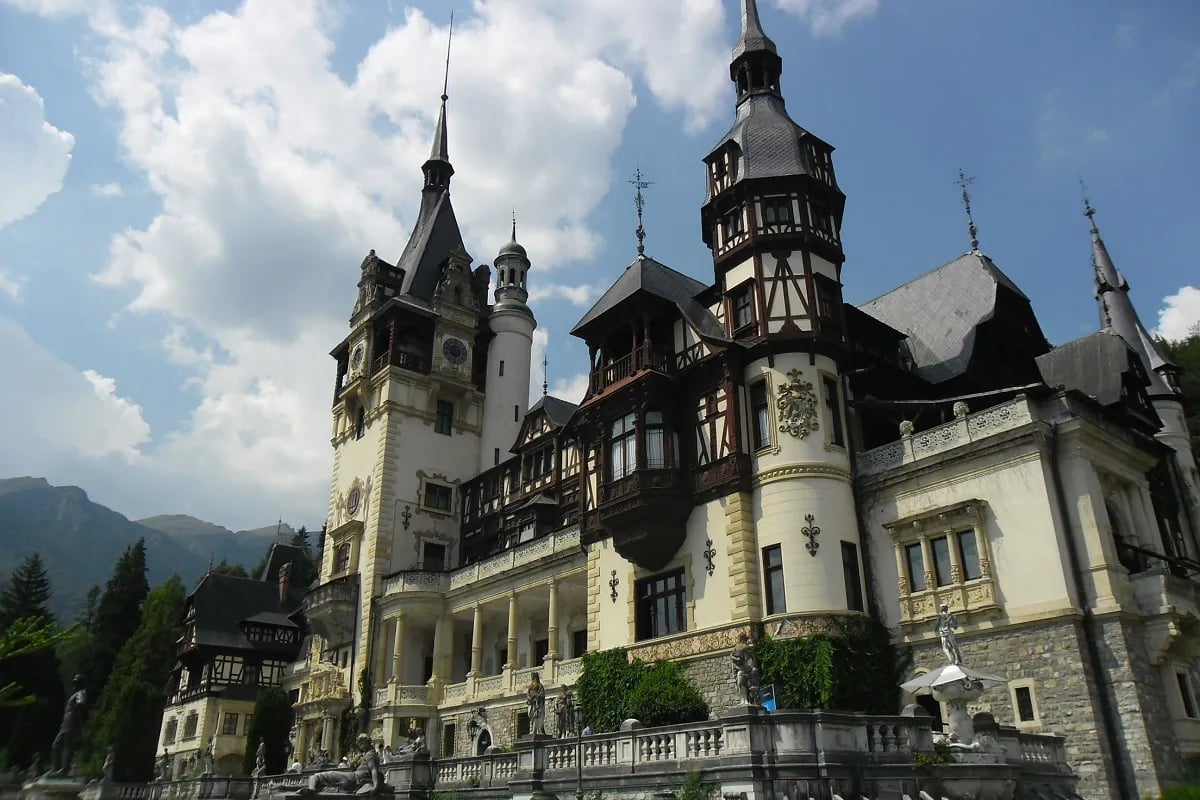
Most people arrive in Sinaia for one reason.
Peleș Castle.
That is a very good reason to come.
It is not the only reason to stay.
Sinaia sits in the Prahova Valley between Bucharest and Brașov, directly below the Bucegi Mountains. Within one relatively small destination you can move between Romanian royal history, a seventeenth-century Orthodox monastery and an alpine landscape rising toward 2,000 metres.
That combination is what makes Sinaia interesting.
For some travellers, it is an easy day trip from Bucharest.
For others, it should become the first stop on the way into Transylvania.
And for people who care more about mountains than castles, Peleș may not even be the main event.
The useful question is not simply:
“What is there to see in Sinaia?”
It is:
“Which version of Sinaia belongs in my trip?”
Yes. Sinaia is one of the easiest destinations to recommend on a first trip to Romania.
It combines:
For a first-time visitor primarily interested in Peleș, one day is enough.
If mountains, skiing or slower resort time matter, staying overnight makes much more sense.
The local answer to the questions most visitors ask — before the details.
| Question | Local answer |
|---|---|
| Is Sinaia worth visiting? | Yes |
| Best known for | Peleș Castle |
| What else matters? | Sinaia Monastery and the Bucegi Mountains |
| Day trip from Bucharest? | Very suitable |
| Direct train from Bucharest? | Yes |
| Need a car? | No, if staying mainly in Sinaia |
| How long? | Around 5–7 hours makes a very good day trip |
| Stay overnight? | Worth considering if mountains or onward travel matter |
| Cota 2000 worth visiting? | Yes when visibility and operations are good |
| Good in winter? | Yes, particularly for mountain and ski travel |
| Combine with Brașov? | Very naturally |
| Combine with Bran? | Yes, but road transport simplifies the itinerary |
Peleș dominates international attention for understandable reasons.
It is one of Romania's most distinctive royal residences and one of the country's major visitor attractions.
But Sinaia existed before Peleș.
And the mountains existed before Sinaia.
Understanding those layers changes the destination.
The town grew around Sinaia Monastery.
Romanian royalty later transformed Sinaia into an important royal and mountain resort.
Above both sits the Bucegi landscape.
So if you arrive, photograph the castle and immediately leave, you have seen the most famous thing in Sinaia.
You have not necessarily understood Sinaia.
That distinction becomes increasingly important if you have more than a few hours.
For most first-time international visitors, I would still put Peleș first.
The castle was built at the initiative of King Carol I, Romania's first king, and became one of the defining buildings of the Romanian monarchy.
The experience is very different from Bran Castle.
Bran feels defensive and vertical.
Peleș feels residential, decorative and deliberately sophisticated.
The interiors are part of the reason to visit.
This is not a castle I would plan only as a five-minute exterior photograph if it is open and tickets are available.
But it is also an attraction that now requires some planning.
Current access operates through timed visiting intervals, and visitor arrangements can change.
Check the official Peleș Castle visitor information and purchase only through the authorised official ticket system before structuring the rest of your Sinaia day.
For our full evaluation, read the Peleș Castle Travel Guide.
2026 Peleș visitor update
The Peleș National Museum currently announces that Pelișor Castle will close for preventive conservation from 28 September to 3 November 2026, while Peleș Castle will close from 2 November to 1 December 2026.
Always confirm current access on the official museum website before travelling.
Not necessarily.
Pelișor sits beside Peleș and forms part of the same royal estate, but the experience is smaller and more intimate.
If you are strongly interested in Romanian royalty — particularly King Ferdinand and Queen Marie — it can be a valuable addition.
If you have limited time, I would prioritise Peleș.
That is not because Pelișor is unimportant.
It is because travel improves when you allow one important place enough time instead of reducing two places to a race.
If you have the time and both are open, seeing them together creates a much richer royal-history experience.
This is where the chronology of the town changes.
Sinaia Monastery predates Peleș by almost two centuries.
Its construction began in 1690 and was completed in 1695, founded by Mihail Cantacuzino after a pilgrimage that took him to Mount Sinai and Saint Catherine's Monastery.
He brought the name back with him.
The monastery became Sinaia.
Eventually the settlement that developed around it inherited the same name.
That means the town is not called Sinaia because royalty discovered a beautiful mountain resort.
The religious history came first. Peleș came later.
For visitors interested in how places develop rather than simply what their most famous building looks like, this is an important piece of context.
Yes, particularly because it gives you something entirely different from Peleș.
The monastery is not simply another historic building.
It remains an active Orthodox religious community.
The old church, courtyards, later buildings and relationship with Romanian royal history make it one of the places that connects different periods of Sinaia unusually well.
You do not need several hours.
But I would not remove it from the itinerary simply because its international name recognition is lower than Peleș.
Enter respectfully. Remember that people may be praying or attending services.
And check the official Sinaia Monastery information if you need current visiting details. It is a religious site first. Visitor attraction second.
The mountains change the calculation entirely.
Sinaia sits below the eastern side of the Bucegi Mountains. For how the Bucegi fit into the wider Romanian Carpathians, see our Carpathian Mountains in Romania guide.
From the town, mountain transport allows visitors — when conditions and operations permit — to move through different altitude levels.
The current gondola system includes:
There are also cable-car and ski installations depending on current operations.
The second gondola section takes you from forested mountain terrain toward a much more open alpine environment.
And that is where Sinaia stops feeling like a castle excursion.
When the weather is good, yes.
Especially if you do not otherwise have a significant mountain experience in your Romania itinerary.
But this recommendation comes with an important condition:
check the mountain before you go up the mountain.
Weather in Sinaia town does not tell you everything about conditions at 2,000 metres.
Cloud. Wind. Visibility. Temperature. Technical operations.
All can change the experience.
Transport Urban Sinaia publishes current Sinaia mountain and gondola conditions, including which installations are operating.
Check that information on the morning of your visit.
A sunny photograph from somebody's July holiday is not operational information.
Mountain transport can also be affected by wind, weather, technical maintenance, seasonal operations and safety conditions. Do not guarantee that every cable installation will operate on the day you visit.
If visibility is good, I think so.
The point is not simply that you can say:
“I went to 2,000 metres.”
The value is the transition.
You leave the resort. Move through forest. Gain altitude.
Reach a landscape that feels completely different from Peleș and the town below.
For an international visitor whose Romania itinerary otherwise contains mostly Bucharest, castles and historic cities, that contrast is valuable.
I would reconsider the ascent if:
Mountains are not improved by stubbornness. Sometimes the correct mountain plan is not going up.
And as a guiding principle: do not go to Cota 2000 simply because the number 2000 appears impressive. Go because the mountain conditions make the journey worthwhile.
Yes.
But this is where planning becomes interesting.
Peleș operates according to museum access arrangements.
The mountain operates according to weather and cable-transport conditions.
Neither adjusts itself because you created a beautiful itinerary in a spreadsheet.
If I wanted both in one day, I would first understand my Peleș ticket time and then check the mountain conditions that morning.
If the weather at altitude was excellent, I would preserve enough space for the gondola.
If Cota 2000 was inside cloud or the upper installations were affected, I would not force it. I would use that time for:
Flexibility is particularly valuable in mountain destinations because the mountain gets a vote.
For most first-time visitors, I would think in four different versions.
This is a Peleș-focused stop. Enough for the castle and perhaps a little surrounding exploration. It works especially well if Sinaia is one stop while travelling onward.
This is a very good Sinaia day. You can include Peleș, the monastery, some town time and a meal without moving constantly.
Now you have room for the mountain as well — if conditions cooperate. This is where Sinaia starts becoming more than a castle excursion.
Stay when the mountains themselves matter. Or when Sinaia is naturally part of your journey toward Brașov and Transylvania rather than something you need to return from immediately.
These are useful ranges, not guaranteed itineraries.
Yes.
In fact, it is probably one of the easiest Romanian day trips to do independently from Bucharest.
The reason is the railway.
Sinaia sits directly on the main rail corridor between Bucharest and Brașov.
Direct trains operate from București Nord to Sinaia, and you arrive within the town rather than at some distant station requiring another major transfer.
That gives Sinaia an advantage over destinations such as Bran Castle, which require an additional road connection.
For an independent visitor who wants:
train; Peleș; monastery; lunch; train back — Sinaia is a very logical
day. Our
Best Day Trips from Bucharest
guide compares it with the more ambitious alternatives.
There is no single journey time because different train services stop at different stations.
Faster direct services can complete the journey in roughly the range many visitors would expect for a practical day trip, while slower regional trains take considerably longer.
Check the official CFR train planner for the actual date you are travelling.
This is more useful than building your day around somebody's statement that “the train always takes exactly X.” It does not. Choose the train, not an imaginary average.
Sometimes, absolutely.
For a simple Bucharest → Sinaia → Bucharest day, the train can be one of the best transport decisions.
You avoid driving. You avoid DN1 traffic. You arrive centrally. You can read, sleep or look out of the window.
But the calculation changes if your day becomes:
Bucharest → Sinaia → Bran → Brașov → Bucharest.
The railway serves Sinaia and Brașov very well. It does not take you to Bran.
At that point, combining road and rail starts adding transitions and road transport becomes more attractive.
There is no universally superior transport mode. The itinerary decides.
For more detail on rail versus road across Romania, see the Getting Around Romania and Romania by Train guides.
The road is straightforward in theory.
The traffic is not always straightforward in reality.
Sinaia lies on the DN1 route through the Prahova Valley — one of the country's important corridors between Bucharest and the mountains.
On a good day, the journey can feel easy.
On a busy weekend, holiday period or peak mountain day, the same road can change your entire schedule.
This is one of the classic Romanian examples of why kilometres do not tell the whole story.
If driving from Bucharest, leave enough flexibility that traffic does not destroy everything that follows. A castle ticket does not care that you spent longer in the car than Google initially suggested.
Yes, but an airport arrival creates a different problem from leaving a Bucharest hotel.
Your flight may land at a particular time. That does not mean you leave the airport at that time. Then there is luggage, transport, traffic and potentially a timed Peleș ticket.
We have a separate guide to Bucharest Airport to Sinaia & Peleș Castle: Train, Car or Private Transfer? because this specific journey deserves more precision than one paragraph here.
If you are landing and continuing directly toward the mountains, use that guide rather than treating the airport like another city-centre departure point.
Day trip works best if:
Overnight works better if:
Do not claim everybody needs to stay. If Peleș is your only strong interest, a day trip works very well.
For many first-time visitors spending several nights in the region, Brașov is the more versatile base.
It is a larger city. It has a substantial historic centre. More urban life. Restaurants. Better positioning for Bran and other parts of Transylvania.
Sinaia has a different advantage. It gives you Peleș, immediate Bucegi access, a smaller mountain-resort environment, and a strong connection with Romanian royal history.
So I would not ask which city is “better.” I would ask what the nights are for.
Choose Sinaia when mountains and Peleș are central to the experience.
Choose Brașov when you want a broader Transylvania base.
And if the route permits it, do not choose at all. Visit Sinaia on the way to Brașov. That is often the most natural answer.
See the Brașov Travel Guide for a full picture of the larger historic city.
Yes.
From Bucharest, this becomes one of the classic first-time Romania days:
Peleș Castle → Bran Castle → Brașov.
It works because the three stops are genuinely different. Peleș gives you the monarchy. Bran gives you the medieval fortress and Dracula mythology. Brașov gives you a Transylvanian city.
The problem is not variety. The problem is time.
Sinaia → Bran is not the same simple public-transport corridor as Sinaia → Brașov. Trying to combine Peleș, Bran and Brașov independently by public transport in a single day creates multiple connections. Road transport simplifies this. This is a full day — traffic matters, castle access matters, meals matter.
DACO's Royal Castles & Dracula's Legend follows this first logic: one privately arranged day connecting those three very different experiences. Be honest — it is a long day from Bucharest.
Then only do Sinaia.
This needs saying because tourism has developed a strange anxiety around day trips. If the car could physically reach another attraction, people assume the itinerary should contain it. It does not have to.
A slow Sinaia day can include:
That is already a real travel day. You have not failed because you did not also visit a vampire castle.
Very good. Perhaps especially for visitors who mistakenly think of it only as a ski resort.
Summer gives you green forest around Peleș, longer daylight, mountain access when installations operate, walking, cooler mountain conditions than Bucharest can experience, and easy continuation toward Brașov and Transylvania.
But remember the altitude distinction. It may be warm in town and considerably cooler higher up. If going to Cota 2000, dress for the mountain you are visiting rather than the pavement you left.
Mountain trails require route-specific information, weather checks and appropriate preparation. Never assume a mountain route is easy or safe without official trail information.
Visually, this can be one of its strongest seasons.
Forest around Peleș begins changing colour. The mountain landscape changes. The route through the Prahova Valley toward Transylvania can become particularly beautiful.
But autumn also reminds you that Sinaia has vertical weather. Conditions at Cota 2000 can change more quickly than in town. Days become shorter. And museum conservation closures can occur outside peak season.
Check before travelling. Especially in autumn 2026, because both Pelișor and Peleș have announced scheduled conservation closures during different periods — see the visitor update above.
A different destination.
Skiing and mountain transport become much more important. The ski domain extends through high-altitude terrain around Cota 2000, with access depending on actual snow, weather and installation status.
The important word is actual. Do not book a ski day because an old article says December equals snow. Check current conditions.
Transport Urban Sinaia publishes the current status of lifts and slopes — that should be your source, not a promise of guaranteed snow or specific pistes being open.
Even if you do not ski, winter Sinaia can still be attractive: Peleș in a winter setting, the monastery, mountain scenery, restaurants and a slower resort atmosphere. But winter roads and short daylight should be included in the plan, and access subject to opening and weather conditions.
Spring is where altitude creates some of the most misleading assumptions.
Sinaia town can feel mild. Cota 2000 may still look and feel like another season.
That is normal. The difference in elevation is substantial enough that you should check the upper mountain conditions separately from Sinaia town weather.
This is also why packing for Sinaia should follow the experience. If the day is train → Peleș → restaurant, city-style layers may be enough. If the day includes Cota 2000, the mountain needs its own clothing decision.
For the broader seasonal logic, our Best Time to Visit Romania guide helps put Sinaia in context.
Yes.
And no.
The central parts are easy to explore on foot.
But Sinaia is a mountain town. That means elevation.
Peleș sits uphill from the railway station. Other areas sit at different levels. Distances that look modest on a flat map can involve more effort than expected.
If you are comfortable walking, this is not necessarily a problem. If you have heavy luggage, limited mobility, young children, little time, or somebody in the group who dislikes hills, plan the movement rather than assuming everything will be a flat ten-minute walk.
“Walkable” and “effortless” are not the same word.
No.
For a simple visitor itinerary, you can arrive by train and use walking or local transport.
A car becomes more useful when Sinaia is part of a broader road journey (for example, Sinaia → Bran → rural Transylvania), when accommodation sits away from the central corridor, or when the group has significant luggage.
If you are staying beside the centre and only visiting Peleș, renting a car purely for Sinaia may create more logistics than it solves.
Plan it rather than assuming the castle has a large visitor car park immediately beside the entrance.
Transport Urban Sinaia currently operates multiple public parking areas in town. The Peleș National Museum also makes clear that surrounding access roads and parking areas are not administered by the museum itself.
This matters because “Peleș has tickets available at 10:00” does not mean “I can arrive by car at 09:58.” Parking, walking and entrance all belong to the visit.
Drivers should check current parking information rather than assuming castle-door parking.
Start with what you want to do the next morning.
Useful if arriving and leaving by train. You reduce transfers and can move easily through the central town.
Useful when the royal estate is central to the trip. But check elevation and actual pedestrian access before booking. A hotel can look very close on the map while sitting on a route you do not particularly want to climb with suitcases.
Useful if mountain access is the priority, particularly during ski-oriented stays.
The important Sinaia accommodation rule is: check altitude as well as distance. Two hotels can both be “one kilometre away” and produce very different walks.
For the wider question of where to base a Romania trip, see our Where to Stay in Romania guide.
I would not build the destination around a permanent top-ten restaurant ranking.
Sinaia is a resort town. Restaurants change. Hotel dining changes. Mountain facilities change. Recent reviews are more useful than pretending a fixed list will remain definitive.
If the day already contains Peleș and the mountain, lunch should not necessarily become another logistical project. Visitors travelling onward to Brașov do not need to turn every meal into a major destination.
Choose somewhere appropriate to the experience. Eat. Leave enough time to enjoy the place you travelled to see. The purpose of lunch is not always to become the third attraction.
Yes. Especially because you can build very different days: a castle, a monastery, a gondola, snow in winter, mountain views in summer. That variety can work very well with children.
But two practical things matter. First, historic buildings and mountain terrain create stairs, slopes and uneven surfaces. Second, children have their own concept of itinerary duration. Peleș plus Pelișor plus monastery plus Cota 2000 plus Bran plus Brașov may look efficient to an adult planning at midnight. It may feel entirely different at 15:30 with a tired eight-year-old. Choose the priorities.
Yes, particularly when you resist over-scheduling it. Peleș, a mountain journey, lunch, perhaps an overnight — that is enough. You do not need to invent romance through champagne packages and rose petals for a mountain town to work well for two people. The better luxury is time: being able to stay somewhere because you like it rather than because the itinerary permits another seventeen minutes.
Very easily.
This is one of the places in Romania where I actively recommend considering independent travel. The train connection is useful, the town is manageable, Peleș has official ticketing, the monastery is straightforward to locate, and mountain transport has its own official operational information. You do not need somebody to escort you simply to prove that private travel exists.
Where private travel starts making sense is when Sinaia becomes one element inside a more complex day — for example, Bucharest → Peleș → Bran → Brașov → Bucharest — or when a flight, luggage, several travellers and onward transport all need to connect. Complexity creates the value, not the attraction itself.
When the objective is Romanian history + Transylvania in one day: Peleș, Bran and Brașov.
This is the stronger option if you have limited time and want broad contrast. You are accepting a long day in exchange for seeing three genuinely different places. Explore Royal Castles & Dracula's Legend.
When the objective is different: mountains, views, altitude, Sinaia — a more scenic rather than castle-heavy day.
If Cota 2000 is what excited you while reading this article, forcing Bran into the same day may make no sense at all. That is why DACO keeps the experiences separate. Not every traveller asking about Sinaia wants Dracula. Explore Sinaia 2000m Alpine Escape.
If I had never been to Romania and had a full day for Sinaia, I would start with Peleș. Not because the mountain is less valuable. Because Peleș is much less flexible — it has museum opening conditions and timed access.
Then I would see Sinaia Monastery.
After that, I would let the weather decide. If Cota 2000 was open and visibility looked good, I would go up. If the mountain was inside cloud, I would not spend part of the day travelling vertically to photograph fog simply because the itinerary said “Cota 2000”. I would slow down, have lunch, walk, perhaps see Pelișor.
Then decide whether Sinaia was my destination or simply the first chapter on the way to Brașov. That is a much better way to travel here.
Sinaia is one of Romania's easiest places to underestimate. Internationally, it is often reduced to a castle. Romanians know it equally as a mountain resort. Its history begins with a monastery. Its modern identity was transformed by royalty. Its geography is defined by the Bucegi.
All three belong in the same story.
So come for Peleș. Absolutely. But once you reach Sinaia, look beyond the castle gates. Look toward the monastery. Then look toward the mountain. That is when the destination begins to make sense.