Romania Travel Knowledge Hub

Romanian Food Explained: What to Try, How We Eat and What Travellers Should Know

By DACO Team

Local travel knowledge from DACO Private Travel, Bucharest.

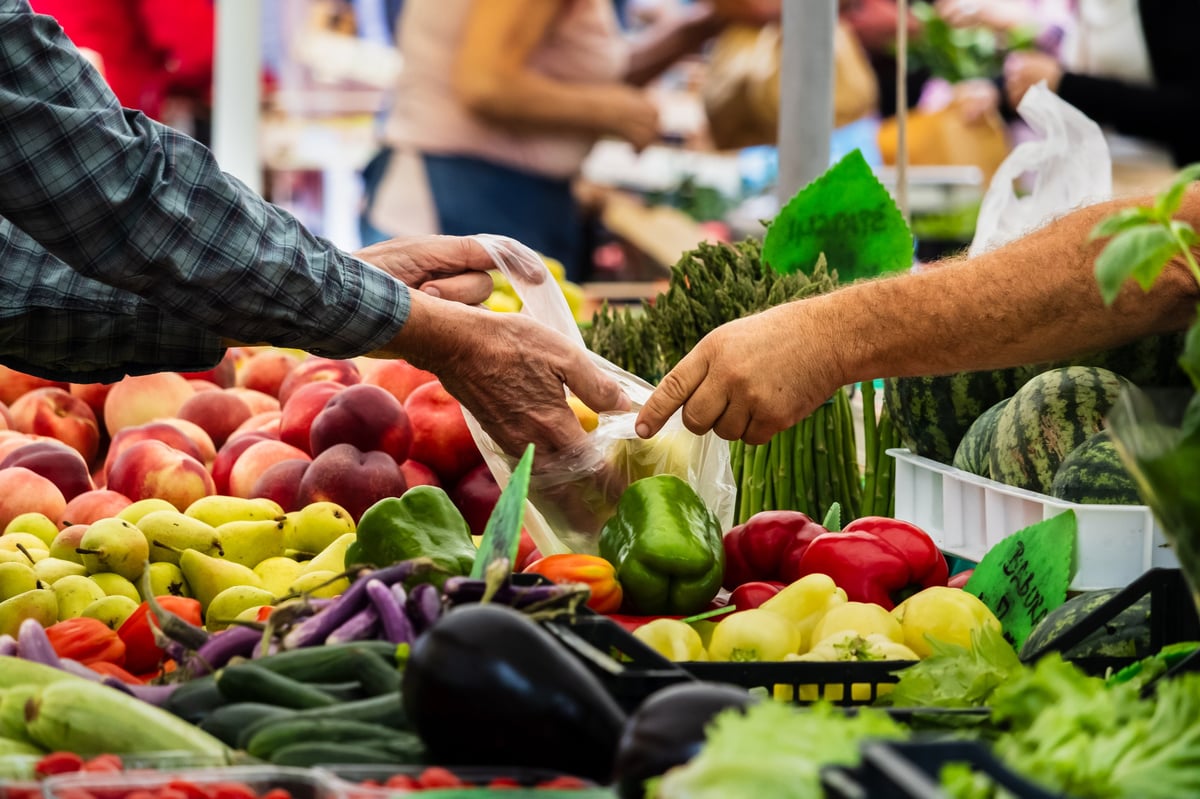
A buyer and a vendor exchange fresh vegetables at a busy farmers market, with colourful produce including peppers, peaches and eggplants in the foreground.

Romanian food is easy to photograph and surprisingly difficult to explain.

You can show someone a plate of sarmale.

You can tell them that mici are grilled meat rolls.

You can translate ciorbă as soup.

You can point to mămăligă and say polenta.

All of those descriptions are technically useful.

None of them tells you very much about how Romanians actually eat.

Because food here is rarely only about the dish.

It is about when it appears.

Who made it.

What comes before it.

What is placed beside it.

How long people stay at the table.

Whether somebody insists you take another portion.

Whether lunch quietly becomes the main event of the afternoon.

And whether, after saying you cannot eat another thing, you somehow still accept papanasi.

If you want to understand Romanian food, we would begin there.

Not with a list.

With the table.

Romanian food is not one perfectly defined cuisine

Romania sits in a part of Europe where cultures, empires, trade routes and neighbouring peoples have influenced one another for centuries.

You can feel that in the food.

Some dishes may remind you of the Balkans.

Others of Central Europe.

Some have Ottoman echoes.

Some are closely connected with rural life, preservation, livestock, seasonal produce or what could be grown locally.

And then every region adds its own habits.

So when somebody asks:

“What is Romanian food?”

there is no single elegant answer.

It can be sour.

Smoky.

Rich.

Simple.

Festive.

Rustic.

Comforting.

Fresh.

Very meat-heavy in one meal and almost entirely vegetable-based in another.

Romanian cooking does not always care about fitting neatly into a category.

Neither should you.

Start with ciorbă

If we wanted an international visitor to understand one Romanian food idea properly, we might start with ciorbă.

Not because it is the most spectacular dish.

Because it explains something about the way we eat.

Calling ciorbă simply “soup” is useful but incomplete.

Ciorbă is a whole family of sour soups, and the sourness is part of the identity.

Different versions may contain vegetables, beans, meat, meatballs or other ingredients.

Different households and regions may prepare them differently.

And Romanians can have surprisingly strong opinions about what belongs in a particular one.

The important thing for a visitor is this:

Do not expect every Romanian soup to taste like the soup you already know.

The slight sourness may be exactly the point.

Local DACO Note

If you see several kinds of ciorbă on a menu and do not know what to choose, ask what the restaurant actually prepares well that day.

We prefer that question to automatically ordering the dish that appears first in every tourist guide.

Sarmale are more than cabbage rolls

Sarmale are probably among the Romanian dishes most international visitors encounter.

The basic idea is simple: a filling, traditionally often based around meat and rice, wrapped in cabbage leaves, though versions and preparation vary.

They are frequently served with mămăligă, sour cream and sometimes something spicy alongside.

But their cultural meaning is larger than their ingredients.

Sarmale belong to family meals.

Celebrations.

Christmas tables.

Weddings.

Large pots prepared for many people.

They are the sort of food that makes more sense when you imagine someone cooking for a household rather than plating an individual portion for a photograph.

That is partly why they feel so Romanian even though related dishes exist across a much wider region.

Food does not need to be unique to one national border to become deeply part of a country's life.

Mici make more sense when you understand the setting

Mici are easy to describe.

Grilled rolls of seasoned minced meat.

But again, the description misses half the experience.

Mici belong to grills.

Terraces.

Markets.

Casual meals.

Outdoor gatherings.

Beer.

Mustard.

The smell of smoke.

People eating without much ceremony.

They do not need to be refined.

Trying to turn mici into fine dining almost misses their personality.

Sometimes the best way to understand a dish is not to ask:

“What are the ingredients?”

but:

“When do people normally eat this?”

With mici, the answer tells you almost as much as the recipe.

Mămăligă is not simply a substitute for bread

International visitors usually recognise mămăligă once someone says “polenta”.

That is a useful reference point.

But in Romanian food culture it has its own life.

It can sit beside stews.

Meat.

Cheese.

Sour cream.

Eggs.

Fish.

It can be soft or firmer.

Simple or part of a much richer plate.

Historically, it is connected with ordinary rural food and ingredients that were accessible and filling.

Today it appears everywhere from simple traditional restaurants to more contemporary interpretations.

You do not need to think of it as exotic.

It is one of those foods that became ordinary enough to become cultural.

Cheese deserves more attention than it usually gets

Romanian food conversations with international travellers tend to move quickly toward meat.

That leaves out an important part of the table.

Cheese.

Different sheep, cow and mixed-milk cheeses appear across the country, with strong regional and seasonal traditions.

Some are fresh and mild.

Others saltier or more mature.

In mountain and rural areas especially, cheese can tell you something about local agricultural life in a way that a restaurant menu cannot fully explain.

You do not need to memorise names before travelling.

Just try some.

Ask what it is.

Ask where it comes from.

Those small questions often lead to better conversations than asking only:

“What is the most famous Romanian dish?”

Pork has an important place at the traditional table

Traditional Romanian cooking makes extensive use of pork.

That is particularly visible around winter celebrations and in many rural food traditions.

Grilled pork.

Roasts.

Sausages.

Smoked preparations.

Stews.

Preserved meats.

For visitors who eat meat, this is part of the cuisine worth understanding.

For visitors who do not, it is also useful context because a menu described as “traditional Romanian” can be considerably more meat-focused than they expect.

Romanian food can absolutely be explored without eating pork.

But pretending pork has not been historically important would give the wrong picture.

Romanian food can be heavy. It does not have to be.

This is something we would rather say openly.

If you order sarmale at lunch, a large grilled dinner, papanasi and repeat that pattern for five days, you may decide Romanian cuisine is extremely heavy.

You would not be entirely wrong.

You would also be sampling one particular side of it.

Romanian cooking includes soups.

Salads.

Vegetable dishes.

Fish.

Beans.

Fresh cheeses.

Seasonal produce.

Pickles.

Fruit.

Lighter meals.

And, of course, contemporary restaurants that are not trying to recreate a traditional feast at every sitting.

A traveller does not need to eat as though every day is Christmas.

You do not need to eat Romanian food at every meal

We mean this sincerely.

Trying local food is part of understanding a country.

Turning every meal into an obligation is not.

If you have eaten a large Romanian lunch and want sushi in the evening, have sushi.

If you have spent three days exploring traditional dishes and suddenly want a simple salad, order the salad.

Travel becomes strangely joyless when people start eating according to a checklist.

The purpose is curiosity.

Not compliance.

A meal should still feel like a meal.

Not homework.

Papanasi deserve the warning first

Papanasi are one of those desserts that look innocent until they arrive.

They are usually substantial.

Very substantial.

The combination of fried or boiled cheese-based dough, sour cream and jam is not designed to finish a delicate tasting menu.

It is dessert with confidence.

If somebody at the table says:

“Maybe we should share one.”

listen to them.

You can always order another.

Romania is unlikely to run out.

Sweetness here often comes with memory

Dessert in Romania is not only restaurant food.

Many people's strongest food memories come from kitchens.

Cakes made for holidays.

Pies.

Jam.

Sweet cheese fillings.

Walnuts.

Fruit.

Recipes inherited through families.

The exact dish matters less than the pattern.

Food carries memory remarkably well.

A Romanian may taste something they have not eaten for years and immediately start talking about a grandmother, a village, a childhood kitchen or a holiday table.

That is not unique to Romania.

But it is very visible here.

Breakfast may surprise you less than lunch

Hotel breakfast in Romania may look broadly familiar to most European travellers.

Eggs.

Cheese.

Cold cuts.

Bread.

Vegetables.

Yogurt.

Pastries.

Coffee.

At a traditional household table, however, breakfast can also include combinations that reflect local products and family habits.

We would not arrive expecting every morning to become a cultural event.

Sometimes breakfast is just breakfast.

This matters because travel content occasionally tries too hard to make every ordinary behaviour look exotic.

Romanians also eat cereal.

We promise.

Bread is never very far away

Bread remains deeply embedded in Romanian eating habits.

For many people, a meal without bread can feel slightly unfinished.

That may be changing across generations and individual habits, but the cultural relationship remains visible.

You may receive bread automatically.

People may use it with soup.

With grilled food.

With sauces.

With almost anything capable of being accompanied by bread.

Do not feel obliged to eat all of it.

Nobody is grading you.

Pickles are not decoration

Pickled vegetables appear naturally beside many Romanian dishes, particularly richer foods.

Cabbage.

Cucumbers.

Peppers.

Other vegetables according to household and season.

The acidity is not accidental.

It balances.

This is another useful lesson when tasting Romanian food:

Do not evaluate each component separately.

Sometimes the plate works because rich, sour, salty, fresh and spicy elements are supposed to meet.

Markets show you what restaurants sometimes hide

A restaurant shows you a finished dish.

A market shows you what people buy.

That difference is useful.

Vegetables in season.

Cheese.

Bread.

Fruit.

Meat products.

Herbs.

Pickles.

Honey.

People choosing tomatoes one by one.

Someone asking where the cheese came from.

A stallholder explaining something with far more enthusiasm than your question required.

Markets are imperfect.

Messy.

Ordinary.

And often more revealing than places created specifically for visitors.

This is one reason our Bucharest Food & Market Walk is not only about eating.

A market helps explain the relationship between food and everyday life.

The tomato problem

There is a small Romanian obsession visitors may encounter.

Tomatoes.

Especially summer tomatoes.

Ask enough Romanians about tomatoes and somebody will eventually begin explaining that supermarket tomatoes do not taste like the tomatoes from their childhood, garden, grandparents or favourite market stall.

The conversation can become unexpectedly emotional.

This is not actually only about tomatoes.

It is about seasonality.

Memory.

Home.

And the belief that somewhere, somehow, a proper tomato still exists.

We advise letting the conversation continue.

There is very little you can do to stop it.

Summer tastes different from winter

Romanian food still has a noticeable seasonal dimension.

Summer brings produce.

Tomatoes.

Peppers.

Fruit.

Fresh herbs.

Autumn changes the table.

Winter traditionally moves toward preserved foods, pickles, richer meals and celebration cooking.

Modern supermarkets obviously make ingredients available far beyond their traditional seasons.

But seasonal preference has not disappeared.

A good local meal in August should not necessarily look like a good local meal in January.

That is a feature.

Not an inconsistency.

Food changes as Romania changes

Just as the architecture and landscape vary across regions, the table changes too.

Transylvania carries Central European and Saxon influences alongside Romanian traditions.

Dobrogea has its own relationship with fish and the cultures that have shaped the region.

Moldova has strong culinary traditions of its own.

Banat reflects western and Central European connections.

Mountain areas have deep relationships with sheep farming and cheese.

The Danube Delta has an entirely different relationship with fish and water.

No traveller needs a degree in Romanian regional gastronomy before arriving.

But noticing these differences can transform eating from consumption into understanding.

If you are still deciding where to begin your journey, our Romania by Region guide explains how the country differs from one part to the next — and the food follows those differences.

Do not expect the same dish to be identical everywhere

This can become a source of unnecessary debate.

One restaurant makes something one way.

Another makes it differently.

A Romanian tells you their grandmother would never prepare it like that.

Another Romanian insists their own family version is correct.

Welcome.

Family food does not behave like a technical specification.

Recipes move.

Regions differ.

Households differ.

People improvise.

That variation is part of the story.

The phrase “traditional restaurant” tells you less than you think

This is important.

A restaurant can describe itself as traditional.

The word alone does not tell you whether the food will be good.

It may be excellent.

It may be designed primarily around what visitors expect Romanian food to look like.

It may be somewhere locals genuinely enjoy.

It may not.

We would judge the restaurant rather than the label.

Is the food good?

Are ingredients treated properly?

Does the place make sense?

Would we bring somebody we cared about here?

That final question matters to us.

A recommendation should mean something.

How to recognise a restaurant we would trust

There is no perfect formula.

But we usually pay attention to fairly ordinary things.

A menu that understands what it is trying to be.

Staff who can answer simple questions honestly.

Food arriving as though somebody cared about preparing it.

A room that does not need to perform “Romanian tradition” through every available decorative object.

A recommendation that sounds like a recommendation rather than an upsell.

Locals at tables can be encouraging, but that alone proves nothing.

Reviews can help, but they are not infallible.

Popularity can be useful information.

It is not the same thing as quality.

Our standard is simpler:

Would we be comfortable sending someone there without needing to apologise afterwards?

Sometimes the less famous restaurant is the better decision

Tourism concentrates people.

That is normal.

A restaurant near a major landmark has location working in its favour.

Sometimes it also has very good food.

Sometimes its strongest ingredient is the address.

Walking ten minutes away can completely change the experience.

But this does not mean every obscure restaurant is automatically more authentic.

That is another tourism cliché.

Hidden does not mean good.

Famous does not mean bad.

Evaluate the place.

Not the mythology around it.

Eating with Romanians involves negotiation

If you are invited into a Romanian home, there is a reasonable chance the conversation will include some version of:

“Try this.”

“No, thank you, I am full.”

“Just a little.”

“I really cannot.”

“Take a small piece.”

This is not a legally binding sequence.

You are allowed to stop eating.

But food and hospitality are closely connected here, and offering more can be a form of care rather than a belief that you are visibly underfed.

A polite refusal is fine.

An enthusiastic acceptance is also fine.

The host may be happier with the second.

“Have you eaten?” is sometimes an emotional question

We explored this in our guide to Romanian hospitality, but it belongs here too.

Ai mâncat? — Have you eaten?

can be literal.

It can also mean:

Are you all right?

Are you taking care of yourself?

Do you need something?

Food is one of the languages through which care is expressed in Romanian families.

This is why meals can carry more emotional weight than the ingredients suggest.

Lunch can quietly become two hours

This surprises some travellers with tightly planned days.

A good lunch begins.

The food arrives.

Conversation starts.

Dessert seems possible.

Coffee follows.

Suddenly the schedule has changed.

We do not think every meal needs to take two hours.

But we also would not design every Romanian itinerary so tightly that enjoying lunch becomes a logistical problem.

A country is difficult to understand when you are always asking for the bill.

Local DACO Note

If you have booked every day to the minute, leave at least one lunch alone.

Do not assign it a 47-minute slot between two attractions.

Sit somewhere good.

Order.

Talk.

Look around.

Occasionally, doing less is the part of the itinerary you remember.

What about vegetarian travellers?

Traditional Romanian restaurant menus can be meat-heavy.

That is real.

It does not mean vegetarian travellers cannot eat well here.

Romania has longstanding fasting traditions connected with Orthodox Christianity, and vegetable-based dishes have always existed alongside meat-heavy cooking.

Modern cities also have much broader vegetarian and vegan options than older stereotypes suggest.

The key difference is location and context.

A contemporary Bucharest restaurant may offer many choices.

A small traditional restaurant in a rural area may offer fewer.

Planning matters more when dietary requirements are strict.

If you have allergies, medical dietary requirements or strong restrictions, communicate them clearly rather than assuming the meaning of terms will always be understood identically.

“Fasting food” can be useful to understand

Visitors may encounter the word post or descriptions connected with religious fasting periods.

Traditionally, Orthodox fasting can involve avoiding animal products, though practices vary considerably between individuals.

This has contributed to a substantial repertoire of plant-based foods in Romanian cooking.

That does not automatically make every dish suitable for every vegan or allergy requirement.

But it is an interesting reminder that Romanian cuisine is not as universally meat-based as first impressions sometimes suggest.

Romanian wine deserves its own journey

Romanian wine is one of those subjects that still surprises international visitors.

Many arrive knowing little or nothing about it.

That can be an advantage.

There are no expectations to satisfy.

You can simply taste.

Wine regions such as Dealu Mare allow travellers to experience another version of Romanian food culture — vineyards, local producers, conversation and slower days rather than another sequence of monuments.

Our Romanian Wine — Country Escape exists for exactly this kind of contrast. To understand how the regions differ before you choose one, see our Romanian Wine Regions guide.

After several busy sightseeing days, wine country can change the rhythm completely.

And sometimes changing the rhythm is more valuable than adding another attraction.

Do not worry about becoming a Romanian wine expert

You do not need to know grape varieties.

You do not need to swirl professionally.

You do not need to pretend you smell twelve things in the glass.

If you like it, say you like it.

If you do not, say that too.

Travel improves considerably when people stop performing expertise they do not actually possess.

Curiosity is enough.

What should you order on your first Romanian meal?

There is no mandatory combination.

But if you want an introduction, we would choose something that gives you different aspects of the cuisine rather than ordering the heaviest version of everything.

Perhaps:

If several people are travelling together, sharing or ordering different dishes can make the first meal much more interesting.

Ask what the restaurant recommends.

And listen to the answer.

If the recommendation sounds suspiciously identical to the most expensive items on the menu, use your own judgement.

If you have only one day in Bucharest

Do not spend the day chasing ten specific foods.

Walk.

Visit a market.

Have a proper lunch.

Try something you have not eaten before.

Have coffee.

Perhaps have dinner somewhere completely different from lunch.

That already tells you much more about contemporary Bucharest food culture than collecting dishes mechanically.

Our Bucharest Food & Market Walk is built around this idea: understanding food in context rather than simply assembling tastings.

If you have a week in Romania

Let the food move with the journey.

Eat differently in Bucharest from how you eat in the mountains.

Try regional products when they make sense.

Allow a market or winery to become part of the itinerary.

Do not search for the exact same “top five Romanian dishes” in every city.

One of the pleasures of travelling through Romania is noticing that the table changes with the road.

What we would not do

We would not tell you that every traditional dish is extraordinary.

Taste is personal.

You may dislike something Romanians love.

Nothing terrible will happen.

We would not send you to a restaurant only because it photographs well.

We would not insist every meal needs to be Romanian.

We would not describe a place as authentic merely because the furniture is wooden.

We would not encourage you to order five heavy dishes at once because a list online says you have to try all of them.

And we would never consider a meal unsuccessful because you ordered what you actually wanted instead of what tourism told you to want.

Food is one of the easiest places to practise good travel

Pay attention.

Ask questions.

Try something unfamiliar.

Do not assume unfamiliar means strange.

Do not assume traditional means superior.

Notice who else is eating.

Notice what is in season.

Notice how long people stay.

Notice how food changes when you change regions.

And occasionally let someone choose for you.

There is very little bravery required.

The worst realistic outcome is that you discover a dish you do not particularly like.

That is still useful information.

When food becomes part of a wider Romanian journey

Sometimes a traveller wants more than restaurant recommendations.

A market in Bucharest.

A winery outside the city.

A particular regional meal.

A celebration.

Dietary requirements that need more careful planning.

Restaurants that fit naturally around an itinerary rather than forcing the day to revolve around reservations.

That is where DACO Concierge can become useful.

The goal is not to fill every day with curated culinary experiences.

It is to make sure the ones you choose belong naturally in the journey.

If the best evening after a long day is simply a quiet restaurant close to the hotel, that may be the right recommendation.

Good planning is not about adding more.

It is about knowing what belongs.

Common questions

Frequently Asked Questions

If we could leave you with one thought

Do not come to Romania trying to finish its cuisine.

You cannot.

And there is no prize for eating every famous dish.

Come hungry enough to be curious.

Try the soup even if “sour soup” sounds unusual.

Taste the cheese someone recommends.

Go to a market.

Let lunch take longer once.

Have Romanian food because you want it, not because you think you are supposed to.

And if a Romanian tells you that the tomatoes used to taste better when they were a child, do not argue.

Just smile.

There is a good chance you are no longer talking about tomatoes.

You are talking about home.

Want food to become part of the journey, not another checklist?

Explore Bucharest through its markets, spend a slower day in Romanian wine country, or let DACO Concierge help fit food, restaurants and local experiences naturally around the wider itinerary. For the city version of everything on this page — where to eat, Obor, Old Town and how to choose a restaurant in Bucharest — continue with our Bucharest Food Guide.


DACO Team

Local travel knowledge from DACO Private Travel, Bucharest.

Romania, Privately Arranged.