
Romania Travel Knowledge Hub

Transfăgărășan Road Guide: Is It Worth It, When Is It Open and How to Plan the Drive

By Neli Budeanu

Co-founder, DACO Private Travel · Former hospitality professional in Bucharest

Local travel knowledge based on living in Romania, working in hospitality and helping organise journeys for international visitors.

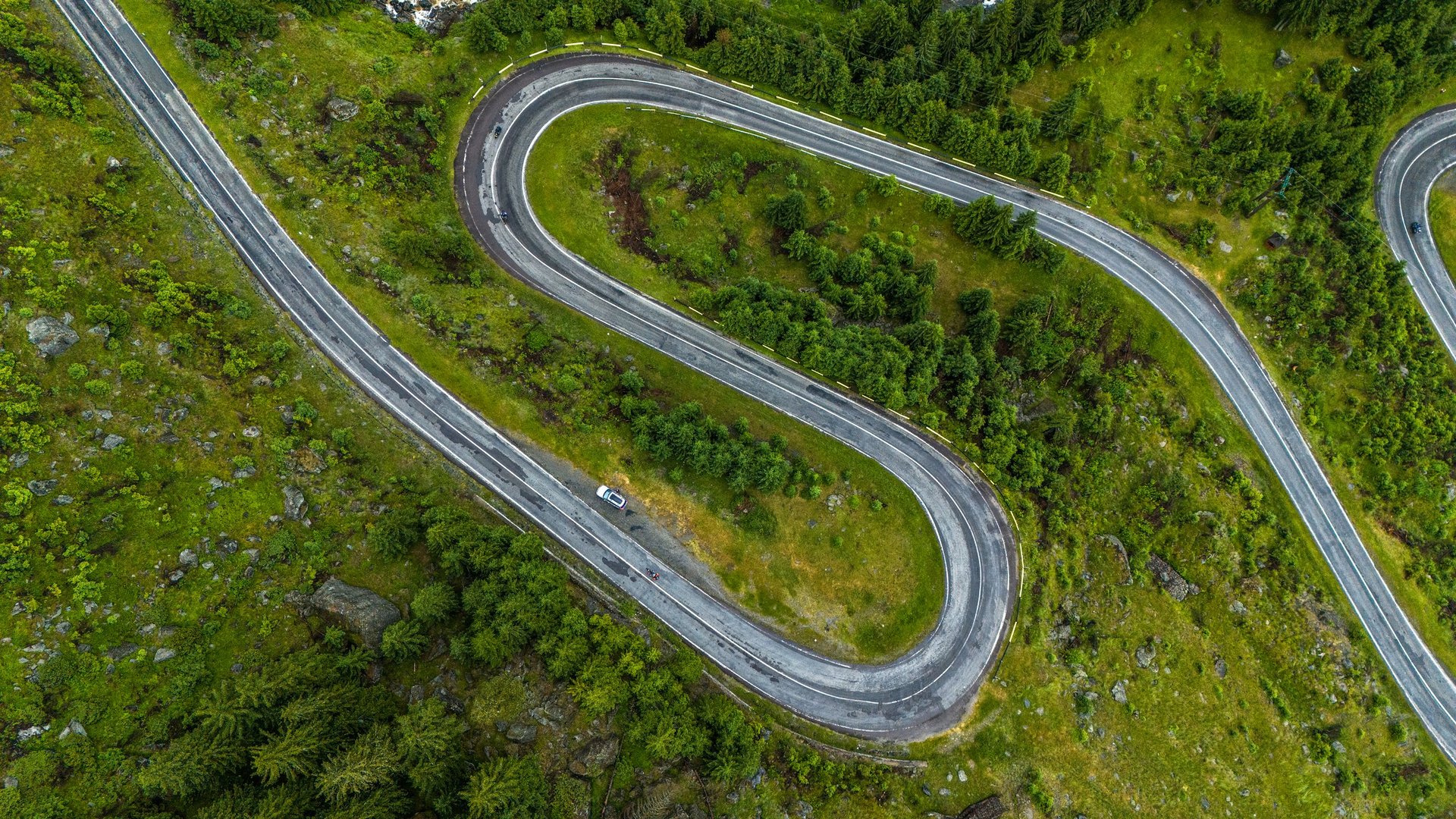
Aerial drone view of the hairpin curves of the Transfagaras Road (DN7C) winding through the Fagaras Mountains in Romania

The Transfăgărășan causes a particular kind of travel-planning optimism.

You see the photographs. Hairpin bends. Mountain ridges. Bâlea Lake. Clouds below the road.

Then Google Maps gives you a number of kilometres and suddenly it looks like a normal drive.

It is not.

The Transfăgărășan is one of those journeys where the road itself is the destination. You are not simply using it to travel from point A to point B. You are climbing through the Făgăraș Mountains, changing altitude, stopping for views, and dealing with mountain weather, traffic and seasonal access.

That is exactly why it can be extraordinary. And exactly why it needs to be planned differently from an ordinary Romanian road journey.

The Short Answer: Is the Transfăgărășan Worth It?

Yes — if the drive and mountain landscape are part of what you came to Romania to experience.

I would particularly recommend it if you enjoy:

  • scenic road trips;
  • mountains;
  • photography;
  • changing landscapes;
  • driving;
  • or a journey that connects southern Romania with the Sibiu side of Transylvania.

I would be less enthusiastic if:

  • you dislike long road days;
  • you are trying to fit three castles and two cities into the same day;
  • the high road is closed;
  • or your only objective is to say that you completed a famous road.

The Transfăgărășan is excellent when you give it enough space. It becomes exhausting when you treat it like a shortcut.

Transfăgărășan at a Glance

A quick decision summary before the detail. The road is seasonal, so the most important rule is always to check the current official status.

Question My answer
Is it worth driving? Yes, when mountain scenery and the road itself matter
Full high road open year-round? No
Main high-altitude stop Bâlea Lake
Good from Bucharest? Yes, but it is a long full-day experience
Good from Sibiu? Very
Good as a through-route? Yes, when the central road is open
Do you need a car? Usually, unless using private transport
Bears guaranteed? Absolutely not
Can you feed bears? No
Poenari worth adding? Yes when current access conditions allow
Best season? When the high road is officially open and weather is suitable
Winter road trip? Not across the full high section

What Is the Transfăgărășan?

The Transfăgărășan — DN7C crosses the Făgăraș Mountains between the Argeș side to the south and the Sibiu side to the north. It is one of Romania's best-known mountain roads.

But the useful travel description is simpler:

it is a high-altitude Carpathian crossing where the journey itself matters more than arriving quickly.

From the southern side, the route can take you through the Curtea de Argeș area, toward Poenari, Vidraru and eventually the high mountains. From the northern side, the road climbs from the Cârțișoara / Bâlea Cascadă area toward Bâlea Lake.

Between them lies the famous high section — and that central mountain crossing is seasonal.

For where the Făgăraș sit inside Romania's wider mountain geography — and how a mountain road differs from mountain hiking — see our Carpathian Mountains in Romania guide.

When Is the Transfăgărășan Open?

This is the most important planning question. And there is no responsible answer that begins:

“Every year it opens on exactly…”

The high-altitude central section closes seasonally because of snow, avalanche risk and severe mountain conditions. The actual reopening date depends on:

  • snow clearance;
  • weather;
  • technical inspection;
  • rockfall and debris;
  • avalanche conditions;
  • and road safety.

In 2026, the high section between Piscu Negru and Bâlea Cascadă reopened on 12 June. That does not mean 12 June becomes the opening date every year. Some years open later. Conditions can also force temporary restrictions after the seasonal opening.

So the correct rule is:

check official road status shortly before you travel — and ideally check again that morning.

2026 Visitor Note

For the 2026 season, the high Transfăgărășan road reopened in June. Temporary restrictions can still occur because of weather, safety work, organised events or changing mountain conditions. Use official Romanian Police INFOTRAFIC and current road-authority (CNAIR / DRDP Brașov) updates before departure. A photograph of an open Transfăgărășan from yesterday is not a traffic bulletin for today.

Is the Whole Road Closed in Winter?

Not necessarily every kilometre. Lower sections of DN7C may remain accessible while the high central crossing is closed.

So when somebody says “the Transfăgărășan is closed”, they usually mean you cannot drive across the high mountain section as a continuous route. That distinction matters. You may still be able to reach attractions on one side. You just cannot assume you can cross the mountains by road.

What Makes the Road Special?

Not one viewpoint. The sequence.

Forest. Reservoir. Steepening mountains. Rock. Hairpins. Waterfalls. Alpine landscape. Tunnel. Bâlea. Then the descent into a completely different side of the mountains.

That is why I would avoid designing the day around ten exact photo stops. You will stop because the landscape tells you to. That is the experience.

A Little History — but Not Too Much

The modern Transfăgărășan was built during Romania's communist period under Nicolae Ceaușescu. Its strategic and engineering history is significant.

But I would not turn your road trip into a lecture on concrete. For the traveller, the important legacy is visible: a road engineered across some of the highest and most dramatic terrain in Romania. The political history explains why it exists. The mountains explain why people still come.

Bâlea Lake: The High-Altitude Centre of the Experience

For most visitors, Bâlea Lake becomes the symbolic centre of the journey. The glacial lake sits high in the Făgăraș Mountains near the road's highest section.

This is the place people picture when they think of high Transfăgărășan, hairpins, steep mountain walls and dramatic road photography.

It is worth stopping. Just adjust expectations. On a clear weekday? Beautiful. On a busy summer weekend? You may share the experience with a substantial number of people and vehicles. In cloud? The mountain may simply disappear. That is not false advertising. That is altitude.

How Long Should You Stay at Bâlea Lake?

That depends on what you came for. If the road trip itself is your priority, stop, walk around, take in the mountain environment and continue. If you actually want mountain time, give it more space.

A high-altitude lake should not become another ten-minute attraction simply because your itinerary is full. Weather should always influence the decision. This is not the place to force a long outdoor stop in a thunderstorm because your spreadsheet allocated forty-five minutes.

Can You Reach Bâlea Lake When the Road Is Closed?

Sometimes, from the northern side, cable-car access from Bâlea Cascadă can provide access toward Bâlea Lake when the high road is closed. But this is not something I would promise in an evergreen itinerary.

Cable-car operation depends on:

  • weather;
  • maintenance;
  • technical conditions;
  • and the operator's current programme.

Check before travelling. And remember: reaching Bâlea by cable car in winter is not the same experience as driving the Transfăgărășan. Both can be worthwhile. They are different trips.

Vidraru Dam: Is It Worth Stopping?

Yes, particularly when travelling from the southern side. The dam and reservoir create one of the major landscape transitions before the alpine section.

But Vidraru also demonstrates why current information matters.

2026 Vidraru Note

The Vidraru hydroelectric complex is undergoing a major refurbishment programme. The reservoir went through controlled drawdown works and controlled refilling began on 1 April 2026, with the process expected to continue through 2026 depending on hydrological conditions.

That means the water level and visual appearance during 2026 may not match the classic photographs you saw online. Do not interpret that as the place having disappeared. It is infrastructure being worked on — and do not build a trip around a particular expected water level.

What About Poenari Fortress?

Poenari can be an excellent addition to a southern Transfăgărășan journey — especially if you are interested in Vlad Țepeș. Unlike many of the tourism associations surrounding Dracula, Poenari has a strong direct historical connection with Vlad.

The fortress sits high above the Argeș valley. Getting there is not casual: the visitor route involves roughly 1,480 steps. So this is not “we'll stop for ten minutes.” It is a physical visit.

2026 Poenari Access Note

Current conditions need to be checked before you include Poenari. In August 2026, after a bear was observed in the area, authorities introduced a preventive measure under which the fortress could be visited only in organised groups of approximately 15–20 people.

Access rules can change again. Therefore, do not build the day around a guaranteed independent climb. Check the official Poenari Fortress / Argeș County visitor information shortly before travel.

Poenari or Bran for Dracula History?

They answer different questions. Bran Castle is the international tourism icon; its Dracula association is deeply embedded in popular culture. Poenari has a stronger direct historical association with Vlad Țepeș.

If your interest is “Where is the famous Dracula castle experience?” — Bran. If your interest is “Where does Vlad Țepeș have a real fortress connection?” — Poenari becomes particularly important. For the deeper story, see our Bran Castle Guide and Peleș Castle vs Bran Castle.

But the Transfăgărășan does not need to become another Dracula route. The mountain road remains the main event.

What About the Bears?

This section matters more than another viewpoint recommendation. Wild brown bears are sometimes seen near sections of the Transfăgărășan.

That does not mean:

  • you will see one;
  • you should search for one;
  • you should stop beside one;
  • you should feed one;
  • you should get out for a better photograph.

If you see a bear, that is wildlife — not a roadside attraction.

Romanian authorities (including Romsilva) repeatedly warn visitors not to feed or approach bears. Feeding changes animal behaviour and increases danger for both people and the animals themselves. In 2026, Romanian authorities intensified enforcement against tourists feeding bears on the Transfăgărășan.

The official safety advice is explicit:

  • do not feed bears;
  • do not approach them;
  • do not leave food accessible;
  • maintain distance;
  • follow local warnings;
  • call 112 if there is an immediate danger.

Will I See Bears on the Transfăgărășan?

Maybe. Maybe not. That is the only honest answer. Any itinerary promising “you will see wild bears” is promising control over wildlife that nobody has.

DACO's own Transfăgărășan experience is called Transfăgărășan: The Road Above the Clouds for a reason. The road is the experience. A wildlife sighting, if one happens safely, is incidental.

How Much Time Do You Need for the Transfăgărășan?

This is where kilometre-counting fails. Mountain kilometres are not motorway kilometres. You stop. Traffic slows. Motorcycles appear. Views appear. Weather changes. You may spend time at Bâlea, include Vidraru, and include Poenari if access conditions allow.

So rather than asking “How fast can I complete it?”, ask: “What role does the road have in my trip?”

Can You Visit the Transfăgărășan From Bucharest?

Yes. It is a very popular way to experience the road. But understand the day: this is a long full-day road experience. A large part of it happens in the vehicle. That is not a defect. It is the product.

Choose it if mountains, road scenery, photography and the drive itself are priorities. If you dislike long driving days, choose another Bucharest excursion. Our Best Day Trips from Bucharest guide explains that trade-off more broadly.

Is It Better to Stay Overnight Instead?

Often, yes — especially if your Romania journey is already continuing into Transylvania. Imagine Bucharest → Curtea de Argeș → Transfăgărășan → Sibiu. When the high road is open, that is not simply sightseeing. It is transportation and experience working together.

Compare that with Bucharest → Transfăgărășan → Bucharest, and then tomorrow Bucharest → Sibiu. You have driven a substantial amount of the same geography simply because the hotel booking told you to. Move forward when the route allows it.

Is Sibiu a Good Base for the Transfăgărășan?

Very — especially for the northern side. From Sibiu, the route toward Cârțișoara, Bâlea Cascadă and the northern ascent fits naturally. If the full road is open, you can potentially continue across the mountains. If it is closed, you need to plan around northern access conditions rather than assume the crossing works.

This is one reason Sibiu is such a useful destination inside a broader Romania itinerary. Our Sibiu Travel Guide explains that role in more detail.

South to North or North to South?

There is no universal better direction.

South → north makes sense when:

  • you are coming from Bucharest;
  • Curtea de Argeș fits your route;
  • you want Vidraru / Poenari context;
  • you are continuing toward Sibiu.

North → south makes sense when:

  • you are leaving Sibiu;
  • your journey continues toward Argeș, Pitești or Bucharest;
  • the road becomes your mountain exit from Transylvania.

Choose according to where you need to sleep next. That is more useful than choosing according to which hairpin looks better in a drone photograph.

What Is a Good Through-Route?

When conditions allow, one of the strongest route ideas is:

Bucharest → Curtea de Argeș → Transfăgărășan → Sibiu.

Not because everybody must copy it. Because it has directional logic. You move from southern Romania across the Carpathians and finish in Transylvania. The road becomes part of the journey rather than an excursion detached from it. From Sibiu, the trip can then continue toward Sighișoara, fortified villages, Brașov or another part of Transylvania.

See the Transylvania Travel Guide and How to Plan a Romania Itinerary Without Trying to See Everything for the wider logic.

Is a Rental Car a Good Idea?

Yes, if you enjoy driving. The Transfăgărășan is one of those places where self-driving can be part of the pleasure. A rental car makes sense if you are comfortable with mountain roads, want flexibility, want to continue your road trip independently, and understand that parking and traffic remain your responsibility. Read our Driving in Romania guide before you decide, and see Rent a Car for DACO vehicles.

When Does a Private Driver Make More Sense?

When nobody wants the job of driving. That is not trivial. A mountain-road day can be tiring. A private driver allows everybody in the vehicle to look outside, take photographs, talk, rest, and let somebody else manage road conditions and parking.

It becomes particularly useful when luggage is moving from Bucharest to Sibiu rather than returning to the same hotel. This is less about luxury than logistics. See Transfers and Concierge.

What About Motorcycles?

The Transfăgărășan is extremely popular with motorcyclists. That does not make mountain conditions irrelevant. Weather changes. Traffic changes. Road surface changes. Animals appear. Temporary restrictions happen.

If you are riding, use current road and weather information. This article is not a technical motorcycle guide. The mountain deserves specialist preparation where specialist preparation is needed.

Cycling and Hiking

The Făgăraș area supports serious mountain and cycling activity, but this article is a road and travel planning guide. Do not assume the highway itself is automatically safe for every cyclist, and do not treat it as an unproblematic place to ride alongside fast mountain traffic.

If you plan mountain hiking or riding beyond the road itself, use current official mountain-safety resources, such as Salvamont România, and check conditions before setting out.

Is Summer the Best Time?

Summer offers the strongest probability that the full high-altitude crossing will be open. That makes it the easiest period for a classic road trip. It also means traffic, motorcycles, busy viewpoints, crowded parking and weekend congestion.

So “best” depends on your priorities. A completely open road shared with thousands of other visitors is not automatically better than a quieter day with less predictable weather.

What About September?

September can be excellent. The light changes. Tourism pressure may begin to ease. The mountains can look extraordinary. But high altitude does not care that Bucharest is still warm. Weather can deteriorate quickly, daylight shortens, cold becomes more significant, and early snow is possible. Check the road, check the weather, then go.

Can You Drive It in Spring?

Do not assume so. This is one of the easiest planning mistakes. It can be warm and green in Bucharest and warm in Sibiu — and still be winter at more than 2,000 metres. The high road often remains closed while lower sections are accessible. A warm city forecast tells you almost nothing about avalanche conditions on a mountain pass.

And Winter?

The full high-altitude crossing is not a normal winter drive. The central mountain section closes. That does not mean the entire region stops existing. Lower areas remain, Bâlea Cascadă remains, and cable-car access toward Bâlea Lake may operate from the northern side when conditions allow.

But that is a winter mountain visit, not a full Transfăgărășan road trip.

Transfăgărășan or Transalpina?

Another internet competition that does not need a winner.

Transfăgărășan gives you:

  • a dramatic engineered mountain crossing;
  • Bâlea Lake;
  • Vidraru;
  • Poenari connection;
  • strong Bucharest → Sibiu route logic;
  • iconic hairpins.

Transalpina gives you:

  • a different mountain-road character;
  • different geography;
  • route logic that fits western/southern Romania;
  • a journey not interchangeable with the Transfăgărășan.

If you have time for both and enjoy mountain driving, wonderful. If not, choose the one that fits the itinerary. Roads are infrastructure before they are rankings.

Is the Transfăgărășan Crowded?

It can be. Especially during summer weekends, holidays, excellent-weather days, and around Bâlea Lake.

You may encounter slow traffic, parking pressure, vehicles stopping where they should not, motorcycles, cyclists and people concentrating more on photographs than on traffic. A traffic jam on a famous mountain road is still a traffic jam. Plan with patience. Leaving earlier may help. Nothing guarantees an empty mountain road.

Is It Difficult to Drive?

For a confident driver in good conditions, the road is manageable. It is paved. It is a national road. But it is still a mountain road.

Expect:

  • hairpins;
  • gradient;
  • changing visibility;
  • traffic;
  • motorcycles;
  • cyclists;
  • animals;
  • vehicles entering and exiting parking areas;
  • and rapid weather changes.

If mountain driving makes you anxious, there is no prize for forcing yourself to do it. Let somebody else drive. You will probably enjoy the scenery more.

What Is the Weather Like?

Variable. That is the most useful word. At Bâlea, conditions can be dramatically different from the lower valleys.

Bring another layer even when the city is warm. Rain matters. Fog matters. Wind matters. Storms matter. And cloud can remove the spectacular panorama you came for. Do not treat poor visibility as an operational failure by Romania. Mountains have weather.

What Should You Not Do?

  • Do not plan the high road without checking whether it is open.
  • Do not trust last year's opening date.
  • Do not feed bears.
  • Do not leave the vehicle to approach wildlife.
  • Do not stop dangerously in the road for photographs.
  • Do not assume Poenari is accessible under yesterday's rules.
  • Do not promise yourself blue sky at Bâlea.
  • Do not build three unrelated major destinations into the same mountain-road day.
  • Do not interpret kilometres as motorway time.
  • And do not continue simply because you want to “complete the road” when authorities or weather tell you otherwise.

Turning around is not a failed holiday. It is a sensible decision.

Where Does the Transfăgărășan Fit in a Romania Trip?

Best when it solves two things simultaneously: experience + movement.

For example: Bucharest, then the Transfăgărășan, then Sibiu, then perhaps Sighișoara, fortified villages and Brașov. Now the road has introduced you to the mountains while physically moving the itinerary forward.

Our Transylvania Travel Guide explains the wider regional logic. For timing, use Best Time to Visit Romania, and for overall length, How Many Days Do You Need in Romania?

Can You Do the Transfăgărășan Independently?

Absolutely. Check the road. Check the weather. Rent an appropriate vehicle. Drive responsibly. Choose a few stops. Continue. You do not need a tour company simply because a road is famous.

Private travel becomes useful when you would rather somebody else manage the driving, route changes, luggage, parking, current road conditions, and the relationship between the road and the next hotel. If that is what you want, DACO's Transfăgărășan: The Road Above the Clouds is the private day-trip version of the experience. If the road is part of a larger Romanian journey, Plan My Trip usually makes more sense.

The Local Planning View

The Transfăgărășan is spectacular. It is also a road. That second fact is important.

Roads close. Traffic happens. Weather changes. Construction happens. Reservoirs are maintained. Wild animals appear. Mountain views disappear into cloud. None of that makes the journey less worthwhile. It makes the journey real.

So do not plan the Transfăgărășan as a collection of guaranteed outcomes. Plan it as a mountain day.

If Bâlea is clear, enjoy it. If Poenari is accessible, decide whether 1,480 steps sound like your idea of fun. If Vidraru looks different because of engineering works, understand why. If a bear appears, stay away from it. If the road closes, change the route.

The best Transfăgărășan journeys are not the ones where every photograph looks exactly like Instagram. They are the ones where the road was given enough space to behave like a mountain road.

Common questions

Frequently asked questions

Continue Planning

If you are travelling onward into the region, read the Transylvania Travel Guide. If Sibiu is your next stop, use the Sibiu Travel Guide.

For the wider road decision, continue with Driving in Romania and Getting Around Romania. For timing, use Best Time to Visit Romania.

If you are comparing excursions from the capital, read Best Day Trips from Bucharest. For a broader regional overview, see Romania by Region, and before you travel, our Is Romania Safe? guide.

If you want the road arranged privately from Bucharest, see Transfăgărășan: The Road Above the Clouds. And if the Transfăgărășan is one part of a larger route rather than a return day trip, Plan My Trip can connect it with the rest of Romania.

Romania, privately arranged.