
Romania Travel Knowledge Hub

Is Romania Safe for Tourists? What International Travellers Should Actually Know

By DACO Team

Local travel knowledge from DACO Private Travel, Bucharest.

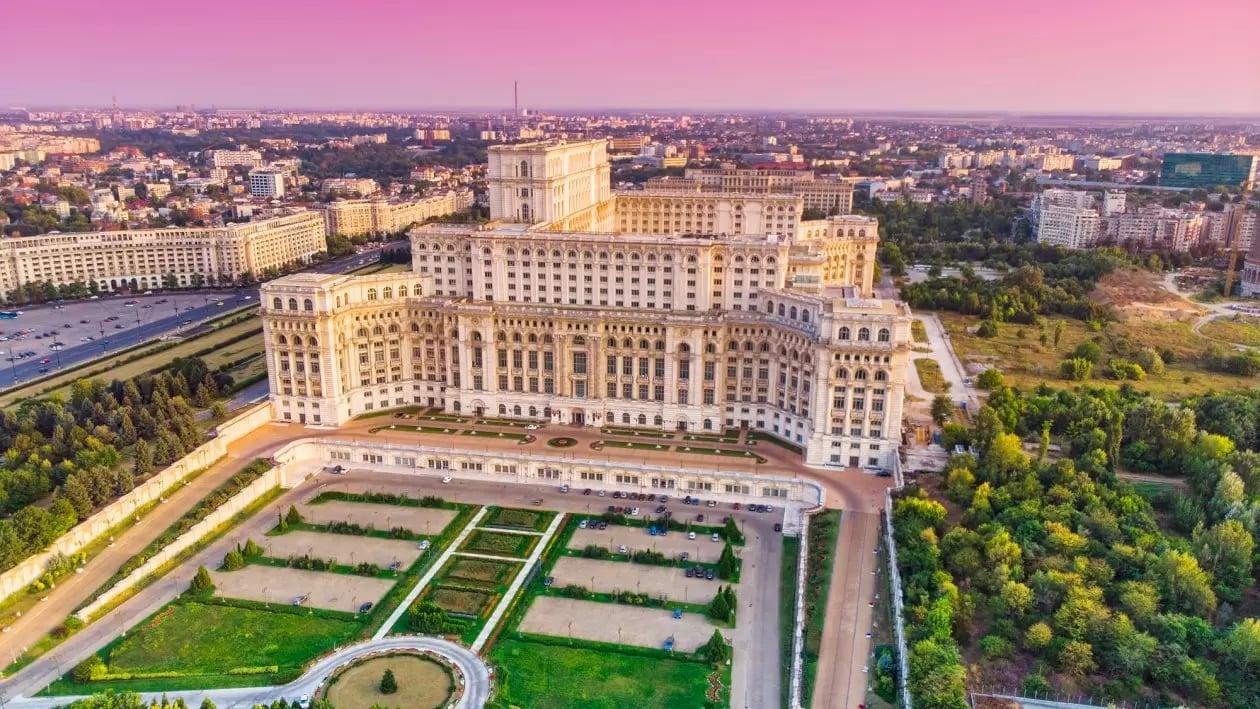
Aerial view of the Palace of Parliament and surrounding cityscape at sunset in Bucharest

Most travellers asking whether Romania is safe are not really asking for a statistic.

They are asking something more personal.

Will I feel comfortable there?

Will I know how things work?

Will I understand what to be careful about?

Will I be able to move around without feeling constantly on guard?

Those are better questions.

Because safety while travelling is not only about crime rates or official classifications.

It is also about familiarity.

About knowing which situations deserve attention.

And knowing which situations simply feel unfamiliar because you are somewhere new.

Romania does not require a survival strategy.

It does require the same thing most unfamiliar countries require:

attention without obsession.

At the time of writing, both the U.S. State Department and Australia's Smartraveller place Romania at their lowest general travel-advisory level, essentially advising normal precautions rather than heightened caution.

That is useful context.

But it is not a guarantee.

No country can give you one.

What we can do is explain how we would think about travelling here.

Good travel advice should make you more aware, not more afraid

Safety content has a strange tendency to become either reassuring to the point of uselessness or alarming to the point of absurdity.

“Romania is completely safe.”

Too absolute.

“Watch out for everything.”

Also not useful.

We prefer something in the middle.

Keep your belongings reasonably secure.

Use judgement at night.

Be careful when drinking.

Pay attention in busy places.

Check who is picking you up.

Do not follow a stranger somewhere simply because you are on holiday and do not want to seem impolite.

None of this is particularly Romanian.

That is precisely the point.

Romania does not require an entirely new set of instincts.

It requires you to bring the useful ones you already have.

Unfamiliar does not automatically mean unsafe

This is one of the most important distinctions for a first visit. Our What International Travellers Often Misunderstand About Romania guide touches on the same theme in more depth.

A street can look different from the streets you know.

An apartment block can look severe.

A neighbourhood may not be polished for tourism.

Someone may not smile.

A rural road may feel unusually quiet.

A train station may feel chaotic.

None of those things, by themselves, tell you how safe you are.

Travellers naturally use visual familiarity as a shortcut.

We all do it.

Places that resemble home feel easier to read.

Places that do not can create tension.

But appearance and risk are not the same thing.

Learn to separate:

“I do not recognise this environment.”

from:

“Something here is actually wrong.”

That makes travel much calmer.

Normal caution is useful. Constant vigilance is exhausting.

There is a version of travel where you spend the whole day checking:

Who is behind me?

Where is my wallet?

Was that person looking at me?

Should I take this street?

Was that taxi suspicious?

Is this neighbourhood safe?

Technically, you are paying attention.

In practice, you may no longer be experiencing much of the place.

Normal caution is different.

You know where your valuables are.

You notice your surroundings.

You avoid obviously bad decisions.

Then you continue with your day.

Local DACO Note

A traveller who spends the entire holiday scanning for danger is not necessarily better prepared. Sometimes they are simply experiencing less of the place.

Petty theft deserves attention precisely because it is ordinary

Official travel advice for Romania does warn about petty theft, especially in crowded urban environments, public transport, transport hubs and some tourist-heavy areas.

This is worth knowing.

It is also worth keeping in proportion.

You do not need to walk through Bucharest gripping your bag with both hands.

Just avoid making theft unnecessarily easy.

Do not leave your phone unattended on a table beside a busy walkway.

Do not keep your open handbag behind you in a crowded place.

Know where your passport is.

Pay extra attention in stations, airport environments, crowded public transport and busy nightlife areas.

This is ordinary city awareness.

Not a Romania-specific state of emergency.

Your passport does not need to experience every café table

Travellers sometimes treat the passport as something that must remain physically visible because it is important.

Importance is actually a good reason not to leave it loose.

Know what documentation you need to carry for your own circumstances.

Store valuables sensibly.

Keep useful copies where appropriate.

And avoid repeatedly taking your passport out in public unless there is a reason to.

The most secure travel document is often the one nobody around you knows you are carrying.

Bucharest is a large city. Treat it like one.

Bucharest can feel very easy.

That does not make it a village.

It has crowded streets.

Nightlife.

Public transport.

Rail stations.

Tourist areas.

Quiet residential streets.

Very busy commercial areas.

And neighbourhoods where tourists rarely have any reason to go.

Most visitors simply use the same judgement they would use in another unfamiliar European capital. Our Bucharest for First-Time Visitors guide is worth reading if you want to understand the city before you arrive.

Keep an eye on belongings in crowded areas.

Use legitimate transport.

Be sensible late at night.

And if a particular situation feels uncomfortable, leave.

You do not need to complete a sociological investigation before trusting that instinct.

Old Town at midnight and Calea Victoriei at noon are not the same environment

This seems obvious when written.

It is sometimes forgotten when people ask:

“Is Bucharest safe?”

Safe when?

Where?

Doing what?

A restaurant lunch.

A metro journey.

A crowded nightclub.

A quiet walk.

A large public event.

These are different situations.

Nightlife always asks for a little more awareness.

Alcohol changes judgement.

Crowds make belongings easier to lose.

And anyone travelling alone should think about how they are getting back before the evening becomes complicated.

The fact that one environment requires more attention does not describe the entire city.

Drink safety is not something to dismiss

Current UK and Australian travel advice both specifically mention drink-spiking risk in Romania, including nightlife contexts.

The advice is simple.

Keep control of your own drink.

Do not casually accept an open drink from someone you have just met.

Do not leave it unattended and then assume everything is fine.

And if you suddenly feel much more affected than expected, get somewhere safe and ask for help.

This is not a reason to avoid Bucharest nightlife.

It is a reason to enjoy nightlife without outsourcing your judgement.

A stranger being friendly is not automatically suspicious

The opposite mistake happens too.

Once travellers read enough safety advice, every interaction becomes a potential scam.

Someone gives directions.

Suspicious.

Someone starts a conversation.

Suspicious.

Someone recommends somewhere.

Suspicious.

That is not a particularly enjoyable way to meet a country.

Most ordinary interactions are exactly that:

ordinary interactions.

Safety comes from judgement, not from assuming bad intent everywhere.

You can be open without being careless.

But politeness is not a safety obligation

This is something worth saying clearly.

Travellers sometimes stay in an uncomfortable situation because they do not want to appear rude.

They keep talking.

They accept the ride.

They follow someone.

They remain at the table.

They give another explanation.

You do not have to.

Local DACO Note

If something feels wrong, leave. You do not owe a place, a driver, a restaurant or a stranger the benefit of the doubt simply because you are travelling.

You can analyse the situation later.

Distance first.

Airport arrival should feel organised, not vulnerable

Airports are rarely where people are at their sharpest.

You have travelled.

You may be tired.

You are managing luggage.

Perhaps children.

Perhaps roaming is not working yet.

You may not know what the local currency looks like.

That makes the arrival moment worth organising in advance.

Know how you intend to leave the airport.

If someone is meeting you, know who.

If using a taxi or ride-hailing service, use a legitimate channel and check that the vehicle and driver correspond to what you booked.

A good airport arrival removes questions rather than creating them.

This is one reason we think airport transfer quality begins before the passenger enters the car. Our What a Good Airport Transfer Should Actually Feel Like article explains that thinking in more detail.

Taxi uncertainty is usually easier to avoid than to negotiate

Bucharest has traditional taxis as well as app-based ride services.

Official UK travel guidance notes that taxi overcharging of foreign visitors can occur and advises travellers to pay attention to legitimate taxi identification and displayed pricing; app-based services are also widely used.

Our preference is simpler:

know what service you are using before entering the vehicle.

If something about the arrangement does not match what you expected, do not get in merely because the car is already there.

There will be another car.

A good driver should reduce uncertainty, not create dependency

We care about this because transport is part of what DACO does.

But the principle is bigger than our service.

The driver should be identifiable.

The vehicle should match what was arranged.

The communication should be clear.

You should know where you are going.

And the passenger should not feel that only the driver understands what is happening.

Good service gives you orientation.

Bad service uses your lack of orientation as leverage.

We have no interest in the second kind.

Card payments are common. Keep some financial judgement anyway.

Many travellers find card payments straightforward in Bucharest and other cities.

That does not mean every situation is identical.

A small amount of cash can still be useful.

When using cards, normal habits apply:

know what you are paying;

check amounts before approving them;

keep control of the card where possible;

use reputable ATMs rather than whichever machine happens to be closest.

Current foreign travel advice also recommends care around ATMs and payment-card security.

The goal is not to mistrust every transaction.

It is to pay attention long enough that you do not need to worry afterwards.

If a price seems unclear, ask before accepting

This is useful almost everywhere.

Taxi.

Restaurant.

Service.

Activity.

If the price matters and it is not clear, ask.

A surprising number of travel disputes begin with both sides assuming the other person understood something that was never actually agreed.

Clarity is cheaper than conflict.

We believe this enough to make transparent pricing one of our own standards.

Walking alone is a contextual decision, not a national one

People often ask:

“Can I walk alone at night in Romania?”

That question is too large.

Which city?

Which neighbourhood?

What time?

How far?

Have you been drinking?

Do you know where you are going?

The same traveller may reasonably walk alone in one situation and take a car in another.

There is no contradiction.

Being independent does not mean insisting on walking somewhere simply because technically you can.

Solo travel does not require pretending you never need help

Independent travellers are often very capable.

That is why they are travelling independently.

But independence can sometimes become a performance.

You do not need to solve every uncertainty alone to prove you are good at travelling.

Ask the hotel.

Ask restaurant staff.

Ask the police if the situation requires police.

Contact your transport provider.

Call someone.

Change your plan.

Solo travel works best when independence includes knowing when to use other people.

Solo female travellers do not need a different Romania

Women travelling alone understandably ask more safety questions.

That makes sense.

Their everyday experience may already require calculations that some male travellers rarely have to make.

We would not dismiss that.

Nor would we promise:

“Romania is completely safe for women travelling alone.”

No responsible travel company should make that promise about anywhere.

What we can say is that Romania does not require abandoning the practical precautions you would normally use in another unfamiliar European city.

Think about:

how you are returning at night;

who is driving you;

how much you drink;

whether somebody knows where you are;

whether a situation still feels comfortable.

And give yourself permission to change your mind.

You do not owe the itinerary bravery.

Being approached is not the same as being in danger

This distinction matters, particularly for women travelling alone.

Someone may speak to you.

Flirt.

Ask where you are from.

Offer help.

Most such encounters go nowhere.

The useful boundary is not whether someone initiated an interaction.

It is whether they respect your response.

A person who accepts no is different from a person who does not.

If somebody ignores the boundary, move away and seek help if necessary.

You do not need to justify it.

Families usually have different safety problems

Families often worry less about nightlife and more about logistics.

Children near traffic.

Getting separated in a crowded place.

Car seats.

Medication.

Food timing.

Long road days.

Weather.

The child who decides they urgently need a bathroom five minutes after the last stop.

These may not appear under the heading “safety” in a travel guide.

They matter anyway.

Good family planning reduces the small pressures that lead adults to make rushed decisions.

Children make road safety more important than road ambition

If you are driving through Romania as a family, do not plan the journey as though everybody experiences three hours in the car the same way.

Breaks matter.

Fatigue matters.

Appropriate child restraints matter.

Driver concentration matters.

Getting somewhere twenty minutes earlier does not matter nearly as much.

A family road trip should be designed around the family.

Not around the navigation application's most optimistic estimate.

Driving is a different kind of safety question

People sometimes combine:

“Is Romania safe?”

and:

“Is driving in Romania safe?”

They are not the same question.

Driving introduces:

road conditions;

traffic;

weather;

driver behaviour;

mountain roads;

fatigue;

rural road users;

seasonal conditions.

Current UK travel guidance specifically advises visitors that Romanian road conditions and driving standards can vary and that rural roads can involve hazards such as livestock or slower-moving vehicles.

That does not mean tourists should avoid driving.

It means road safety deserves its own preparation.

We cover that in much more detail in our Driving in Romania guide.

The car behind you does not control your speed

This is worth repeating from our driving advice.

Someone may want to go faster.

Let them.

Your holiday does not become safer because you adopted another driver's urgency.

Drive according to:

the road;

conditions;

your visibility;

your vehicle;

your ability.

A stranger's impatience is not part of your itinerary.

Rural Romania is usually read differently from urban Romania

Outside cities, the environment changes.

Less traffic in some places.

Different roads.

Fewer people.

More open space.

Perhaps animals.

Perhaps limited late-night services.

Perhaps areas where English is less common.

None of that automatically makes rural travel unsafe.

It makes it different.

And different environments create different preparation.

In the city, you may think more about belongings.

On a rural road, you may think more about road conditions.

In the mountains, weather and terrain become more important still.

Safety moves with the journey.

Animals should be respected without becoming part of the mythology

Travellers occasionally hear dramatic stories about dogs or wildlife in Romania.

Animals exist.

Street and free-roaming dogs may still be encountered in some places.

Wild animals exist in mountain environments.

This is not a reason to treat the entire country as an outdoor hazard.

The sensible principle is simple.

Do not approach unfamiliar animals casually.

Do not feed wildlife.

Follow local guidance in areas where wildlife is relevant.

And if an animal bites or scratches you, seek medical advice promptly.

Australian travel guidance notes that rabies can occur in Romania and advises medical attention after an animal bite.

Respect animals enough not to turn them into a photograph.

Seeing a bear from a car is not an invitation

This deserves its own line.

Wildlife should remain wild.

A bear beside a mountain road may look like an extraordinary travel moment.

It is not a roadside attraction.

Do not leave the vehicle to get closer.

Do not feed it.

Do not encourage animals to associate vehicles and people with food.

The photograph is not worth changing the relationship between a wild animal and humans.

Mountain safety is not the same as city safety

You can feel perfectly comfortable walking through Bucharest and still be poorly prepared for a mountain trail.

Different environment.

Different risk.

Mountain safety involves:

weather;

terrain;

footwear;

route choice;

daylight;

physical ability;

current conditions.

A traveller who would never walk into an unfamiliar city neighbourhood without checking where it leads may walk onto a mountain trail because the first ten minutes look easy.

Apply the same judgement.

The mountain does not become harmless because it is beautiful.

A cable car does not turn a mountain into a city park

Where cable transport exists, it can make higher areas more accessible.

That does not remove:

weather changes;

temperature differences;

terrain;

closing times;

the need to understand how you are coming back.

Accessibility and predictability are not the same thing.

Plan the return before becoming absorbed by the view.

Weather alerts are information, not an insult to your holiday

Nobody enjoys changing plans because of weather.

But weather does not know what you booked.

If official local guidance says conditions require attention, take it seriously.

Romania uses public emergency-alert systems, and official foreign travel advice recommends following the instructions of Romanian authorities during extreme weather or other emergencies.

Changing one day is usually easier than proving the forecast wrong.

The border with Ukraine deserves current information, not speculation

Romania borders Ukraine.

That fact understandably creates questions for some international travellers.

Most Romanian tourism routes are not defined by that border.

But the regional security situation can change, particularly in areas close to Ukraine.

Current Australian travel advice specifically notes incidents connected to Russian attacks on Ukrainian Danube ports and advises travellers to follow local authorities' instructions.

We would not turn this into a dramatic general warning about Romania.

Nor would we ignore it.

If your itinerary takes you into areas near the Ukrainian border, check current official travel advice close to the date of travel.

Current means current.

Not a forum thread from last summer.

Earthquakes belong in preparation, not daily anxiety

Romania is in a seismically active region, with Bucharest particularly relevant to earthquake preparedness in official travel guidance.

That is a fact worth knowing.

It is not a reason to spend every dinner looking at the ceiling.

If you want to be prepared, learn the basic emergency guidance appropriate to earthquakes, know where you are staying and follow official instructions if an event occurs.

Preparation has a purpose.

Permanent anxiety does not.

Demonstrations are usually something to navigate around, not investigate

Public demonstrations occur in Bucharest and other Romanian cities, and current foreign travel advice recommends extra care around large gatherings and following local authorities' directions.

If you encounter one:

do not assume you understand what is happening;

do not move closer purely out of curiosity;

allow extra time if transport is disrupted;

follow local instructions.

You came to travel.

You do not need to become field correspondent for the afternoon.

If somebody claims to be an authority, you are allowed to verify

Uniforms and authority can make travellers comply quickly.

That is understandable in an unfamiliar country.

But if a situation feels strange, verification is reasonable.

Current Australian guidance even warns of scams involving people posing as police officers and advises travellers to ask for identification if they suspect impersonation.

The larger principle is useful:

authority should survive reasonable verification.

A legitimate situation does not become illegitimate because you calmly ask what is happening.

Your instinct is data too

Not perfect data.

But data.

Travel advice cannot see the person beside you.

A map cannot hear the conversation.

A guide cannot know exactly how a street feels at that moment.

If you are uncomfortable, you are allowed to respond before you can explain why.

Cross the street.

Leave.

Enter a hotel.

Call a car.

Speak to staff.

Contact someone.

Being polite is optional.

Being safe is not.

If you lose something, act before you panic

Phone.

Wallet.

Passport.

Bag.

The emotional response usually arrives instantly.

The useful response should arrive next.

Retrace.

Contact the place.

Lock or cancel what needs locking or cancelling.

Contact the relevant provider.

If something was stolen, contact the police.

If a passport is involved, contact the appropriate embassy or consular service for your nationality.

Problems become easier when they become a sequence of actions rather than one large disaster.

112 is the emergency number

For an actual emergency in Romania, call 112.

It is the national emergency number for services including police, ambulance and fire. Romanian Police confirms that 112 is the emergency number, and official foreign travel advice lists the same number for emergency services.

Save it if that makes you feel better.

Hopefully you will never use it.

That is the ideal relationship with an emergency number.

Not every problem is a 112 problem

A delayed driver is not an emergency.

A lost restaurant reservation is not an emergency.

You disagreeing with your hotel bill is not an emergency.

Use emergency services for emergencies.

For ordinary travel problems, start with the relevant provider, accommodation, insurer, bank, transport company or local police channel as appropriate.

Knowing the difference helps everybody.

Travel insurance is boring until it is interesting

Nobody builds a Romania itinerary because they are excited about insurance.

Still, appropriate travel insurance is one of those pieces of preparation that exists for the trip you hope not to have.

Official travel advice recommends insurance that fits the itinerary and planned activities.

Especially consider what you are actually doing.

City trip?

Driving?

Hiking?

Winter activity?

Something else?

The policy should know too.

Tell somebody where you are when it makes sense

You do not need to file a movement report every time you buy coffee.

But if you are travelling alone into:

a mountain area;

a remote location;

a long unfamiliar route;

or somewhere with limited communication,

letting someone know your plan is simple.

Good safety habits are often boring.

That is why they work.

Social media does not need your live itinerary

This is one of the easier modern precautions.

You can post every photograph.

The mountains will not be offended if you upload them two hours later.

Constantly broadcasting your exact real-time location, accommodation or solo status is rarely necessary.

Share what you want.

Just remember that public information is public.

Travel should generate memories.

It does not require continuous location telemetry.

Forums are useful and terrible at the same time

Search:

“Is Bucharest safe?”

You may find:

“I felt safer than at home.”

“I was terrified.”

“Nothing happened.”

“My phone was stolen.”

“A taxi charged me too much.”

“Everyone was wonderful.”

All can be true.

Personal stories tell you what happened to a person.

They do not automatically tell you what will happen to you.

Use forums to identify patterns and practical questions.

Use current official information for significant safety conditions.

And use judgement once you arrive.

No single Reddit thread is a national risk assessment.

One bad story travels further than one normal Tuesday

This affects how destinations are perceived.

Nobody posts:

“Walked to dinner, ate, returned to hotel, everything normal.”

There is no story.

Problems create stories.

Stories create attention.

Attention changes perception.

That does not mean bad experiences should be dismissed.

Quite the opposite.

Learn from them.

Just do not let the most memorable anecdote automatically become your statistical model of a country.

Good hospitality should make you feel informed, not dependent

This principle matters enormously to us.

A travel company should not increase your fear so that its service feels necessary.

We do not want to tell you:

“Romania is complicated. Stay with us.”

We would rather tell you:

this is how the airport works;

this is how the journey works;

this is what deserves attention;

this is what probably does not;

this is where local help genuinely makes things easier.

Then you decide.

Our value should come from removing useful uncertainty.

Not manufacturing it.

You should be able to travel without DACO

We mean this literally.

You can walk around Bucharest yourself.

Use public transport.

Take trains.

Choose restaurants.

Rent a car.

Travel between cities.

Visit museums.

Spend a day with no organised service at all.

That is normal.

DACO becomes relevant when something benefits from:

private transport;

local context;

route planning;

coordination;

a private tour;

or someone taking responsibility for specific pieces of complexity.

We do not want to stand between the traveller and Romania.

We want to remove friction where friction interferes with the experience.

A private service should not become a security theatre

A polished car does not make every situation safer.

A suit does not prove competence.

Someone saying “VIP” does not establish trust.

Good service is more ordinary than that.

Correct driver.

Correct vehicle.

Clear communication.

Punctuality.

Safe driving.

Cleanliness.

Knowing the route.

Respecting the passenger.

Solving problems without creating drama.

Safety is often visible as competence.

Not ceremony.

If a plan changes because you do not feel comfortable, the plan changed

That is all.

You do not need to defend the decision.

Perhaps the area is perfectly fine.

Perhaps the driver was legitimate.

Perhaps the road would have been okay.

Perhaps the person meant well.

You can be wrong about the risk and still make the correct decision for yourself.

Travel is not a test of courage.

The goal is not zero uncertainty

That goal would make travel impossible.

You cannot know every street.

Every person.

Every road.

Every weather change.

Every unexpected situation.

The goal is enough understanding that uncertainty does not control the trip.

You know what normal looks like.

You know what deserves extra attention.

You know what to do if something goes wrong.

Then you continue.

That is a much more useful definition of feeling safe.

Common questions

Frequently Asked Questions

If we could give you one safety rule

Pay attention.

Then travel.

Do not ignore your instincts.

Do not leave your judgement at home because you are on holiday.

But do not allow every unfamiliar face, street or situation to become evidence of danger either.

Know where your belongings are.

Know how you are getting home.

Know who is driving you.

Respect the mountain.

Check important current information.

Call 112 if there is a genuine emergency.

And if something feels wrong, leave.

Then give yourself permission to enjoy the country.

Good travel advice should make you more aware, not more afraid.

Feeling safe in an unfamiliar country usually comes less from somebody repeatedly telling you that everything is safe.

It comes from beginning to understand how things actually work.

That is the kind of confidence worth travelling with.

DACO Team

Local travel knowledge from DACO Private Travel, Bucharest.

Romania, Privately Arranged.

Planning your first journey to Romania?

Tell us where you are going, how you prefer to travel and what still feels unclear. We can help with the parts where local knowledge genuinely makes the journey easier — without making Romania feel more complicated than it is.