Romania Travel Knowledge Hub

What International Travellers Often Misunderstand About Romania

By DACO Team

Local travel knowledge from DACO Private Travel, Bucharest.

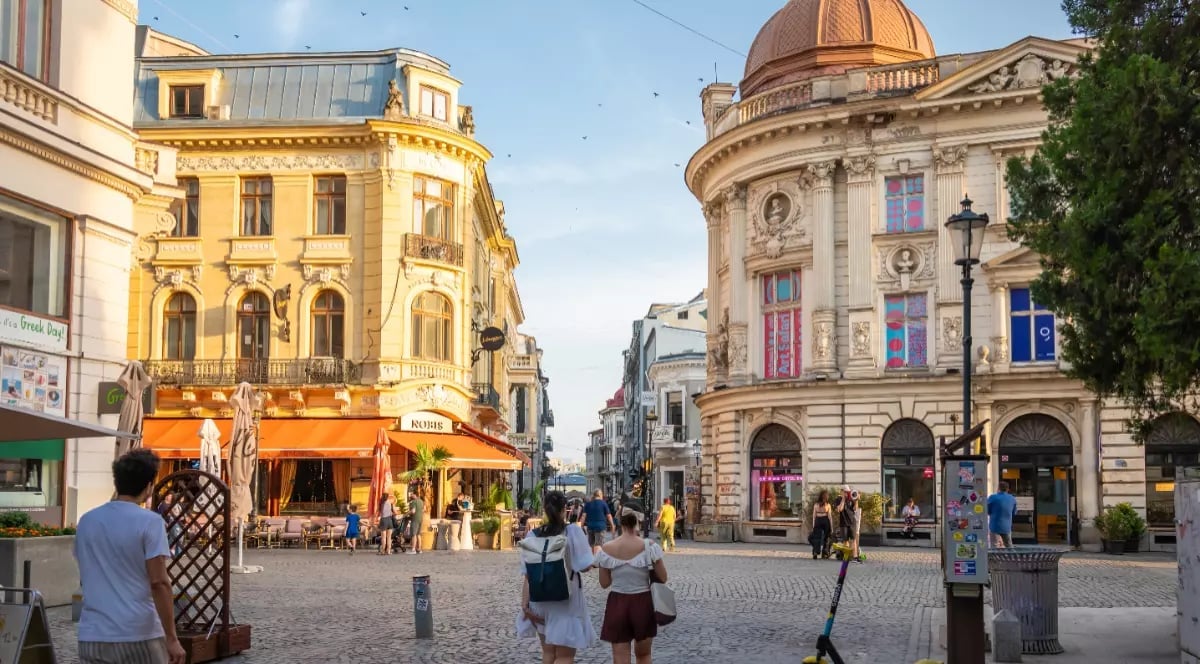
Historic yellow and cream-coloured buildings, domed architecture and pedestrians walking on a cobblestone street in central Bucharest

Romania is one of those countries people often arrive with an opinion about before they have actually been here.

Sometimes the opinion is positive.

Sometimes cautious.

Sometimes based on Dracula.

Sometimes on communism.

Sometimes on a photograph of a village.

Sometimes on something somebody told them twenty years ago.

And sometimes the traveller simply admits:

“I don’t really know what to expect.”

We like that answer.

Not knowing is a good place to begin.

Because Romania is difficult to reduce to one clear first impression.

It is not only medieval towns.

It is not only Bucharest.

It is not only mountains.

It is not only villages.

It is not an untouched corner of Europe waiting to be discovered.

And it is certainly not a country that has been standing still while the rest of the continent moved forward.

Romania makes more sense once you stop trying to match it with the version you expected.

That is where we would begin.

Romania is not waiting to be discovered

The phrase appears often in travel writing.

“Undiscovered Romania.”

“Europe’s hidden gem.”

“A country untouched by tourism.”

We understand why the language is attractive.

But we do not think Romania needs it.

People live here.

Cities grow.

Restaurants open.

Roads change.

Villages change.

Young people leave.

Some come back.

Businesses are built.

Old buildings are restored.

Others are neglected.

Tourists already visit.

Life continues.

Calling a country “undiscovered” can make it sound as though it only becomes important when an outsider finds it.

Romania was here already.

The more interesting question is not whether you have discovered it.

It is whether you have taken enough time to understand what you are looking at.

Dracula is part of the story. It is not the story.

There is nothing wrong with arriving because of Dracula.

Really.

Stories bring people to places.

Bran Castle is internationally famous partly because of that association, and ignoring the mythology completely would be almost as artificial as pretending it is the whole truth.

The problem begins only when Romania gets reduced to it.

There is royal history.

Saxon heritage.

Orthodox culture.

Communism.

The 1989 Revolution.

Ottoman influence.

Austro-Hungarian influence.

Village traditions.

Contemporary city life.

Wine regions.

The Danube.

The Black Sea.

The Carpathians.

And millions of ordinary people who rarely spend their Tuesday mornings thinking about vampires.

Enjoy Dracula.

Then keep going.

Romania becomes much more interesting after the souvenir shop.

Bucharest is Romania. Bucharest is not all of Romania.

Both statements are true.

Bucharest is Romanian.

Its contradictions are Romanian.

Its history is Romanian.

Its humour, impatience, cafés, apartment blocks, interwar houses, traffic and ambition all belong here.

But if you spend a weekend in Bucharest, you have not seen a compressed version of the entire country.

Drive towards Sinaia and the atmosphere changes.

Continue into Transylvania and it changes again.

Go east towards the Danube Delta and the logic of the journey changes completely.

Travel into Maramures and another rhythm appears.

Reach western Romania and different historical influences become visible.

The mistake is not visiting Bucharest.

The mistake is assuming it explains everything.

Our Bucharest for First-Time Visitors guide exists partly because the city deserves to be understood on its own terms.

So does the rest of Romania.

Romania is more modern than some people expect

This surprises us less than it surprises visitors.

Some travellers arrive expecting a country suspended somewhere between communism and rural tradition.

Then they reach Bucharest.

They use a modern airport.

They see office buildings.

Coffee shops.

Restaurants.

Technology companies.

Contemporary apartments.

Shopping centres.

Young professionals.

Digital services.

And suddenly the mental image needs updating.

That does not mean the older Romania has disappeared.

You can still find villages where older patterns of life remain visible.

Traditional crafts.

Local agriculture.

Religious customs.

Houses built in regional styles.

Grandparents keeping ways of doing things their grandchildren may no longer follow.

Both realities exist at the same time.

That is not contradiction.

That is what countries do.

They change unevenly.

Tradition and modern life are not enemies

Travel content often creates a false choice.

Either a place is authentic and traditional.

Or it is modern and therefore somehow less real.

We reject that completely.

A wooden gate in Maramures is real Romania.

So is a coworking space in Bucharest.

A monastery is real Romania.

So is a crowded supermarket on Friday evening.

A village wedding is real Romania.

So is a young Romanian ordering Thai food through an app.

Culture does not become fake when people buy newer cars or renovate their kitchens.

Tradition does not become meaningless because somebody also uses an iPhone.

Countries are allowed to exist in the present.

Romania included.

Do not come looking for “the real Romania”

This phrase sounds harmless.

But it can create strange expectations.

Where is the real Romania?

In a village?

At a market?

In Transylvania?

At somebody’s grandmother’s house?

Perhaps.

But also:

in Bucharest traffic at 08:30 on Monday;

in a technology office;

in a university;

in a vineyard;

in a football stadium;

in a shopping centre;

in a church on Sunday;

in a café full of students;

in an apartment block;

on a mountain road;

at a family table;

in a petrol station at midnight.

All of it counts.

The country does not stop being authentic when it becomes inconvenient for the photograph.

Local DACO Note

If you find yourself asking whether somewhere is “the real Romania”, try a different question:

What does this place tell me about Romania as it exists today?

You usually learn more that way.

Rural Romania is not a museum

This matters especially in villages.

Travellers understandably enjoy places where older architecture, agriculture and customs remain visible.

But people living there are not part of an exhibit.

They do not owe visitors a traditional costume.

They do not need to use old tools because they photograph better.

They are allowed satellite dishes.

Modern windows.

New cars.

Solar panels.

Plastic chairs.

Renovations you may not consider aesthetically perfect.

A village is successful when it works for the people living there.

Not when it preserves an outsider’s idea of the past.

We can appreciate heritage without asking people to remain frozen inside it.

Poverty and rural life are not synonyms

Another assumption worth challenging.

A rural environment may look different from what an urban traveller associates with wealth.

That does not mean every simple-looking household is poor.

And the opposite is also true: some communities face very real economic difficulty.

Romania contains inequality, like many countries.

But interpreting every village through a simple rich/poor lens misses a lot.

Property.

Land.

Family networks.

Agricultural activity.

Migration.

Money earned abroad.

Multigenerational households.

Local economies.

All of these can create realities that are not obvious from the roadside.

We would be careful about deciding what somebody’s life is worth from the condition of a fence.

Romanians may seem more serious before they seem warm

Not everyone arrives with this impression.

But some do.

A person behind a counter may not perform friendliness.

Someone may answer directly.

A stranger may not smile automatically.

That can feel different if you come from a culture where social warmth is expressed immediately and visibly.

Give it a little time.

Romanian warmth often appears through interaction rather than performance.

Ask something.

Start talking.

A completely different person may appear.

Someone who looked serious thirty seconds ago may spend ten minutes helping you solve a problem they were never responsible for.

This is one of the things we discussed more deeply in What Romanian Hospitality Really Feels Like.

Friendliness and friendliness-as-performance are not always the same thing.

Direct does not automatically mean rude

Romanian communication can sometimes be direct.

People may tell you something quite plainly.

They may ask personal questions earlier than you expected.

They may give advice without much ceremony.

Family members can sound as though they are conducting diplomatic negotiations at high volume when they are actually discussing lunch.

Tone matters.

Context matters.

Individual personality matters.

But visitors sometimes interpret unfamiliar communication rules through their own cultural expectations.

That is natural.

Just leave room for another interpretation.

Sometimes the person is not angry.

They are simply Romanian and discussing parking.

English is more common than some visitors expect

Especially in Bucharest, other major cities, hotels, restaurants and tourism environments, many international travellers find communication easier than expected.

Younger Romanians in particular often use English comfortably.

That does not mean every person in every village will speak it.

Nor should they have to.

But the idea that travelling through Romania requires constant language difficulty is usually exaggerated.

A few Romanian words are still worth learning.

Not because survival depends on them.

Because effort is appreciated.

Romania does not need you to be impressed immediately

Some destinations announce themselves.

You arrive and immediately understand the appeal.

Romania can work differently.

The first road from the airport may not be beautiful.

Bucharest may not make immediate architectural sense.

A village may not look like the romantic photograph you saw online.

A castle may be busier than expected.

A road may take longer.

Give the country a little time.

Look again.

Notice the old house between two newer buildings.

Notice how the mountains appear after leaving the city.

Notice how architecture changes between regions.

Notice the food.

Notice how long people sit at dinner.

Notice that a monastery is still functioning rather than merely preserved.

Notice the humour.

Notice what people complain about.

Notice what they defend.

Romania often becomes more interesting gradually.

We think that is one of its strengths.

Not every beautiful place needs to be spectacular

Tourism has trained all of us to expect intensity.

Breathtaking.

Unbelievable.

Epic.

Once-in-a-lifetime.

But travel does not always work like that.

A quiet square can be enough.

A normal lunch can be memorable.

A country road can stay with you.

A conversation can matter more than a landmark.

Romania contains spectacular landscapes.

Of course it does.

But if you only value the moments that could become a desktop background, you will miss much of the country.

Romania is not particularly interested in being a polished product

And we mean that affectionately.

There are rough edges.

A restored building may stand beside one waiting for restoration.

A beautiful historic centre may lead quickly into ordinary apartment blocks.

A spectacular mountain view may include a badly placed sign.

A charming village may have overhead cables.

A wonderful restaurant may have a menu design you would never approve.

Sometimes visitors find this frustrating.

Sometimes they find it refreshing.

We would not pretend the imperfections do not exist.

But we also would not confuse polish with value.

A place can be worth experiencing without looking perfectly curated.

Some things work better than you expected. Others less smoothly.

This is a more useful expectation than deciding Romania is either highly developed or difficult.

You may find digital payments extremely easy.

Then encounter a small local situation where cash is simpler.

You may travel efficiently on one route.

Then discover another road needs much more time.

You may have excellent English communication in one place.

Then need gestures and patience somewhere else.

You may walk into a contemporary restaurant that could belong in almost any European capital.

Then spend the following morning somewhere with a completely different rhythm.

The country is uneven.

Most countries are.

Travel becomes easier when you stop needing every part of it to behave identically.

Cheap is no longer a very useful description of Romania

Romania has historically been presented to international travellers as an inexpensive European destination.

For some visitors, many things may still offer comparatively good value.

But simply arriving with the assumption that everything will be cheap is increasingly unhelpful.

Accommodation ranges widely.

Restaurants range widely.

Private services range widely.

Bucharest prices are not identical to rural prices.

Popular destinations are not identical to less visited places.

Contemporary Romania has premium restaurants, expensive hotels and high-end services alongside very accessible everyday options.

We would think in terms of value, not cheapness.

Did what you paid for make sense?

That is a better question.

A lower price is not automatically more Romanian

This is another strange travel assumption.

A local experience does not become more authentic because it costs less.

A Romanian can eat at an inexpensive neighbourhood restaurant.

A Romanian can also eat at an expensive contemporary restaurant.

Both are Romanian life.

The same applies to accommodation, wine, transport and entertainment.

Do not use price as a shortcut for authenticity.

It rarely works.

Romania is not difficult to travel. It does require realistic planning.

There is an important difference.

You can travel through Romania independently.

You can rent a car.

Use trains.

Take private transport.

Join tours.

Combine them.

The country is not an expedition requiring special courage.

But geography and infrastructure deserve respect.

Two hundred kilometres do not automatically behave like two hundred kilometres somewhere else.

A mountain road is not a motorway.

A Friday afternoon is not always a Tuesday morning.

The Danube Delta does not behave like a road trip.

This is why we built separate guides to Getting Around Romania and Driving in Romania.

Planning reduces friction.

It does not make the country difficult.

Maps make Romania look easier to collect than it is

This is one of the most common planning mistakes.

Bucharest.

Brasov.

Sibiu.

Sighisoara.

Maramures.

Bucovina.

Delta.

Black Sea.

Everything fits beautifully on a screen.

Then you calculate the road.

And the check-ins.

And the meals.

And the time spent packing.

And suddenly your Romanian holiday has become a logistical relay race.

Our Romania by Region guide goes much deeper into this.

The short version is:

You will enjoy Romania more if you stop trying to win it.

You are allowed to leave something for next time

This sounds obvious.

Travellers struggle with it constantly.

Especially if they believe they may visit Romania only once.

But adding another destination does not guarantee another meaningful experience.

Sometimes it only guarantees another arrival.

There is dignity in saying:

Not this trip.

Maramures will remain.

Bucovina will remain.

The Delta will remain.

Romania does not disappear because you did not finish it.

Transylvania is not a theme park

It is a large historical region where people live.

That sounds obvious until travel planning begins.

Transylvania can mean:

Brasov.

Sibiu.

Sighisoara.

Villages.

Fortified churches.

Mountains.

Modern suburbs.

Businesses.

Universities.

Traffic.

Supermarkets.

Historical architecture.

Contemporary life.

The Dracula layer is real as tourism.

But expecting Transylvania to behave like a gothic stage set is unfair to the place.

Allow it to be normal sometimes.

Normal is part of culture too.

Castles are better when you stop asking which one is “best”

Peles and Bran are very different.

Good.

They should be.

Peles tells you something about Romanian royalty, taste, architecture and political history.

Bran has a completely different atmosphere, history and international mythology.

The question:

“Which castle is better?”

usually tells us less than:

“What do you want to understand?”

Part of our Royal Castles & Dracula’s Legend journey exists for exactly this reason — to give each place enough room to speak for itself.

“What do you want to understand?”

Travel improves when everything does not need to enter a ranking.

The countryside is not automatically quieter inside your itinerary

This sounds strange.

You go rural because you want calm.

Then you plan:

village at 10:00;

fortified church at 11:15;

lunch 12:20;

another village 13:10;

castle 15:00;

check-in 18:00.

The landscape is peaceful.

You are not.

Slow places require slow schedules.

Otherwise you simply carry the city’s urgency into the countryside.

Local DACO Note

If you are visiting somewhere because you want to experience a slower rhythm, do not schedule it in a way that makes slowing down impossible.

Romanian food is not only sarmale and mici

They matter.

Try them if you want.

But contemporary Romanian eating is much broader.

Markets.

Regional cooking.

Cheese.

Fish.

Wine.

Modern restaurants.

International food.

Coffee culture.

Seasonal ingredients.

Family recipes.

Our Romanian Food Explained guide is deliberately not a checklist for this reason.

A country’s food culture is not preserved inside six famous dishes.

And a Romanian eating pizza has not betrayed the nation.

Romanian hospitality is not unlimited smiling

We think this misunderstanding is worth repeating.

Hospitality can look like:

being on time;

explaining clearly;

carrying something;

giving directions;

calling somebody who knows the answer;

bringing food;

checking whether you arrived;

telling you honestly that your plan is too ambitious.

Not all care comes with theatre.

Some of the best hospitality is almost invisible.

You simply notice that things became easier.

Service and servility are not the same thing

This matters to us as a travel company.

Good service does not mean performing superiority for the guest.

Nor does it mean pretending every guest request is automatically sensible.

Sometimes good service means saying:

“We can do that.”

Sometimes:

“We can, but we would not recommend it.”

And occasionally:

“No. There is a better way.”

We believe travellers deserve competent judgement, not obedience disguised as hospitality.

That is part of what Romania, Privately Arranged means to us.

Do not mistake flexibility for lack of planning

A good Romanian itinerary should have room to move.

That does not mean nothing is organised.

Quite the opposite.

Real flexibility usually requires good preparation.

You know what matters.

You know what can move.

You know what cannot.

You know what happens if weather changes.

You know which stop can be shortened and which should not.

Poor planning says:

“We’ll figure it out.”

Good flexibility says:

“We have options.”

There is a difference.

Romania is not a country you need to “survive”

Occasionally travel content talks about Romania as though international visitors need special courage.

Be careful.

Watch your belongings.

Use normal urban judgement.

Understand transport.

Check current requirements.

Do the things you would do when travelling in any unfamiliar country.

Then travel.

Constant anxiety is not preparation.

And pretending nothing can ever go wrong is not preparation either.

Confidence sits somewhere in the middle.

You do not need someone local for everything

We say this despite being the local company.

Many parts of Romania are easy to explore independently.

Walk Bucharest yourself.

Take a train.

Rent a car.

Choose a restaurant.

Spend an afternoon with no plan.

You do not need to outsource the entire experience.

Local help becomes valuable when it removes a real uncertainty.

A complicated route.

Timing.

A private tour where context matters.

An airport arrival.

A multi-region journey.

A restaurant or activity that genuinely needs arranging.

The goal should never be to insert DACO between the traveller and Romania.

The goal is to remove friction where friction gets in the way.

Sometimes the best advice we can give is not to book something

Do not rent a car for two central Bucharest days if you do not need one.

Do not add another castle because you think three is better than two.

Do not make Maramures a rushed detour simply because somebody said you must see it.

Do not book a private transfer when the train genuinely suits you better.

Do not turn every dinner into a curated experience.

And do not buy a service simply because it exists.

We would rather have a traveller use DACO where DACO improves the journey.

That creates a better trip.

And, frankly, a better relationship.

Romania will probably contradict something you believed about it

We hope so.

That is one of the reasons to travel.

Perhaps you expected it to feel poorer.

Perhaps richer.

More traditional.

Less traditional.

More chaotic.

More organised.

More Eastern.

More Western.

More serious.

More welcoming.

You may be right about some things.

Wrong about others.

But the point is not to arrive with no assumptions.

That is almost impossible.

The point is to allow reality to revise them.

Do not compare Romania every five minutes

“This looks like Austria.”

“This feels like Italy.”

“This reminds me of Hungary.”

“This is like the Balkans.”

Comparisons are natural.

They help us understand unfamiliar things.

But at some point, let them go.

Brasov does not need to become a smaller version of another city you already know.

The Carpathians do not need to become someone else’s mountains.

Romanian wine does not need to imitate French wine before you are allowed to enjoy it.

The country becomes more interesting when it stops auditioning for another country’s role.

Romania does not have to win

This may be one of the most important things we can say.

Romania does not need to be:

the cheapest;

the most beautiful;

the most authentic;

the safest;

the wildest;

the most underrated;

or Europe’s anything.

Travel marketing likes competitions.

Actual travel does not need them.

You can love one Romanian town and dislike another.

You can have a wonderful meal and a forgettable one.

You can think a famous attraction was worth it and another was not.

That does not threaten the country.

It makes your experience real.

We would rather help you understand Romania than convince you to admire it.

What we hope changes while you are here

Not your opinion necessarily.

Your resolution.

We hope Romania becomes less blurry.

Bucharest becomes more than a capital you landed in.

Transylvania becomes more than Dracula.

A village becomes more than “traditional”.

A Romanian becomes more than a stereotype.

A plate of food becomes connected to a place.

A road becomes part of the journey rather than dead time between attractions.

You begin seeing differences between regions.

You begin understanding why some journeys need more time.

You notice that old and new live together.

And perhaps the country starts feeling less like something you are consuming and more like somewhere you are temporarily participating in.

That is enough.

Common questions

Frequently Asked Questions

If we could leave you with one thought

Come to Romania with expectations.

Everybody does.

Just do not protect them too carefully.

Let Bucharest be more complicated than you thought.

Let a village be more modern.

Let a Romanian be less formal.

Let a famous place disappoint you slightly.

Let an ordinary place surprise you.

Let lunch take too long.

Let the road change the plan.

Let the country contradict you.

That is not Romania failing to match the trip you imagined.

That is travel doing what it is supposed to do.

Romania becomes much more interesting when you stop asking whether it matches the version you expected.

And perhaps, by the time you leave, you will not have a simpler opinion of Romania.

You will have a more accurate one.

We think that is better.

DACO Team

Local travel knowledge from DACO Private Travel, Bucharest.

Romania, Privately Arranged.

Planning your first Romania journey?

Tell us what you are curious about, how much time you have and how you prefer to travel. We can help you understand what fits naturally — and just as importantly, what does not need to be added.

Plan My Trip