Romania Travel Knowledge Hub
By Neli Budeanu
Co-founder, DACO Private Travel · Former hospitality professional in Bucharest
Local travel knowledge based on living in Romania, working in hospitality and helping organise journeys for international visitors.
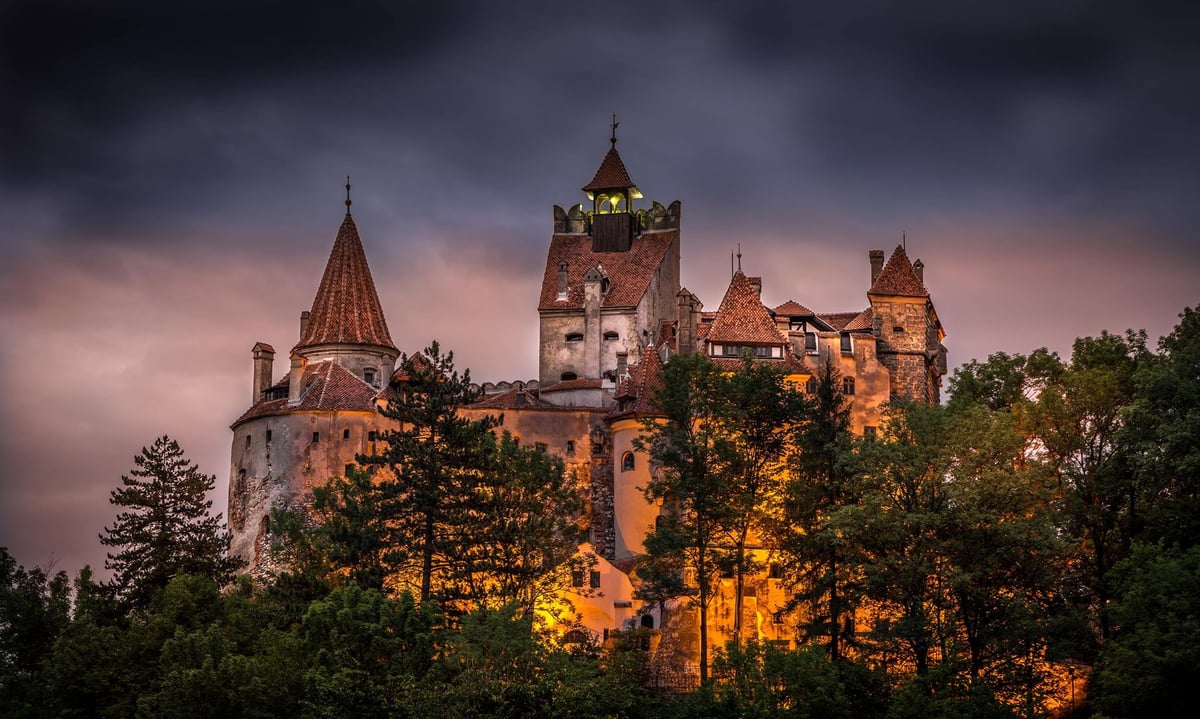
Bran Castle has a branding problem.
It is extremely good branding.
Ask international travellers what they know about Romania and there is a reasonable chance somebody will say:
Dracula's Castle.
That association has made Bran one of the country's most recognisable attractions.
It has also made the actual castle surprisingly easy to misunderstand.
Bran is worth visiting.
But not because Count Dracula once walked through its corridors.
He did not.
Count Dracula is fictional.
And the real story of Bran — a medieval fortress, an important passage between Transylvania and Wallachia, a customs point and later a beloved royal residence — is much more interesting once you stop demanding that every room prove the vampire story.
The legend can still be fun.
You just need to know where the legend ends and the history begins.
Yes, for most first-time visitors to Transylvania — provided you know what you are going to see.
Bran Castle is particularly worth visiting if you are interested in:
I would be less enthusiastic if your only expectation is an immersive Dracula attraction.
Bran is a real historical castle that acquired a powerful literary identity.
It is not the preserved home of a fictional vampire.
| Question | Local answer |
|---|---|
| Worth visiting? | Yes, especially on a first Transylvania trip |
| Is it really Dracula's Castle? | By modern cultural association, yes; historically, the story is much more complicated |
| Did Count Dracula live there? | No. Count Dracula is fictional |
| Was it Vlad the Impaler's home? | No |
| What is its strongest real history? | Medieval fortress, border/commercial role and royal residence |
| Important royal figure | Queen Marie of Romania |
| How long inside? | Around 1–1.5 hours works for many visitors |
| Distance from Brașov | About 30 km |
| Direct train to Bran? | No |
| Easy from Brașov? | Yes, with road transport |
| Possible from Bucharest? | Yes, but it creates a full travel day |
| Combine with Peleș? | Yes, particularly by road |
| Combine with Brașov? | Yes |
| Main downside | Crowds and a highly tourism-oriented area around the castle |
This requires three different stories.
They are often compressed into one.
Count Dracula is the fictional character created by Irish author Bram Stoker in his 1897 novel Dracula.
He is not a historical Romanian nobleman whose residence can be visited.
Vlad III — Vlad Țepeș in Romanian, usually called Vlad the Impaler in English — was a real fifteenth-century ruler of Wallachia.
His life belongs to history.
The modern association between Vlad and Dracula developed separately from the historical identity of Bran Castle.
Bran is a real fortress with its own documented history.
Over time, the visual character of the castle, its Transylvanian setting and the international fascination with Dracula helped turn Bran into the place most widely marketed and recognised as "Dracula's Castle".
That name is now part of its global identity.
But it should not replace the history.
No.
Bran Castle should not be presented as Vlad Țepeș's home.
This is one of the easiest myths to repeat because the tourism story becomes much simpler if every piece connects perfectly.
Real history rarely behaves that conveniently.
Vlad was ruler of Wallachia.
Bran occupied an important position near the historical passage between Transylvania and Wallachia.
That geographical relationship matters.
It does not transform the castle into Vlad's permanent residence.
You can enjoy the Dracula connection without inventing the missing history.
The fortress visible today developed at the end of the fourteenth century.
Its position explains much of the story.
Bran sits near an important mountain passage connecting Transylvania with Wallachia.
A fortress here could therefore serve strategic and economic purposes.
Movement mattered.
Trade mattered.
Customs mattered.
Defence mattered.
For much of its history, Bran was not a romantic castle isolated in the mountains waiting for a novelist.
It was connected to the practical realities of controlling a route.
That is often a much better way to understand medieval architecture.
Ask not only:
"Who lived here?"
Ask:
"Why did somebody need a fortress here at all?"
The landscape begins answering the question.
This is the part of Bran that deserves much more attention than it often receives internationally.
In 1920, after Transylvania had become part of Greater Romania, Bran Castle was offered to Queen Marie of Romania by Brașov.
The castle became one of her favourite residences.
She oversaw its transformation into a royal home, giving Bran a completely different layer of identity from its earlier military and commercial role.
This matters when you walk through the interiors.
You are not simply seeing a medieval fortress.
You are seeing a building repeatedly adapted to new purposes.
Fortress.
Customs point.
Residence.
Museum.
Legend.
Few castles remain frozen inside the century in which they were first built.
Bran certainly did not.
Queen Marie is one of the most significant figures in modern Romanian royal history.
Born into the British royal family as a granddaughter of Queen Victoria, she married the future King Ferdinand of Romania.
Her public role became particularly important during the First World War and the political period surrounding the creation and international recognition of Greater Romania.
But at Bran, the enormous political figure becomes more personal.
The castle was somewhere she actively shaped and enjoyed.
That royal history gives Bran something the Dracula story alone cannot provide:
a real person whose relationship with the castle can actually be documented.
If you visit Bran and leave remembering only a fictional count, you have missed one of its strongest stories.
Do not expect Peleș Castle.
This is important.
Bran is narrower.
More vertical.
More fortress-like.
The experience includes:
Its appeal is partly architectural.
You move through a building that feels constrained by the rock and defensive structure on which it developed.
That can also make the visit feel crowded when many people arrive simultaneously.
A beautiful medieval stairway becomes less mysterious when everyone is trying to climb it at once.
Crowds genuinely affect the Bran experience.
For many visitors, around 1 to 1.5 hours inside the castle is reasonable.
Allow closer to two hours if you want to:
The experience can take longer during busy periods.
If Bran itself forms part of a relaxed afternoon with lunch or time around the village, you may spend several hours in the area.
But you do not need an entire day solely to walk through the castle.
That is why Bran combines so naturally with Brașov or other nearby experiences.
During busy periods, I would.
Bran Castle's official visitor information currently recommends online ticket purchase, and demand can be high during summer and special periods.
This becomes particularly important around:
Do not build an entire Bucharest-to-Bran day around a particular castle visit and only begin thinking about tickets when you reach the entrance.
Check the official Bran Castle tickets and opening hours while planning.
Prices and schedules change.
A permanent travel guide should not pretend otherwise.
Season changes Bran considerably.
The surrounding landscape begins turning green and visitor numbers may be easier than during peak summer periods.
You have long days and the wider region is easy to combine with outdoor travel.
You may also encounter substantially more visitors.
Bran and the surrounding Carpathian landscape work extremely well visually in autumn.
The Dracula association also becomes especially prominent approaching Halloween.
That popularity has consequences.
Snow can make the castle's setting particularly atmospheric.
Road conditions and shorter daylight hours need more attention.
The best season depends on the rest of your Romania itinerary.
I would not plan an entire trip around finding Bran in some imagined perfect state.
Castles survive weather.
Travellers can usually adapt.
If Halloween at "Dracula's Castle" is genuinely one of the reasons you are travelling to Romania, it can be a unique experience.
It is also not an ordinary Bran visit.
Bran Castle has organised special Halloween programming and events, with separate arrangements depending on the year.
Demand can be intense.
Tickets and programmes change.
If Halloween is the objective, use the official Bran Castle events information and organise it well in advance.
Do not arrive on 31 October assuming a standard daytime ticket will somehow turn into the experience you saw online.
Special events require special planning.
No. But Bran is extremely tourist-oriented.
Those are different statements.
The castle itself is a genuine historic monument.
Its medieval history is real.
Its role around the Transylvania-Wallachia passage is real.
Its association with Queen Marie is real.
Its architectural setting is real.
Then there is the Dracula economy around all of that.
None of this makes the castle fake.
It tells you what happens when a real historical place acquires one of the most successful tourism identities in Eastern Europe.
If you arrive expecting an untouched Transylvanian village that nobody else has discovered, you may dislike the immediate area.
If you arrive expecting one of Romania's best-known historical attractions and understand that popularity creates commerce, the experience makes much more sense.
The area immediately around the castle is designed substantially around visitors.
You will find places to eat, accommodation, shops and plenty of souvenir activity.
Some travellers enjoy the energy.
Others want to leave quite quickly after the castle.
Both reactions are reasonable.
What I would avoid is concluding that the immediate castle entrance represents rural Transylvania.
It does not.
If village landscapes and rural life are important to you, the wider Bran-Moieciu area and Transylvanian countryside deserve their own time.
The castle is one point within a much larger region.
Bran is approximately 30 kilometres from Brașov and is reached by road.
There is no direct train to Bran Castle.
That distinction matters because many travellers correctly discover that Bucharest and Brașov connect easily by rail, then assume Bran is simply the next railway stop.
It is not.
From Brașov you can continue by:
The official Bran Castle visitor information currently describes public bus connections between Brașov and the Bran-Moieciu area.
Check the current timetable before travelling rather than relying on a schedule copied into an old article.
For independent travellers, this is completely manageable.
It simply requires one additional connection.
Yes.
The logical public transport structure is generally:
Bucharest → Brașov by train
then
Brașov → Bran by road transport.
This can work perfectly well.
But calculate the complete day.
Suddenly the question is not whether it is technically possible.
It is whether that is how you want to spend the day.
If Bran is your only priority and you enjoy independent transport, fine.
If you want Bran plus Peleș plus Brașov, road transport becomes much more attractive.
Yes.
They fit naturally together.
Brașov is a city.
Bran is a separate destination outside it.
That means you should give each one a different role.
I would not arrive in Brașov, photograph Council Square for twelve minutes and then declare the city complete because Bran was the real objective.
Brașov deserves time of its own.
If you have an overnight stay, the combination becomes particularly easy.
Visit Bran during part of the day.
Then return to Brașov and experience the city after the day-trip traffic has disappeared.
Our Brașov Travel Guide explains how much time the city itself deserves.
Yes.
This is one of the classic first-time Romania excursions.
It also creates a long day.
The combination works because each place gives you something different.
Peleș Castle — Romanian royal history and an elaborate nineteenth-century residence.
Bran Castle — medieval fortress character, Queen Marie and the Dracula story.
Brașov — an actual Transylvanian city rather than another castle interior.
For somebody who has only one excursion day from Bucharest, that contrast can be excellent.
But there is a trade-off.
Traffic.
Castle visiting times.
Tickets.
Meals.
Driving.
All three compete for the same hours.
If you want a slower experience, remove a stop or sleep in the region.
If you want the broad introduction and accept a full day, the combination makes sense.
Compare your options in the Best Day Trips from Bucharest guide.
Do not treat them as substitutes.
They are very different.
I would.
Not because two castles are automatically better than one.
Because these two are different enough to explain very different chapters of Romanian history.
That contrast is useful.
If somebody asked me:
"Which castle has the more impressive interiors?"
I would choose Peleș.
"Which castle gives me the iconic Transylvania/Dracula experience I came to Romania curious about?"
I would choose Bran.
"I know absolutely nothing about Romania and have one full day outside Bucharest."
I would try to see both, with Brașov if the day can be organised realistically.
The right answer changes with the question.
That is more useful than declaring a winner.
It can be.
A real castle already has an advantage.
Children interested in castles or Dracula stories may find Bran much more engaging than another formal museum.
But remember that this is a historic building.
The visitor route involves physical movement through old architecture and can become crowded.
Families with mobility or stroller concerns should check current official accessibility information before visiting.
And Dracula does not need to become frightening in order to make Bran interesting.
There is enough real history to work with.
Not solely because it takes a long time to visit the castle.
It does not.
Stay if the area interests you.
An overnight can make sense when:
For many first-time visitors, Brașov is the more versatile base.
You have a historic city, restaurants, accommodation and transport connections, with Bran available as an excursion.
For a countryside-focused trip, the calculation changes.
Accommodation should follow the experience.
See our Where to Stay in Romania guide for choosing the right base.
If you have only one free day from Bucharest, a day trip works.
If you have several days allocated to Transylvania, I would stop returning to Bucharest.
Stay in the region.
This is one of the most important itinerary principles in Romania.
Bucharest is a useful base until the return journey begins consuming the experience.
Bran.
Brașov.
Villages.
Sibiu.
Sighișoara.
At some point this is no longer a day-trip itinerary.
It is a Transylvania itinerary.
Treat it like one.
Usually one of two things.
They arrive expecting direct historical evidence connecting every room with Dracula and Vlad the Impaler.
The castle cannot deliver that because the story does not work that way.
This is almost as limiting.
They spend the visit saying:
"But Dracula wasn't real."
Correct.
And now you are standing inside a medieval Romanian castle discussing why a fictional Victorian vampire became connected with a real Transylvanian landmark.
That is culturally fascinating.
The myth itself has become part of the castle's history.
You do not need to believe it to enjoy it.
Go with three stories in your head.
The fortress.
Why was a castle needed here?
The queen.
How did Bran become a royal residence associated with Queen Marie?
The vampire.
How did a fictional character become so powerful that millions of people now recognise a Romanian castle through his name?
Those stories overlap.
But they are not the same.
Once you separate them, Bran becomes much more interesting.
Absolutely.
No travel company is required.
The case for a private tour begins when the itinerary becomes:
Bucharest → Peleș → Bran → Brașov → Bucharest
with tickets, traffic, timing and several different stops to coordinate.
Then someone else handling the road can become valuable.
Not because Bran itself is difficult.
Because the day around Bran becomes complicated.
That is the difference.
I would consider it when:
I would not insist on it when:
Use the simplest solution that gives you the day you actually want.
Bran Castle deserves better than either extreme.
It is not a vampire's historical home.
It is also not a meaningless tourist trap created from nothing.
It is a real fortress with centuries of history.
A strategic gateway.
A place of commerce and defence.
A royal residence connected deeply with Queen Marie.
And, eventually, one of the world's most recognisable symbols of Dracula.
The legend brought many people to the door.
The real castle gives them considerably more to discover once they walk through it.
So yes.
Go to Bran.
Take the photograph.
Enjoy the Dracula story.
Then look beyond it.
Romania becomes much more interesting when the myth is the beginning of the conversation rather than the end.
Common questions
Keep planning
If Bran is part of a wider journey, continue with the Brașov Travel Guide.
If you want the full decision guide for Romania's royal residence, read the Peleș Castle Guide, and if you are trying to choose between Romania's two most famous castles, continue with Peleș Castle vs Bran Castle.
If you are coming from Bucharest, compare the Best Day Trips from Bucharest, or plan the journey in our Bucharest to Bran Castle transport guide.
If you want to understand which Romanian regions belong naturally together, use Romania by Region and decide how much time you need in How Many Days Do You Need in Romania?.
For transport and movement, Getting Around Romania and Romania by Train cover your options, and Where to Stay in Romania helps you choose a base. If it is your first trip, start with First Time in Romania.
Romania, privately arranged
Bran is straightforward once you are there. The complexity lies in combining Bucharest, Sinaia, Peleș, Bran and Brașov within one realistic day — tickets, traffic, timing and several stops that all compete for the same hours.
A private day with DACO lets someone local coordinate the logistics while you focus on the castles, the Dracula story and the landscape. You can absolutely visit Bran independently; a private tour is simply a way to make the whole day around Bran simpler.