
Romania Travel Knowledge Hub

Romania for Solo Travellers: How to Travel Independently Without Turning Independence Into Work

By DACO Team

Local travel knowledge from DACO Private Travel, Bucharest.

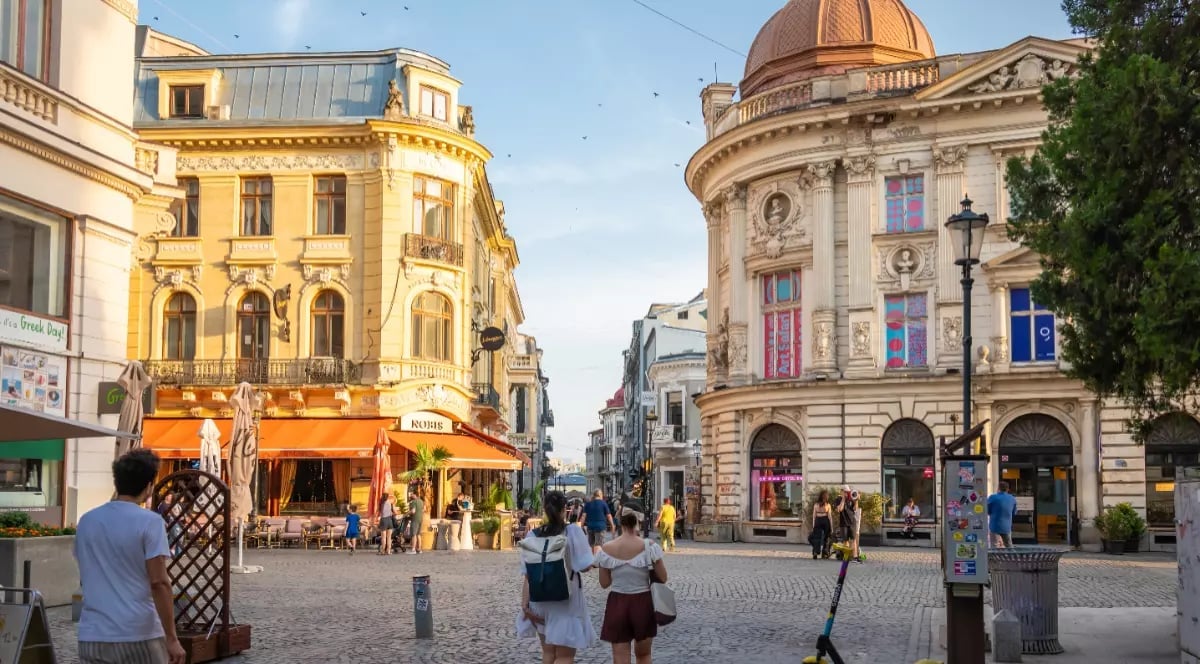
European town square with historic yellow and cream-coloured buildings, domed architecture and pedestrians walking on a cobblestone street in central Bucharest

Travelling alone gives you something group travel rarely does.

Complete ownership of the day.

You decide when to leave.

Where to stop.

What to skip.

Whether lunch lasts thirty minutes or two hours.

Whether you want company.

Whether you want silence.

Whether tomorrow needs a plan at all.

That freedom is one of the best things about solo travel.

It can also become surprisingly tiring.

Because when you travel alone, every small decision belongs to you too.

Which train.

Which road.

Which restaurant.

Which neighbourhood.

Which ticket.

Which hotel.

Which route.

Which problem to solve first when something changes.

Independence is valuable.

But independence does not mean turning yourself into the logistics department of your own holiday.

That distinction matters.

Especially in a country like Romania, where a journey may move between cities, mountain roads, rural areas and regions that work very differently from one another.

So this is not a guide about how to prove you can travel alone.

You already can.

It is about deciding which parts of the journey deserve your attention.

The best thing about travelling alone is that nobody votes

You like the place?

Stay.

You do not?

Leave.

You want another coffee?

Nobody is checking the schedule.

You decide that Bran is less interesting to you than the road through the countryside?

That is the new plan.

You wake up and realise you do not want to leave at 08:00?

There is no committee meeting.

This is genuine freedom.

It is one of the reasons solo travel can feel so different from travelling with friends, family or a group.

You are not constantly negotiating.

And because nobody else needs to approve the decision, your trip can respond much more quickly to what you actually enjoy.

That can be wonderful.

Use it.

But freedom can quietly become decision fatigue

There is another side.

Nobody votes because nobody else is there to decide.

So you decide everything.

Breakfast.

Transport.

Route.

Timing.

Whether the weather looks good enough.

Where to eat.

Whether to take that train.

Whether to change hotels.

Whether the taxi feels right.

Whether you are too tired to continue.

Whether tomorrow should be Sibiu or another night in Brasov.

None of these decisions is particularly difficult.

Fifty of them can become tiring.

A good solo trip does not eliminate decisions.

It protects the decisions that matter and removes the ones that do not.

A good solo trip removes decisions that do not deserve your attention and protects the ones that do.

Solo does not mean unsupported

This is one of the most unnecessary pressures travellers place on themselves.

You decided to travel alone.

Therefore you should organise everything alone.

Why?

There is no rule.

You can book your own hotel and use a private transfer from the airport.

You can travel by train for three days and use a guide on the fourth.

You can rent a car for the countryside and return it before spending two days in Bucharest.

You can organise almost everything yourself and ask someone local to help with one complicated route.

The journey remains yours.

Support does not cancel independence.

Sometimes it protects it.

Independence is choosing what you want to handle yourself

Not handling everything yourself.

There is a strange version of solo travel where inconvenience becomes evidence of competence.

Three transport changes instead of one direct journey.

Dragging luggage across a city because taking a car feels insufficiently independent.

Driving immediately after a long flight even though you are exhausted.

Spending an evening solving tomorrow's route because asking for help feels like cheating.

Nobody is scoring this.

You do not receive a more authentic journey because you made it unnecessarily complicated.

Local DACO Note

Independence is not measured by how many inconveniences you solve alone.

Not every inconvenience is an experience

This is especially important in travel.

Sometimes inconvenience becomes a story.

A train delay leads to a conversation.

A wrong turn reveals somewhere interesting.

Fine.

But not every logistical problem is secretly valuable.

Sometimes a missed connection is just a missed connection.

Sometimes carrying a suitcase up a hill is just carrying a suitcase up a hill.

Sometimes the transfer you almost did not book would simply have saved two hours of irritation.

Travel does not have to be difficult to become meaningful.

Romania is very possible to travel independently

You can build an independent trip here.

Bucharest is navigable.

Major destinations can be connected by rail or road.

Rental cars open rural areas.

Accommodation can be booked independently.

Restaurants do not require a local intermediary.

Museums can be visited without a guide.

You can walk.

Explore.

Change plans.

Spend a day doing absolutely nothing organised.

There is no need to construct Romania as a country that requires constant assistance.

It does not.

The useful question is not:

"Can I do this alone?"

Usually, yes.

The useful question is:

"Do I want to spend my time doing this part alone?"

Those are different questions.

The first few hours often deserve more planning than the third day

Solo travel usually feels easier once you are oriented.

You know where the hotel is.

You understand the street.

Your phone works.

You know how payments feel.

You have seen the transport system.

The country stops being completely unfamiliar.

Arrival is different.

You may be tired.

Carrying luggage.

Looking for transport.

Trying to work out where you are.

This does not mean you need a private transfer.

It means the first movement of the trip is worth understanding before you land.

Know how you intend to leave the airport.

Then choose the option that suits you.

Uncertainty is much more exhausting when you are also carrying a suitcase.

Bucharest works well when you allow it to be a city

A solo traveller can do a great deal in Bucharest independently.

Walk Calea Victoriei.

Visit museums.

Use the metro.

Sit in cafés.

Eat alone.

Take a taxi or ride-hailing service when walking does not make sense.

Spend an afternoon without any particular objective.

Our Bucharest for First-Time Visitors guide covers the city in much more detail.

The important solo-travel point is this:

you do not need to fill Bucharest with organised activities simply because you are alone.

Cities are especially good at giving solo travellers somewhere to be without needing a formal purpose.

Use that.

A café is useful even when you do not need coffee

One of the advantages of solo travel is how easily a café becomes a pause button.

You can sit.

Charge your phone.

Look at the map.

Watch the street.

Decide what happens next.

Or decide nothing for twenty minutes.

That does not need to become a productivity session.

Sometimes you simply need somewhere to stop being in transit.

Romanian cities have plenty of places where this is completely ordinary.

A table for one is still a table

Eating alone receives far too much psychological analysis.

You enter.

Ask for a table.

Sit.

Order.

Eat.

That is the procedure.

Nobody is convening a committee to establish why you came alone.

The waiter is not writing a case study.

The people at the next table usually have their own lunch to deal with.

If you want your phone, use it.

If you want a book, bring one.

If you want to sit and observe the room, do that.

Eating alone is not a test of confidence.

It is eating.

You do not need to hide inside your phone

This is optional, not a rule.

Phones are useful.

Maps.

Messages.

Reading.

Translation.

Planning.

They also provide an easy screen between you and the environment.

Sometimes that is exactly what you want.

Sometimes it is worth putting the phone down.

A solo traveller often notices things differently because nobody beside them is already providing commentary.

When nobody beside you is already interpreting the place, you sometimes notice more of it yourself.

The room.

Conversation around you.

The street.

How people move.

How long people stay.

What a place sounds like when you are not discussing it.

Solo travel can create attention.

If you let it.

Being alone and being lonely are not synonyms

Neither are being social and having a good trip.

This should not need saying.

But solo travel content often treats meeting people as the final proof that the journey succeeded.

Sometimes you will meet people.

Good.

Sometimes you will have long conversations.

Good.

Sometimes you will spend a whole day mostly alone and enjoy it.

Also good.

A solo journey does not need to become a social challenge.

You are allowed to like your own company.

You are also allowed to want company.

The useful part is being able to decide.

You do not have to meet locals

Another strange pressure.

"The best part of solo travel is meeting locals."

Maybe.

Sometimes.

But Romanian people are not included automatically with your airline ticket.

People are living their lives.

You may speak to someone.

You may not.

You may have a great conversation with a driver.

A waiter.

Another traveller.

A person beside you on a train.

Or nobody.

Do not judge the success of your journey by the number of strangers who became part of it.

Connection is valuable when it happens naturally.

It becomes strange when pursued as a travel objective.

And you do not need to avoid people either

The opposite extreme is equally unnecessary.

Solo does not mean isolated.

Join something because it interests you.

Take a private tour because context matters.

Sit at a bar if you feel like talking.

Ask someone a question.

Accept conversation when you want it.

Decline conversation when you do not.

Our guide to Romanian Etiquette for Visitors goes deeper into how social interaction here can feel.

The useful rule is simple:

your social energy belongs to you too.

Do not build the trip around avoiding being alone

Some solo itineraries become strangely full.

Walking tour.

Food tour.

Museum tour.

Group activity.

Dinner event.

Meetup.

Day trip.

Another tour.

The traveller is never alone.

Which is fine if that is exactly what they wanted.

But if every empty hour feels like something that must be solved, it may be worth asking why.

The freedom of solo travel includes empty time.

Local DACO Note

If you are travelling alone, do not fill every empty hour simply because nobody else is filling it for you. Some of the best parts of solo travel begin as unplanned time.

A quiet afternoon is still part of the trip

You do not have to explain it.

You do not need a sightseeing justification.

You can return to the hotel.

Read.

Walk without a destination.

Sit in a park.

Drink coffee for too long.

Do laundry.

Call home.

There is sometimes an assumption that solo travellers should maximise every minute because nobody else is slowing them down.

Perhaps the better use of that freedom is to slow yourself down.

The danger of flexible itineraries is pretending time is infinite

Solo travel makes last-minute changes easier.

That is useful.

But flexibility can become poor planning if everything remains undecided until the final moment.

Transport sells out.

Some attractions have schedules.

Distances remain distances.

Seasonal roads remain seasonal.

The Danube Delta does not reorganise itself because your mood changed after breakfast.

Freedom works best on top of enough structure.

Our How to Plan a Romania Itinerary Without Trying to See Everything guide is built around exactly this principle.

You need enough plan to protect the trip.

Not so much plan that the trip begins protecting the schedule.

Know what tomorrow requires before tonight becomes complicated

This is especially useful when travelling alone.

If tomorrow begins with:

an early train;

a long drive;

a mountain route;

an airport departure;

know that before deciding how much tonight becomes.

This is not a Romanian cultural rule.

It is simply kindness towards tomorrow's version of yourself.

Solo travellers have one driver.

One alarm clock.

One person responsible for remembering the passport.

Look after them.

Trains can be excellent when the route suits them

Romanian rail travel has advantages for solo travellers.

No driving.

No parking.

You can read.

Look outside.

Work.

Sleep carefully.

Arrive closer to the centre in some destinations.

But train should not become an ideology either.

Some routes work much better than others.

Some journeys take longer than expected.

Rural exploration often becomes difficult without additional transport.

Our Getting Around Romania guide compares these choices more broadly.

Use rail where rail helps.

Not because travelling alone creates a moral obligation to use public transport.

A rental car can completely change a solo journey

Especially outside the cities.

A car gives you:

freedom to stop;

access to smaller places;

flexibility;

control over timing.

It also gives you:

navigation;

parking;

fuel;

driving responsibility;

luggage management;

the fact that there is nobody else to take over when you are tired.

For some solo travellers, that freedom is exactly what they want.

For others, it turns the holiday into work.

Our Driving in Romania guide goes much deeper into that decision.

Again:

choose the responsibility because you want the freedom attached to it.

Not because solo travellers are supposed to do everything themselves.

Driving alone means nobody takes the second shift

This matters on longer routes.

With two drivers, fatigue can be shared.

Alone, it cannot.

If you are tired, stop.

If the weather changes, adjust.

If the road demands more concentration, give it more concentration.

If someone behind you wants to drive faster, that is their journey.

The solo road trip does not become more successful because you completed the maximum number of kilometres.

A private transfer can be an independent decision

This sometimes surprises people.

Private transport is occasionally treated as the opposite of independent travel.

It is not.

If you decide:

"I do not want to drive this section."

and book someone else to do it, who made the decision?

You did.

If a direct transfer removes three connections you do not care about experiencing, it may give you more useful independence at the destination.

The service should solve a specific problem.

It should not take ownership of the journey.

You can use DACO for one day and not see us again

We are completely comfortable with that.

Perhaps you organise nine days yourself.

Then one day you want:

a private tour;

a difficult transfer;

local context;

a specific road journey;

someone to organise a complicated segment.

Use us there.

Then continue independently.

We do not need to own the entire journey to be useful inside it.

In fact, we think this is often the healthier relationship between a traveller and a travel company.

The service appears where it adds value.

Then gets out of the way.

A guide can be useful for context, not companionship

Solo travellers sometimes avoid private guides because it feels inconsistent with travelling independently.

We think that is a misunderstanding of what a guide can be.

Perhaps you want to understand:

Romanian history;

Bucharest;

a castle;

a region;

communism;

food;

a route.

Then a good guide may improve those hours.

Not because you needed someone to keep you company.

Because context has value.

Viewing our private tours may help if you are considering which contexts benefit most.

A private tour should not turn you into a passive passenger.

It should make the place easier to understand.

And some days need no guide at all

Also important.

Walk.

Explore.

Get lost within reason.

Visit the museum alone.

Have lunch.

Take the metro.

Spend half the afternoon somewhere nobody recommended.

The existence of guided experiences does not make unguided time incomplete.

Romania does not need to be explained continuously.

Sometimes you should simply be there.

Decision fatigue often appears around food

Especially around 19:00.

You have spent the whole day deciding things.

Now another question.

Where do I eat?

Review sites.

Maps.

Menus.

Ratings.

Distance.

Price.

Cuisine.

Open now.

Suddenly dinner becomes research.

Sometimes choose well.

Sometimes choose nearby.

Sometimes ask the hotel.

Sometimes return to the place you liked yesterday.

Not every meal needs a strategic review.

Solo travel gets easier when ordinary decisions are allowed to remain ordinary.

You are allowed to eat in the same place twice

This is apparently controversial in travel culture.

You found a café you like.

Go back.

A restaurant worked.

Return.

You know where it is.

You know what happens.

That small piece of familiarity can be pleasant during a trip where almost everything else is new.

You did not fly to Romania to demonstrate maximum restaurant coverage.

Familiarity is useful when everything else is unfamiliar

The second morning at the same café feels different.

The same street looks different.

The receptionist recognises you.

You know where the supermarket is.

You stop checking the map before every corner.

This is one reason longer stays can feel so different from rapid itineraries.

Solo travellers especially can benefit from a good base.

Familiarity reduces low-level cognitive work.

That leaves more attention for the things you actually came to notice.

Changing hotels alone means moving the entire operation

Nobody watches the bags.

Nobody waits with the luggage while you ask a question.

Nobody checks the room while you call the car.

None of this is a major problem.

It simply makes frequent hotel changes slightly more tiring.

Our itinerary-planning advice applies even more strongly here.

Stay two nights where two nights make sense.

Do not convert freedom into constant relocation.

Your accommodation matters differently when you are alone

Not because it must be luxurious.

Because location can have more value.

A hotel or apartment that saves awkward transport every evening can simplify the entire trip.

Think about:

how you return at night;

public transport;

walking distance;

where you will eat;

how early you leave;

whether you have a car.

The cheapest room is not always the cheapest journey.

Location is part of logistics.

Safety should support the trip, not dominate it

We have a separate guide answering Is Romania Safe for Tourists? because the subject deserves proper context.

For solo travel, we would keep the essentials simple.

Know how you are returning to your accommodation.

Keep your phone usable.

Know where your important documents are.

Use legitimate transport.

Pay attention to your surroundings.

If going somewhere remote or into the mountains, let someone know the plan where appropriate.

Trust your boundaries.

Do not stay in an uncomfortable situation to prove independence.

Then travel.

You do not need to turn solo travel into constant risk management.

Your phone becomes slightly more important when nobody else's phone exists

Navigation.

Tickets.

Hotel address.

Transport apps.

Contact.

Translation.

Photography.

Everything may live in one device.

So battery becomes less boring than usual.

Carry what you reasonably need to keep the phone functional.

Know the accommodation address independently enough that one dead battery does not make the hotel disappear from the earth.

A screenshot can occasionally be one of the most sophisticated travel technologies available.

Have more than one way to access what matters

Not fifteen backups.

Just enough resilience.

If everything depends on:

one phone;

one bank card;

one digital document;

one way of contacting someone,

a minor problem becomes a larger one.

Think reasonably about redundancy.

Especially for:

money;

important contact details;

travel documents;

tickets;

accommodation information.

Prepared does not mean paranoid.

It means one small failure does not become the entire afternoon.

Tell somebody the plan when the plan deserves telling

City museum?

Probably unnecessary.

Coffee in Bucharest?

Nobody needs operational updates.

Mountain walk?

Remote rural route?

Long solo drive?

Perhaps tell someone.

You do not need surveillance.

You need context.

The more isolated the activity, the more useful it can be for someone else to know what you intended to do.

This is ordinary judgement.

Solo female travel deserves seriousness, not theatre

Women travelling alone often think about issues some male travellers rarely have to consider.

Night transport.

Unwanted attention.

Personal boundaries.

Drink safety.

Walking routes.

Who is driving.

This deserves respect.

It does not require constructing Romania as a special danger.

Our dedicated safety guide covers these issues more fully.

The useful solo-travel principle is:

you are allowed to change the plan because you no longer feel comfortable.

No explanation required.

Independence includes leaving.

You do not owe strangers your company

Someone talks to you.

Fine.

Someone asks where you are from.

Fine.

A conversation develops.

Fine.

You want to end it.

Also fine.

Travelling alone can make you appear more approachable because there is no group around you.

That does not create an obligation.

Politeness is useful.

Boundaries are more important.

You also do not owe anyone your travel story

Where are you staying?

Are you alone?

Where are you going tomorrow?

How long are you here?

Most questions may be completely innocent.

You still decide what you answer.

Privacy does not become impolite because you crossed a border.

Do not overplan evenings because you are solo

This is another form of avoiding empty space.

Dinner reservation.

Show.

Bar.

Walk.

Tomorrow's preparation.

Suddenly the evening has become a second work shift.

Leave some nights alone.

Go for dinner.

Walk back.

Stop somewhere because it looks good.

Or go to bed early.

The country will not report you for insufficient nightlife.

Nights do not have to become the social part of the trip

Solo travel advice often assumes evening is when the traveller must find company.

Not necessarily.

You may have spent all day around people.

A quiet dinner may be exactly what you want.

Or nightlife may be important to you.

Both work.

Again:

the decisions belong to you.

That is the recurring advantage.

The itinerary can change more easily when only one person needs convincing

This is one of solo travel's great luxuries.

You planned Sinaia.

Weather changes.

You stay in Bucharest.

No negotiation.

You planned to leave Brasov.

You like it.

Stay.

You intended to visit three places.

After the second, you are done.

Stop.

Travelling alone gives you permission to respond to the actual trip faster.

Use that flexibility rather than recreating group-tour rigidity for yourself.

But do not confuse changing the plan with having no plan

These are different.

A flexible plan can change.

A nonexistent plan requires constant creation.

If every morning begins with two hours of research, some of your freedom is being consumed by administration.

Know the rough route.

Know important constraints.

Know what requires booking.

Then leave the rest movable.

Structure can protect spontaneity.

One important booking can create a very free day

This is a useful solo-travel trick.

Perhaps you know only:

where you are sleeping;

how you are getting there;

one important visit.

Everything else stays open.

That one anchor can remove enough uncertainty for the rest of the day to feel genuinely free.

Freedom is not the absence of commitments.

It is having the right ones.

You do not need to be productive because you are alone

No one else is slowing you down.

Therefore you can see more.

Technically true.

Not necessarily desirable.

You can also:

see the same amount more comfortably;

walk slower;

stay longer;

take photographs;

sit somewhere;

change your mind.

Solo efficiency should not become another performance.

You are not competing against a version of yourself travelling with three friends.

The best solo days sometimes look unimpressive on paper

Coffee.

Walk.

Museum.

Lunch.

Another walk.

Sat somewhere.

Read.

Dinner.

That may sound like nothing.

It may also be the day when the city finally began to make sense.

Travel experience is difficult to measure from itinerary density.

This is true for everyone.

Solo travel makes it particularly visible.

Asking for help does not end the solo trip

You ask the receptionist.

The waiter.

A guide.

A driver.

Someone at the station.

A local.

You use Concierge for a complicated part.

Then what?

You continue travelling alone.

Nothing has been revoked.

The label survives.

More importantly, the journey survives.

A complicated multi-region journey may deserve more organisation

Solo travel across:

Bucharest;

Transylvania;

Maramures;

Bucovina;

the Danube Delta;

or several transport methods

can become administratively heavy.

Not impossible.

Just heavy.

At some point, the question becomes whether researching every connection is still part of the experience you enjoy.

If yes, excellent.

Do it.

If not, this is where a service like DACO Concierge can help with the pieces where coordination genuinely matters.

Not because solo travellers cannot organise complicated trips.

Because sometimes they have better things to do.

You do not need to outsource the interesting decisions

This is where travel planning can go wrong.

A service should not decide what you care about.

You should.

History.

Food.

Mountains.

Cities.

Villages.

Photography.

Rest.

Wine.

Architecture.

You decide what deserves the journey.

Help can then organise around those preferences.

The traveller remains the protagonist.

Always.

Keep ownership of the trip

Even when someone else organises part of it.

Understand roughly where you are going.

Know what the day contains.

Ask questions.

Change something if it does not feel right.

A professionally arranged journey should not make you passive.

It should make complexity quieter.

That is very different.

Some moments will feel more intense because you are alone

A beautiful landscape.

A strange street.

A difficult day.

An excellent meal.

A problem.

There is no immediate person beside you to absorb or reflect the moment.

Sometimes that feels wonderful.

Sometimes strangely quiet.

Both are normal.

You do not need to turn either feeling into a philosophy of solo travel.

Feel it.

Then continue.

Solo travel can make memory more private

There are places you may remember very strongly that nobody else remembers with you.

That is one of the unusual things about travelling alone.

The experience belongs entirely to you.

There is something valuable in that.

There can also be moments when you wish someone had been there.

Both can exist.

Again, travelling alone does not need to become an ideology.

It is simply one way of travelling.

Take photographs for yourself too

Not every photograph needs to prove where you were.

Take the street.

The table.

The road.

The strange sign.

The coffee.

The view from the room.

The thing you will recognise immediately six months later even though nobody else would understand why you photographed it.

Solo travel often creates memories through small observations.

Keep some.

You do not need a photograph of yourself everywhere

But you are allowed to want one.

Ask someone.

Use a timer.

Use a tripod where appropriate.

Or do not.

There is no requirement that solo travel be documented through landscapes containing no evidence that you existed.

Nor is there a requirement that every location contain your face.

Again:

your trip. Your decision.

You can return home without becoming a different person

This may be the most important anti-cliché in the article.

Solo travel is often marketed as transformation.

Find yourself.

Become fearless.

Discover who you really are.

Perhaps something changes.

Perhaps not.

Perhaps you simply had a very good week in Romania.

That is enough.

Travel does not owe you personal reinvention.

Common questions

Frequently Asked Questions

If we could give you one solo-travel rule

Travelling alone does not mean travelling without help.

It means the decisions belong to you.

Take the train if you want the train.

Take the car if you want the road.

Book the guide when context matters.

Sit alone when you want silence.

Talk to someone when you want company.

Change the plan.

Stay longer.

Leave earlier.

Ask for help.

Then continue on your own.

Do not fill every empty hour because nobody else is filling it.

Do not create inconvenience just to prove that you can solve it.

Do not turn independence into another person you have to impress.

The journey does not become more yours because it was more difficult.

Independence is not doing everything yourself. It is being free to decide what deserves to be yours.

That is enough.

DACO Team

Local travel knowledge from DACO Private Travel, Bucharest.

Romania, Privately Arranged.

Planning Romania on your own terms?

Tell us where you are going, what you prefer to organise yourself and which parts of the journey you would rather simplify. We can help where local knowledge adds value — and leave the rest of the trip yours.