
Romania Travel Knowledge Hub

Money in Romania: Cash, Cards, Tipping and What Travellers Actually Need

By DACO Team

Local travel knowledge from DACO Private Travel, Bucharest.

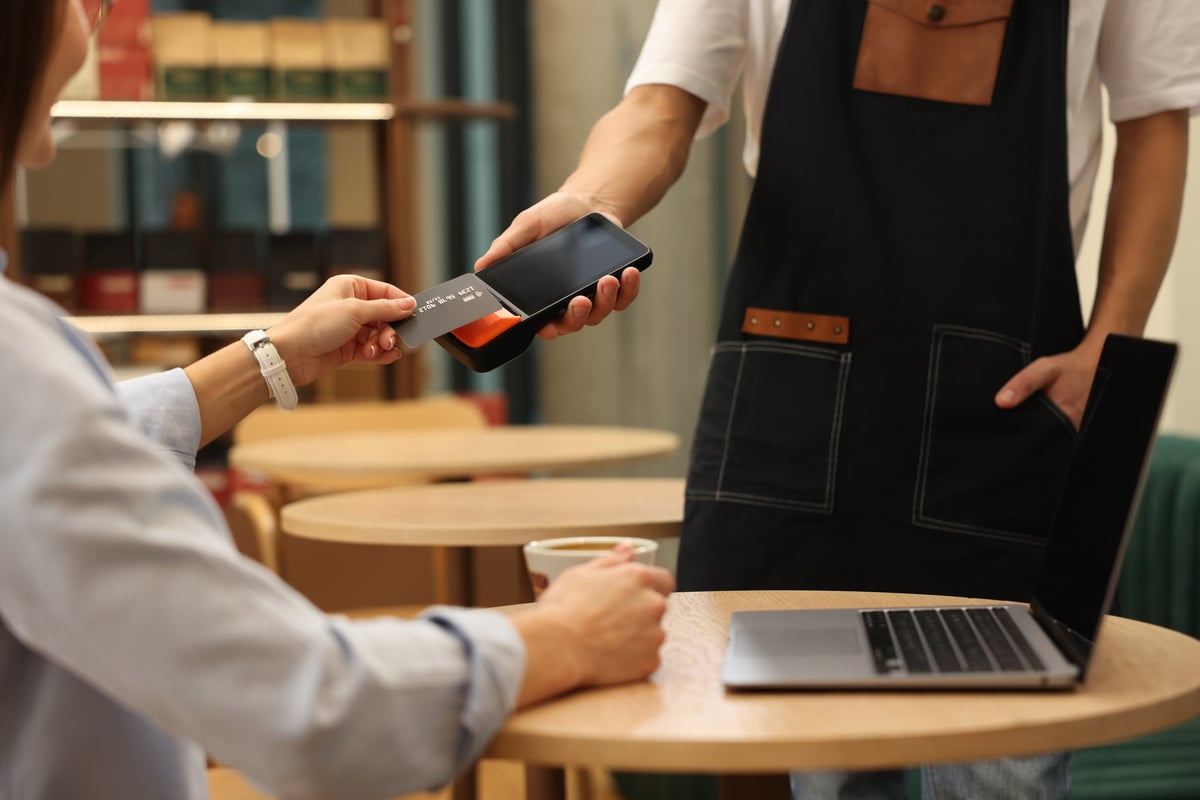
Woman paying with a card at a wooden cafe table

Money is one of those parts of travel that should become boring very quickly.

You arrive.

You understand the currency.

You know roughly when to use a card.

You keep a little cash.

You recognise what the payment terminal is asking.

Then you stop thinking about it.

That is the ideal.

Because if you are spending half the journey calculating exchange rates, wondering whether every restaurant accepts cards or debating the correct tip after every coffee, money has become much louder than it needs to be.

Romania does not require a complicated financial strategy.

It requires a little context.

The official currency is the Romanian leu, usually shown as RON. One leu becomes lei in the plural.

Cards are useful.

Cash is useful.

Neither needs to become an ideology.

And the most important rule is probably this:

Money should support the journey quietly.

Romania uses lei

Not euros.

Not pounds.

Not dollars.

Lei.

You will usually see prices expressed as RON or lei.

If something costs 30 lei, the useful number is 30 lei.

Of course, when you first arrive, you will mentally convert things.

Everyone does.

Thirty lei becomes euros.

Then pounds.

Then dollars.

Then perhaps back to lei because you forgot what you were calculating in the first place.

Normal.

But after a little while, let the new currency become its own reference point.

If a price is in lei, think in lei.

Travel becomes easier when you stop renegotiating the currency mentally at every purchase.

Your euros are not a parallel national currency

Travellers sometimes arrive with euros and assume Romania functions halfway between two currencies.

It does not.

You may occasionally encounter a particular business or arrangement where another currency is discussed, especially in tourism or for quoted services.

That does not make euros legal tender for ordinary everyday purchases.

The domestic currency is the leu.

For normal travel, think in RON.

If someone quotes something differently, understand the arrangement before paying.

Simple.

You probably need less cash than you imagine

A visitor arriving in Bucharest does not normally need to begin the trip by filling a wallet with Romanian banknotes.

Cards are part of everyday payment life in many hotels, restaurants, supermarkets, cafés and other urban businesses.

But that does not mean:

Romania is cashless.

It is not useful to think in absolutes.

Card acceptance can vary.

Terminals can fail.

A smaller business may prefer or require cash.

A market stall may work differently from the supermarket beside it.

A rural stop may work differently from a Bucharest restaurant.

So we would not tell you:

"You don't need cash."

We would tell you:

carry some cash for the situations where cash makes life easier.

Carry enough cash to solve a small problem

Not enough to create a larger one.

This is our preferred approach.

A small amount of lei can be useful for:

  • a small purchase;
  • a market;
  • a place where a terminal is unavailable;
  • a rural stop;
  • an optional cash tip;
  • a minor situation where your card is simply not the easiest solution.

What you probably do not need is your entire holiday budget sitting in your wallet.

Local DACO Note

Carrying enough cash to solve a small problem. Not enough to create a larger one.

The amount of cash you need changes with the journey

Three days in central Bucharest?

One type of payment environment.

A road journey through smaller places?

Potentially another.

Markets?

Different again.

Remote or rural travel?

Having some cash becomes more useful.

This is why universal advice such as:

"Take exactly X lei per day"

is not particularly intelligent.

Your itinerary matters more than a formula.

The smaller the transaction, the more useful cash can become

This is a practical pattern rather than a universal rule.

Large commercial environments usually make card payment straightforward.

Smaller transactions can be more variable.

A local producer.

A market stall.

A small rural business.

Something purchased quickly on the road.

Some will accept cards.

Some may not.

There is no need to turn this into a theory about rural Romania.

Just keep enough flexibility that one unavailable terminal does not become an event.

Markets are not museums with card terminals

Markets are operating commercial environments.

And vendors can work differently from one another.

One accepts cards.

Another cash.

Another may have a terminal that is temporarily not working.

Ask before assuming.

If exploring Bucharest's food and market culture, this is one reason a little cash can remain useful even when most of the rest of the day happens by card.

The payment method is not the interesting part of the market.

Food is.

People are.

The place is.

Solve payment quickly and return your attention there.

Your card is a payment method, not a travel philosophy

Travellers sometimes divide themselves into camps.

"I never carry cash."

"I only use cash abroad."

Why?

Use the tool that works.

Card for one thing.

Cash for another.

A different card if the first one fails.

The objective is not consistency.

The objective is paying for lunch without turning it into a financial position statement.

Know what your own bank charges

This is one part no Romania guide can decide for you.

Your card issuer may apply:

  • foreign transaction fees;
  • cash-withdrawal fees;
  • currency-conversion fees;
  • other conditions connected to international use.

Those depend on your own bank, card and account.

Mastercard itself advises cardholders to check with their issuing institution for the foreign-exchange fees that apply to international transactions.

That is worth understanding before travelling.

Not obsessing over.

Understanding.

An ATM can involve more than one price

You want cash.

You find an ATM.

Simple transaction.

Potentially.

But several different costs can exist around one withdrawal:

  • your own bank may charge something;
  • the ATM operator may charge something;
  • currency conversion may introduce another cost.

This is why the amount leaving your account can be more complicated than the amount of cash entering your hand.

The lesson is not:

"Avoid ATMs."

It is:

read what the machine is telling you.

The machine being convenient does not mean the conversion is

ATMs are excellent examples of travel psychology.

You are standing there.

You need cash.

Buttons appear.

One option looks simple.

The machine helpfully offers to show everything in the currency you already understand.

Wonderful.

Except the convenience may include an exchange rate or additional fee.

That is where Dynamic Currency Conversion enters the conversation.

What is Dynamic Currency Conversion?

Dynamic Currency Conversion, usually shortened to DCC, is when a merchant or ATM offers to convert a foreign transaction into your home currency at the point of purchase or withdrawal.

So instead of seeing the transaction charged in Romanian lei, you may be offered:

  • euros;
  • pounds;
  • dollars;
  • or whatever currency your card uses.

Visa explains that DCC can include the exchange rate and additional fees or markup, and that the user should be shown the relevant conversion information and given a choice whether to accept it.

That convenience is not free information.

It is a currency-conversion decision.

Familiar currency can feel safer than local currency

This is why DCC works psychologically.

You see:

€42.80

and immediately understand it.

You see:

213 lei

and your brain begins doing arithmetic.

So the first option feels easier.

But ease of understanding and quality of exchange rate are separate questions.

Convenience language can hide an exchange-rate decision.

Read the screen before pressing the friendly-looking button.

Helpful and favourable are not always the same thing

Visa says DCC screens should disclose the transaction amount in both currencies, the exchange rate and any additional fee or markup, while Mastercard likewise notes that merchant or ATM conversion into your home currency can involve additional conversion costs.

That is the information you need.

Not whether one button is visually more reassuring.

Local DACO Note

If a payment screen suddenly offers you a helpful conversion into your home currency, slow down. Helpful and favourable are not always the same thing.

Ten seconds of reading is enough.

Then decide.

Your bank and the ATM are not necessarily offering the same conversion

This is the key distinction.

If a transaction remains in RON, currency conversion is generally handled through your card/payment arrangement according to your issuer's terms.

If you accept DCC, the merchant or ATM-side conversion mechanism is involved instead.

Those are different routes.

Visa and Mastercard both advise travellers to understand the conversion terms rather than treating the home-currency option as automatically preferable.

You do not need to become a foreign-exchange trader.

Just know which decision you are making.

Do not press buttons faster because there is someone waiting behind you

A surprisingly useful ATM rule.

You are travelling.

Nobody behind you will suffer permanent harm because you spent eight seconds reading the conversion screen.

Check:

  • amount;
  • currency;
  • fees;
  • conversion.

Then continue.

Speed is valuable.

So is knowing what you just agreed to.

One larger withdrawal and ten small withdrawals create different costs

Depending on your own bank and the ATM operator, repeated withdrawals can mean repeated fees.

That does not mean you should withdraw an enormous amount of cash at once.

Again, there is no universal formula.

The useful balance is between:

  • carrying more cash than you need;
  • and repeatedly paying transaction costs you could have avoided.

Check your card conditions.

Then behave like a normal person rather than a treasury department.

Exchange offices are not all the same decision

You may decide to exchange physical currency.

Fine.

Look at the actual rate.

Understand whether a commission applies.

Check what you are receiving before completing the transaction.

The large words:

0% COMMISSION

do not tell you the entire economic story.

Because the exchange rate itself is also part of the price.

No commission does not mean no cost.

That principle travels well.

A bad exchange rate is still a price

People recognise explicit fees easily.

€5 fee.

Clear.

A weaker exchange rate feels less visible because nobody hands you an invoice saying:

"This was the expensive part."

But the difference still costs money.

That is why comparing exchange arrangements should involve the amount you ultimately receive.

Not only the commission headline.

Airport convenience is still convenience

You have just landed.

New country.

Luggage.

Maybe tired.

Currency exchange is immediately in front of you.

That can be useful.

Perhaps you need some cash.

Fine.

But arrival is rarely a good reason, by itself, to make a large currency decision without looking at the terms.

We would not tell you:

"Never exchange money at an airport."

That is too absolute.

We would say:

understand the rate;

exchange what makes sense;

do not assume the first service you encounter is automatically the best financial choice simply because it appeared at exactly the moment you became tired.

Arrival is not the moment to solve the entire holiday

This applies to more than money.

You do not need:

  • all your cash;
  • every ticket;
  • every restaurant;
  • every decision

solved before leaving the airport.

Get oriented.

Get where you are staying.

Let Romania become slightly less unfamiliar.

Many decisions become easier after that.

Card terminals can ask questions too

Not only ATMs.

A card terminal in a shop, restaurant or hotel may sometimes present a currency-conversion choice.

Same principle.

Read it.

Understand what currency the transaction will be processed in.

Do not automatically accept a conversion simply because your home currency looks more familiar.

A payment terminal is trying to complete a transaction.

It is not personally concerned about your cognitive comfort.

Check the amount before tapping

This sounds insultingly obvious.

Which is why it is useful.

You are talking.

Someone brings the terminal.

Tap.

Done.

Instead, take half a second.

Look at the amount.

Especially with a new currency.

A missing decimal, extra digit or simple misunderstanding is much easier to resolve before payment than afterwards.

Attention is cheaper than correction.

You do not need a financial strategy for every coffee

Coffee costs something.

Pay.

Continue with your life.

At the beginning, perhaps you convert it mentally.

After several days, you begin understanding what:

10 lei;

20 lei;

50 lei;

100 lei

feel like inside your own trip.

That intuition is useful.

Allow it to develop.

Stop converting every small purchase back into euros, pounds or dollars

At first:

25 lei. How much is that?

Fair.

Then:

18 lei. What is that in pounds?

Still understandable.

Then:

7 lei...

At some point you are performing unnecessary arithmetic every time someone hands you a menu.

A new currency becomes easier once you allow it to become a currency instead of a constant maths exercise.

After a little while, 20 lei should simply become 20 lei.

Keep conversion for the decisions where it matters

Hotel.

Large purchase.

Private service.

Car rental.

Something expensive enough that comparison matters.

Convert.

Understand.

Small coffee?

You can eventually let the leu do its job.

Financial awareness and constant calculation are not the same thing.

Tipping should not become arithmetic anxiety

This is one of the travel questions that generates enormous internet discussion.

How much?

Where?

When?

Cash?

Card?

What if I do not?

What if service was average?

What if I ordered only coffee?

The Romanian legal framework is actually useful here because, in restaurants and bars covered by the relevant rules, bacșiș is defined as a voluntary amount given by the customer in addition to the price of the goods or services. The law also explicitly prohibits businesses from conditioning service on the customer giving a tip.

The important word is:

voluntary.

In Romanian restaurants and bars, the bill may actively ask about the tip

Under the current Romanian framework for restaurants and bars covered by the law, the customer is given a payment note before the fiscal receipt with fields allowing them to choose a tip level between 0% and 15%, or to enter a specific amount. The tip is then recorded separately on the fiscal receipt.

Notice something important.

0% is part of the system.

The presence of a tipping field is not a demand.

It is a choice.

The form is not judging you

This deserves saying.

You see:

0%

5%

10%

15%

or another amount.

This can suddenly make dinner feel like an exam.

It is not.

Choose according to the service and what you actually want to give.

A tip should recognise service.

It should not require a calculator, three travel forums and a family vote.

Tipping culture and tipping law are not exactly the same thing

The law tells you something very useful:

the tip is voluntary in the restaurant/bar context covered by those rules.

Culture is less mathematical.

Some people tip frequently.

Some according to service.

Some round amounts.

Different situations create different expectations.

That is why we resist writing:

"Always tip exactly X% in Romania."

Travel is rarely improved by false precision.

A café does not need a moral calculation

You ordered coffee.

Service was normal.

Perhaps you leave something.

Perhaps not.

Perhaps the venue offers an electronic option.

Fine.

Do what is appropriate to the interaction.

Do not spend longer deciding the tip than drinking the coffee.

Restaurant tipping should remain connected to service

This is the most useful principle.

Good service?

You may want to recognise it.

Exceptional service?

Perhaps more.

Poor service?

You are not legally required to repair the evening financially.

And because the Romanian restaurant/bar framework explicitly defines tipping as voluntary, the traveller should not feel that selecting zero is somehow failing to complete the bill.

The meal has a price.

The tip is something else.

For a little more context on restaurant and café interactions, our Romanian Etiquette for Visitors guide is worth a read.

Taxi and ride-hailing tipping is simpler than the internet makes it

You do not need an elaborate percentage protocol.

Some travellers round.

Some add something through an app.

Some do not.

Context matters.

Service matters.

Your choice matters.

If the fare is clear, the fare is the fare.

Tipping should not become a second hidden fare that exists only because the traveller is uncertain.

A guide should not need your tip in order for the price to make sense

This matters to us.

Private guide.

Driver.

Tour.

Professional service.

If you agreed a price, that service should be professionally deliverable at that price.

You may decide afterwards that somebody did an excellent job and you want to recognise it.

Wonderful.

But that should be appreciation.

Not financial repair.

A professional service should be priced to exist without relying on the traveller to repair the business model at the end.

The same applies to private drivers

A driver should not spend the journey emotionally preparing you for the tip.

Good service means:

  • correct vehicle;
  • punctuality;
  • cleanliness;
  • safe driving;
  • clear communication;
  • proper handling of the journey.

The agreed price pays for the professional service.

Anything additional should remain the traveller's decision.

That is a much healthier relationship.

Hotel tipping depends on the interaction

Again, there is no reason to turn every hotel encounter into a percentage.

Someone helps significantly.

You may want to recognise that.

Normal service happens.

Fine.

The useful standard is gratitude without anxiety.

Nobody should need a travel spreadsheet for this.

Good service is not a hostage negotiation

This is the principle underneath all of it.

The customer should not feel:

perhaps something will go wrong if I do not tip;

perhaps the driver expects more;

perhaps the guide will be offended;

perhaps this price was only the beginning.

Professional hospitality removes that tension.

It does not create it.

Transparent pricing matters more than cheap pricing

We care about this more than whether a number initially appears low.

A cheap-looking service with:

  • unclear extras;
  • unexplained surcharges;
  • unexpected add-ons;
  • ambiguous inclusions

can become expensive in more ways than money.

It creates mistrust.

A clear price does something different.

It allows the traveller to decide.

That matters.

The traveller should know what they are paying for before the journey begins

Not discover the business model one surcharge at a time.

This does not mean every possible travel cost can be predicted.

Plans change.

Extra hours happen.

Itineraries change.

But the structure should be clear.

What is included?

What is not?

What could change the price?

When?

Why?

Clarity is hospitality too.

Cheap and good value are not synonyms

Something can be cheap and annoying.

Something can be expensive and unnecessary.

Something can cost more and save meaningful time.

Something can cost less and be exactly what you need.

Travel value is contextual.

This is why we dislike reducing Romania to:

"a cheap European destination."

That description tells you less and less about the actual journey.

Romania is not one price category

Bucharest is not a village.

A five-star hotel is not a guesthouse.

A private tour is not a train ticket.

Fine dining is not a bakery.

August is not always November.

A mountain resort is not necessarily priced like a rural town nearby.

Romania is not one price category. It is a country with different ways to travel through it.

Budget follows choices.

Not nationality alone.

"Romania is cheap" can create the wrong expectations

This matters beyond money.

A traveller arrives expecting everything to cost very little.

Then a central Bucharest restaurant feels expensive.

A private tour feels expensive.

A well-positioned hotel feels expensive.

The conclusion becomes:

"Romania is no longer cheap."

But perhaps the original category was the problem.

Countries are not price tags.

Romania can offer excellent value in some contexts.

It can also contain expensive services, accommodation and experiences.

That is normal.

Budget for the journey you are actually taking

Are you:

  • using trains?
  • renting a car?
  • booking private tours?
  • staying centrally?
  • travelling as a family?
  • eating in restaurants every evening?
  • crossing several regions?
  • using inexpensive accommodation?
  • choosing boutique hotels?

The answers matter.

A generic daily Romania budget may be less useful than understanding the architecture of your own trip.

Transport changes the money picture significantly

Train.

Rental car.

Private transfer.

Taxi.

Public transport.

These have completely different cost structures.

But price alone is not the entire comparison.

Time.

Driving responsibility.

Parking.

Fuel.

Flexibility.

Luggage.

Route.

Our Getting Around Romania guide looks at that decision in much more useful detail.

The cheapest movement is not always the most useful one.

The most expensive movement is not automatically the best.

Accommodation price should be understood inside the journey too

Our Where to Stay in Romania guide makes this point deliberately.

A room that costs less but creates repeated taxi journeys may not save as much as expected.

A hotel that costs more but offers facilities you never use may not create value either.

Price without context is incomplete information.

Road trips generate small costs people forget to think about

Fuel.

Parking.

Possible road-related charges.

Food stops.

Perhaps one extra hotel because the route is longer.

None of these means driving is a bad choice.

A rental car can give enormous freedom.

Our Driving in Romania guide explains why.

Just budget for the journey that exists outside the rental price too.

Food can be inexpensive, expensive or somewhere completely normal in between

Bakery.

Market.

Casual restaurant.

Traditional restaurant.

Contemporary restaurant.

Fine dining.

Different experiences.

Different prices.

Our Romanian Food Explained guide is intentionally about how people eat rather than how to optimise every meal financially.

Good.

Food deserves that.

Do not choose every restaurant because it is cheap.

Do not choose every restaurant because it is expensive.

Eat somewhere you actually want to eat.

Markets are interesting for reasons other than saving money

People sometimes approach markets as:

"Where can I eat cheaply?"

Perhaps.

But a market can also offer:

  • ingredients;
  • seasonality;
  • people;
  • everyday food culture;
  • local rhythm.

Reducing every market visit to bargain hunting misses the point.

Price is part of the place.

Not necessarily its meaning.

If you want to spend a genuine market morning rather than a transactional one, our Bucharest Food & Market Walk is how we do it.

Carrying cash can make spending feel different

This is personal.

Some people understand spending better when physically handing over notes.

Others prefer seeing every transaction in an app.

Neither is culturally superior.

Use whichever helps you remain organised.

Just remember that travel can increase the number of small transactions, and small transactions still accumulate.

Even in lei.

Especially when you have stopped converting them. 😄

You are allowed to check the bill

This should never feel rude.

Restaurant.

Hotel.

Service.

Look.

Understand.

Ask if something is unclear.

A question is not an accusation.

Sometimes there is a mistake.

Sometimes you misunderstood.

Sometimes a charge is legitimate but unfamiliar.

Clarity solves all three.

If the price is unclear, ask before buying

Again:

simple.

How much is this?

Is this included?

Is there an additional charge?

What is the total?

Do not rely on embarrassment to make financial decisions.

A traveller is allowed to know the price.

Hospitality should make that easy.

Do not negotiate every ordinary price because you are travelling

Another extreme.

Some travellers arrive believing every transaction outside a large store is negotiable.

It is not.

A listed restaurant price is not an opening bid.

A professional transfer quote is not automatically an invitation to bargaining.

A shop may have fixed prices.

A market seller may or may not negotiate depending on context.

Observe.

Ask if appropriate.

Do not turn every purchase into sport.

Paying the listed price does not make you a bad traveller

There is a strange mythology around travel competence.

The "real traveller" always knows the secret price.

Gets the local deal.

Never pays what tourists pay.

Sometimes good travel means:

seeing the price;

deciding it is acceptable;

paying;

continuing with your day.

You are not competing in an international procurement exercise.

And asking questions does not make you difficult

The opposite.

If the price structure is unclear, ask.

A professional service should be able to explain:

  • what you are buying;
  • what it costs;
  • what changes the cost.

That is normal.

The exchange rate does not need hourly supervision

You are on holiday.

Unless currency has become materially volatile for some unusual reason, you probably do not need to check the market before lunch and again before dinner.

Understand roughly what your money is worth.

Make larger decisions carefully.

Then allow smaller ones to be ordinary.

No one came to Romania to monitor FX charts between castles.

Your banking app can be useful after a transaction

Not compulsively.

But occasionally check.

Especially at the beginning.

Did the transaction appear as expected?

What currency?

What amount?

Any unexpected fee?

This helps you understand how your particular card behaves abroad.

Then you know.

And you can stop wondering.

Keep another payment route available where practical

One card can fail.

A bank may flag a transaction.

A terminal may reject something.

A wallet can be lost.

Travel becomes more resilient when one small failure does not remove all financial access.

This does not require elaborate preparation.

Just avoid making every part of the trip depend on one object working perfectly.

Do not carry every card you own in the same place

Same logic.

If all payment options are inside one wallet and the wallet disappears, redundancy has accomplished very little.

Think simply.

Not fearfully.

Money planning should reduce vulnerability.

Not occupy your thoughts.

This all follows the same ordinary travel-safety principle: keep cash and cards in normal, reasonable places, check amounts, and use sensible judgement. That is enough for peace of mind on a typical trip, as our Is Romania Safe for Tourists? guide explains in broader context.

Contactless payment is convenient enough to become invisible

Which is excellent.

Tap.

Done.

But convenience also makes it easy to stop looking at amounts.

So preserve one small habit:

check first.

Tap second.

Technology is good at removing friction.

You still want enough friction to notice what you are paying.

Your holiday budget does not have to become a spreadsheet

Unless you enjoy spreadsheets.

Some people do.

We respect that.

For everyone else:

know the major costs;

understand how you are paying;

leave reasonable room for ordinary spending;

check occasionally.

That is often enough.

Travel budgeting should prevent unpleasant surprises.

It should not make every dessert require authorisation.

Couples may have different relationships with spending

One tracks everything.

One does not want to know until the statement arrives.

Useful information.

Decide roughly:

who pays what;

whether you alternate;

whether one card is being used for shared expenses;

how much structure you both want.

Our Romania for Couples guide talks about invisible travel labour more broadly.

Money can become part of that too.

Do not make one person permanent finance department unless they genuinely enjoy the job.

Families have different payment friction

Four people generate more transactions.

Food.

Tickets.

Snacks.

Transport.

Small emergencies.

Someone suddenly needs something.

Having both card access and a sensible amount of cash can reduce small logistical problems.

Again:

not more money.

More flexibility.

Solo travellers need simple redundancy

One person means one immediate wallet, one phone, one set of decisions.

Our Romania for Solo Travellers guide makes the broader point that independence does not require handling every inconvenience the hard way.

Money follows the same principle.

Have enough backup that one small issue remains small.

Then continue.

Tipping does not create better hospitality retroactively

Poor communication during the journey does not become good service because you tipped afterwards.

A chaotic transfer does not become professional.

A guide who did not listen does not become excellent.

The price should pay for the service promised.

The tip, if you choose to give one, recognises what happened beyond that.

This distinction matters.

A traveller should never have to guess whether the final price is really final

Especially in private services.

If something can change:

  • waiting time;
  • extra hours;
  • additional kilometres;
  • an itinerary modification;
  • a different service,

say so.

Ideally before it happens.

Travel contains enough uncertainty naturally.

Businesses do not need to manufacture more.

Clear money creates quieter travel

This is the deeper point.

You know:

  • what currency you are using;
  • roughly what things cost;
  • how your card works;
  • where some cash is useful;
  • what a service includes;
  • that tipping is voluntary;
  • what an ATM is asking.

Then the subject disappears.

Excellent.

Because money is necessary.

It is rarely the reason you came.

Common questions

Frequently Asked Questions

If we could give you one money rule

You do not need a financial strategy for every coffee.

Use the card when it works.

Keep some lei when cash is useful.

Read the ATM screen.

Check the amount before paying.

Ask when the price is unclear.

Understand what your own bank charges.

Do not mistake familiar currency for automatically better conversion.

Do not mistake "0 commission" for "0 cost".

Tip because you want to recognise good service, not because uncertainty made you uncomfortable.

And stop converting every small purchase back into the currency you use at home.

After a little while, 20 lei should simply become 20 lei.

You came to notice Romania.

Not exchange rates.

Money should be one of the quietest parts of the journey.


DACO Team

Local travel knowledge from DACO Private Travel, Bucharest.

Romania, Privately Arranged.

Planning your first journey to Romania?

Explore practical local guidance on transport, accommodation, food, safety and planning so the small uncertainties are easier to solve before they become part of the trip.