Romania Travel Knowledge Hub
By Neli Budeanu
Co-founder, DACO Private Travel · Former hospitality professional in Bucharest
Local travel knowledge based on living in Romania, working in hospitality and helping organise journeys for international visitors.
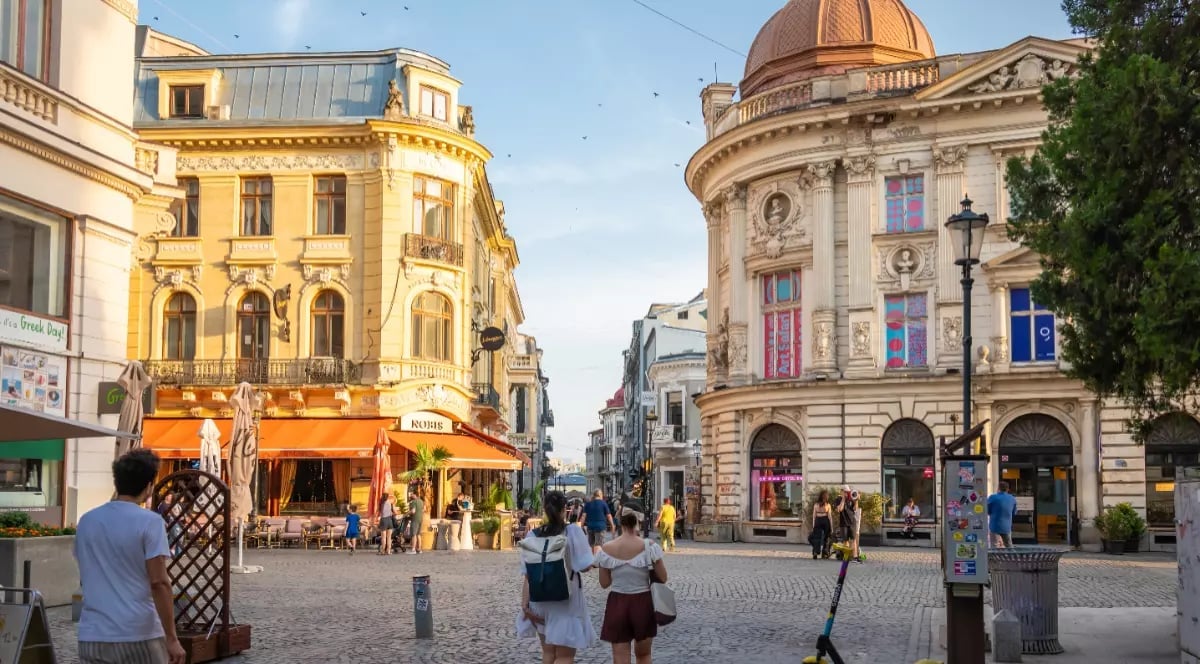
Bucharest has a problem with lists.
Search for the best things to do and you can easily end up with twenty museums, six churches, several parks, a palace, a market, a thermal complex, a day trip to Transylvania and enough restaurants to turn a weekend into a logistical operation.
You do not need all of that.
The more useful question is:
What is actually worth your time?
For a first visit, I would begin with the places that help Bucharest make sense.
The objective is not to complete the city.
It is to leave understanding it better.
The short answer
For most first-time visitors, I would prioritise:
| Experience | Why it matters | Priority |
|---|---|---|
| Calea Victoriei | The easiest introduction to Bucharest's architectural and historical layers | Very high |
| Romanian Athenaeum + Revolution Square | Culture, monarchy, communism and 1989 within one central area | Very high |
| Old Town + Stavropoleos | Historic centre, religious heritage and city atmosphere | Very high |
| Palace of Parliament | Communist-era scale, politics and urban transformation | High if the subject interests you |
| Village Museum | A completely different view of Romania through rural architecture | High |
| Ceaușescu Mansion | Communist history at a domestic and personal scale | High for modern-history travellers |
| National Museum of Art | Art, royal context and a major historic building | High for art and culture |
| Romanian food / Obor | Everyday culture, not another monument | High if food matters |
| Residential neighbourhoods | A quieter, more complete view of the city | Medium |
| King Michael I Park | Green space and a natural pairing with the Village Museum | Medium |
| Therme Bucharest | Leisure and wellness rather than city history | Optional, time-dependent |
If you have one day, do not try to do all of this.
If you have two days, the city begins to open up.
If you have three, you can start choosing according to personality rather than obligation.
If you are still deciding how the capital fits into a wider trip, read Is Bucharest Worth Visiting?
If I had to choose one place to begin explaining Bucharest to somebody who had never been here, I would probably choose Calea Victoriei.
Not because one attraction dominates it.
Because several Bucharests exist along the same street. Royal. Belle Époque. Interwar. Communist. Post-communist. Contemporary.
You pass cultural institutions, historic hotels, churches, former palaces, cafés, shops and buildings that do not belong to one neat architectural story.
That is the point.
Bucharest is not a museum city where every façade agrees with the one next door. Calea Victoriei teaches you that early.
Walk rather than simply driving along it. Look above ground-floor level. Turn occasionally into the streets beside it. The street works best as an introduction to the city, not as a race between landmarks.
The Romanian Athenaeum is one of Bucharest's most recognisable buildings.
But I would not treat it only as a photograph.
It belongs to a much more interesting central cluster: the Athenaeum, the former Royal Palace (now home to the National Museum of Art), Revolution Square, the former Central Committee building and Calea Victoriei.
Within a relatively small area you can begin talking about Romanian monarchy, cultural life, communist power, the Revolution of December 1989 and the city that emerged afterwards.
That is why this part of Bucharest deserves more than ten minutes.
The Athenaeum itself can be visited by tourists outside concert and rehearsal hours, according to the programme published by the George Enescu Philharmonic. Do not assume that tourist visiting hours are identical every day — the schedule changes around concerts and rehearsals. It is worth checking the official Romanian Athenaeum visitor information before you go.
And if a concert fits your dates? That may be a better way to experience the building than simply walking through it.
Revolution Square is not Bucharest's prettiest public space.
That is not why it matters. Its importance comes from history — this is one of the places where Romania's twentieth century becomes physically visible. Royal institutions, communist power, December 1989, memorial architecture.
The square works best when you know what happened here. Without context, it can look like a collection of large buildings and monuments separated by traffic. With context, the area changes completely.
This is one reason I prefer Bucharest sightseeing with explanation rather than simply photographing everything with a famous name. Some places are visually obvious. Others need their story.
Yes, Bucharest Old Town is worth visiting. No, it is not all of Bucharest. Both statements matter.
The streets around Lipscani give you historic architecture, restaurants, bars, churches, passages, fragments of the older commercial city and one of the busiest visitor areas in Bucharest.
Go. Walk. Look around. Have a drink or dinner if you like the atmosphere.
But do not spend your entire stay there. The Old Town is more tourism-oriented than many other parts of central Bucharest, especially at night. A few streets outside it, the city changes quickly. That contrast is worth seeing.
Our Bucharest Old Town Guide goes deeper into how to use the area without mistaking it for the whole capital.
Among the movement and noise of the Old Town, Stavropoleos gives you a very different scale.
It is an active Orthodox religious site as well as an important historic presence in central Bucharest. Treat it accordingly — quietly, respectfully, without approaching it as just another decorative stop between cafés.
For travellers unfamiliar with Romanian Orthodox architecture and religious culture, even a short visit introduces a layer of Bucharest that monumental civic architecture cannot. Current religious and visitor arrangements should always be respected on the day.
Temporary note
The Old Princely Court — Curtea Veche is historically one of the important sites in the Old Town and is associated with the medieval princely court of Wallachia. However, as of September 2026, the Bucharest Municipality Museum states that the archaeological site is closed to the public for maintenance/restoration work.
So do not plan your day around an interior museum visit there unless the official status changes. The surrounding Old Town remains worth exploring. Check the official Bucharest Municipality Museum for the current reopening status before your visit.
When the site eventually reopens, this advice should be updated rather than leaving a temporary closure embedded forever in a Bucharest guide.
This is one of the questions visitors ask most often. My answer is:
yes, if its history and scale interest you.
Not simply because it is famous.
The Palace of Parliament makes much more sense when understood in relation to Nicolae Ceaușescu's restructuring of central Bucharest, the Civic Centre project and the enormous urban transformations of the communist period.
The interior reinforces the scale: large rooms, long corridors, materials, ceremonial architecture — a state building designed to communicate power.
But an interior tour is not obligatory for every first-time visitor. If you have only a few hours and museums or political history do not particularly interest you, seeing the building and understanding the surrounding urban transformation may be enough.
If you do want to enter, plan properly. The current official visitor rules require an original physical ID card or passport, tours are subject to availability and security procedures apply.
Check the official Palace of Parliament visitor information before going rather than relying on an old blog post.
The Dimitrie Gusti National Village Museum is one of the places I recommend most confidently to travellers who are seeing little of rural Romania on the rest of their trip.
Why? Because Bucharest cannot explain the entire country.
The museum's open-air setting brings together traditional buildings and households representing different Romanian regions and forms of rural architecture. This gives you a visual vocabulary for the rest of Romania: roofs, woodwork, household organisation, churches, regional differences and landscape relationships.
If you later spend several days travelling through Romanian villages, the museum may be less essential. But if your trip is mostly Bucharest, a castle day and perhaps another city, the Village Museum adds something genuinely different.
That is what makes an attraction worth time. Not fame — difference.
Check the official Dimitrie Gusti National Village Museum website for current visiting information.
The Village Museum sits naturally within a northern-Bucharest day. The surrounding area gives you a different city from the historic centre.
King Michael I Park can provide a slower walk, and the boulevards and residential areas north of the centre feel different. If you are visiting another northern attraction, the geography works.
This is one of the simplest principles for seeing Bucharest well: cluster places geographically. Do not cross the city repeatedly because an online ranking placed attractions beside one another on a list. A list has no traffic. Bucharest does.
The Ceaușescu Mansion and the Palace of Parliament explain different things. That distinction makes both more useful.
The Palace of Parliament is about state scale, political symbolism, urban transformation and monumentality.
The Ceaușescu Mansion is about a private environment, domestic luxury, the world occupied by Romania's ruling couple, and the contrast between official ideology and elite life.
For travellers interested in twentieth-century Romania, that smaller scale can be extraordinarily useful.
The experience is currently structured around guided visits. Current official rules also prohibit photography and video inside. Check the official Ceaușescu Mansion visiting details before arrival, because tour arrangements and access rules can change.
If communist history does not interest you deeply, I would not automatically add it merely because somebody called it a must-see. Your itinerary should still belong to you.
This sounds obvious. Travel planning often ignores it.
The National Museum of Art of Romania occupies the former Royal Palace on Calea Victoriei. That already makes the setting relevant to Bucharest's royal history. Inside, the museum is a strong choice for travellers interested in Romanian and European art.
But I would not tell everybody to visit simply because it is an important museum. If you have two days and would rather understand rural Romania, choose the Village Museum. If twentieth-century politics fascinates you, choose the Ceaușescu Mansion or Parliament. If art is how you understand a city, go here.
The best attraction is not always the most important institution. It is the one that gives your limited time the most meaning.
Check the official National Museum of Art of Romania visitor information for current galleries, exhibitions and visiting arrangements before your visit.
At some point, stop sightseeing. Eat. This is not lost time.
Bucharest's food tells you things architecture cannot: Romanian comfort food, soups, grilled meats, seasonal dishes, pastries, contemporary interpretations, wine, markets and everyday eating habits.
If food is one of your interests, Obor can introduce you to a functioning urban market environment rather than a curated heritage attraction. Do not go expecting a secret place no tourist has discovered. It is not. Go because markets are useful places for understanding what a city buys, eats and considers normal.
And if you want a deeper food-first experience, our Bucharest Food Guide and Bucharest Food & Market Walk are much more useful than squeezing restaurant recommendations into a general attractions article.
One of Bucharest's weaknesses as a tourist destination is also one of its strengths. Some of its most pleasant areas do not contain a major attraction. There may be no ticket, no famous viewpoint, no monument everybody has photographed.
That can be excellent. Depending on where you are staying and what kind of architecture you enjoy, areas around Cotroceni, Icoanei and Ioanid, Armenească or parts of Dorobanți can reveal quieter versions of the city: houses, gardens, schools, embassies, local cafés, interwar architecture, ordinary residential streets.
Do not turn these neighbourhoods into another checklist. Walk. That is the activity.
A first visit can become strangely historical. King. Communism. Revolution. Old churches. Old houses. Museum. Museum. Museum. Then the visitor leaves having learned a lot about the past and surprisingly little about the city people inhabit today.
Contemporary Bucharest matters too: cafés, independent restaurants, design, galleries, young businesses, renovated spaces, new buildings beside neglected historic ones, public-space projects, traffic, cyclists, delivery drivers, office workers, people meeting after work.
The city is unfinished. That is part of its character. Leave a little time without an attraction attached to it.
Bucharest has substantial green spaces. But if someone has six hours in the city, I am not going to insist that walking around a lake is compulsory.
For a longer stay, parks become much more useful: families, warm weather, morning walks, running, a break between museums, a slower afternoon. King Michael I Park works particularly naturally with the Village Museum. Other green spaces may fit better depending on where you stay.
Again: geography before ranking.
Yes. And no. It depends what the question means.
Therme Bucharest is an impressive leisure and wellness experience: pools, saunas, relaxation, family areas. A very different day from sightseeing.
But Therme does not help you understand historic Bucharest. If you have only one day in the capital and this is your first visit, I would usually prioritise the city.
If you have two or three days, children, a wellness interest, an arrival or departure day that fits geographically, or simply sightseeing fatigue — Therme can make excellent sense.
Our Therme Bucharest Guide explains how the different areas work and when the experience fits an itinerary.
Not everything worthwhile needs to be culturally educational. It just needs to match the reason you are travelling.
Decision guide
There is a point where efficiency stops being impressive. It just becomes tiring.
Priority logic
This is not a minute-by-minute itinerary. It is simply how I would think about your time.
Keep it central. I would prioritise Calea Victoriei, the Romanian Athenaeum area, Revolution Square and the Old Town and Stavropoleos. Then choose one major additional experience — the Palace of Parliament, a museum, food or a guided city overview — according to your interests.
Do not spend the day moving constantly between opposite ends of Bucharest. Our Bucharest in One Day guide gives the route logic in more detail.
Two days is where Bucharest becomes much easier. Use one day for the main central historical layers, and the second according to interest: the Village Museum and northern Bucharest, the Ceaușescu Mansion, art, neighbourhoods, food and markets, or simply a slower afternoon.
You stop asking “Have I seen the main attractions?” and begin asking “What part of this city interests me?” Our Bucharest in Two Days guide gives a practical structure without scheduling every hour.
Then I would slow down further. Keep one museum you genuinely want, spend time in a neighbourhood, eat properly, walk somewhere with no attraction, add Therme if it suits you, return to a café you liked.
Three days does not mean you need three times as many sights. It means you are finally allowed to stop behaving as though the city closes tomorrow forever. For a fuller picture of how Bucharest fits a wider Romanian trip, read How Many Days Do You Need in Bucharest?
You do not need one. Central Bucharest is entirely possible to explore independently.
But a guide becomes useful when the problem is not navigation. It is interpretation. Why does this building sit beside that one? What disappeared when the Civic Centre was built? What happened in Revolution Square? Why does one street feel French-influenced and the next completely different? What survived? What was rebuilt? What is still controversial?
That context can make Bucharest considerably more coherent. DACO's Bucharest Highlights Tour exists for travellers who prefer that introduction privately. But independent travel remains completely valid.
Yes — if you have enough time. No — if it means never actually seeing Bucharest.
This happens more often than you might think. Some travellers arrive, sleep, leave for castles before sunrise, return late and fly home with an opinion about Bucharest based mainly on the airport road.
If you only have two days in Romania, decide what matters more. If you have a week, the choice becomes easier. Our Best Day Trips from Bucharest guide compares the options according to interest, season and how much road time you want.
Not simply the Palace of Parliament. Not simply Old Town. Not simply a restaurant someone recommended online.
I would want them to see the contrast.
Walk Calea Victoriei. Stand in Revolution Square and understand why it matters. Enter a church quietly. See the scale of the communist city. Then see a house. A market. A neighbourhood. Something contemporary. Something ordinary.
Because Bucharest is not at its best when you try to prove that it is as beautiful as another European capital.
It becomes interesting when you stop asking it to be another city.
Common questions
If this is your first visit, start with the Bucharest Travel Guide.
If you are weighing up whether the capital deserves your time at all, read Is Bucharest Worth Visiting?
If you only have one full day, use Bucharest in One Day. If you have a weekend, continue with Bucharest in Two Days, and for a fuller picture of how long to stay, read How Many Days Do You Need in Bucharest?
For the historic centre specifically, read the Bucharest Old Town Guide, and for where to sleep, see Best Areas to Stay in Bucharest.
If food matters, continue with the Bucharest Food Guide. If you are considering a wellness day, use the Therme Bucharest Guide, and for how to move around the city, read Public Transport in Bucharest.
And if you want to compare what lies beyond the capital, see Best Day Trips from Bucharest.
If you prefer a privately arranged introduction to the city, explore the Bucharest Highlights Tour. For a food-first version, see the Bucharest Food & Market Walk, or let us design the whole journey with Plan My Trip.
Romania, privately arranged.
Neli Budeanu
Co-founder, DACO Private Travel · Former hospitality professional in Bucharest
Local travel knowledge based on living in Romania, working in hospitality and helping organise journeys for international visitors.