
Romania Travel Knowledge Hub

Is Bucharest Worth Visiting? An Honest Local Guide

By DACO Team

Local travel knowledge from DACO Private Travel, Bucharest.

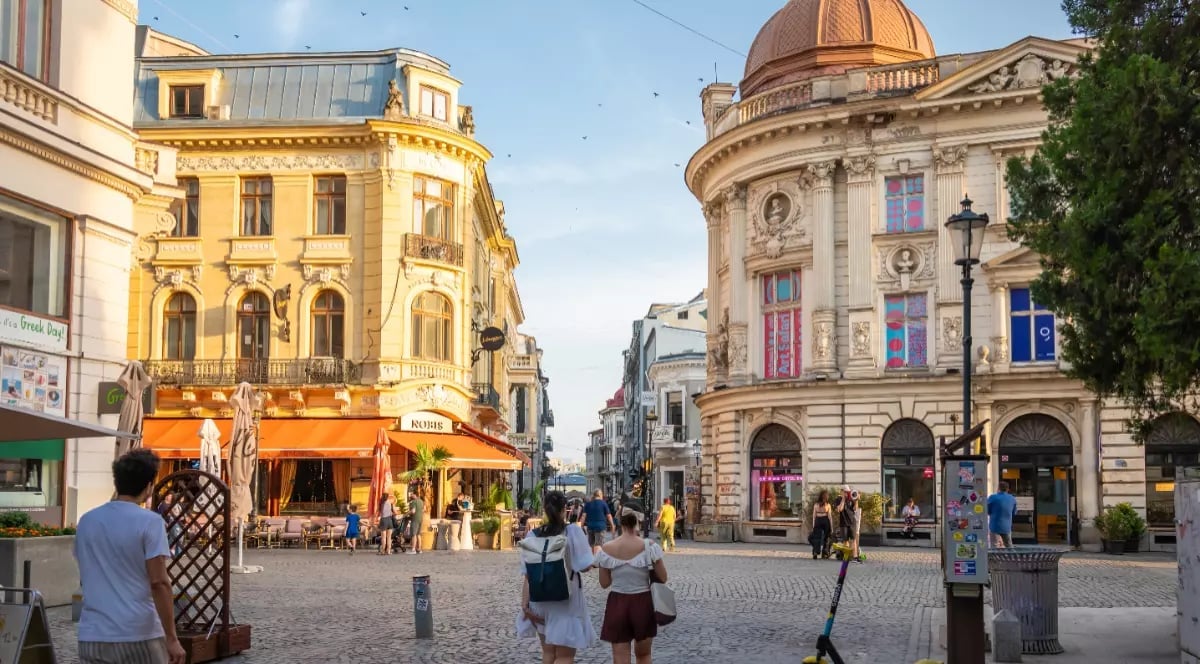
Central Bucharest town square with historic yellow and cream-coloured buildings, domed architecture and pedestrians at the heart of the city

Yes, Bucharest is worth visiting, but probably not for the reasons many first-time visitors expect.

It is not the easiest European capital to understand at a glance.

Bucharest is not uniformly beautiful, perfectly preserved or immediately coherent. Parts of the city are elegant. Others are rough, unfinished or visually confusing. Belle Époque buildings sit beside communist blocks, modern towers and streets that still carry traces of several different political eras.

That mixture is exactly what makes Bucharest interesting.

If you are looking for a polished capital where every street feels postcard-ready, Bucharest may disappoint you.

If you are curious about Romanian history, architecture, food, everyday life and the way several very different versions of the country overlap in one city, Bucharest deserves your time.

The question is not simply whether Bucharest is worth visiting.

It is what kind of traveller will actually appreciate it.

The Short Answer

Your travel style Is Bucharest worth visiting?
First visit to Romania Yes
Interested in Romanian history Definitely
Architecture lover Yes, with context
Food and café traveller Yes
Looking for nightlife Yes
Family with children Yes, selectively
Couple on a city break Yes
Want a perfectly preserved old city Maybe not
Only have 3–4 days in Romania Usually yes, but briefly
Have 7–10 days in Romania Yes
Main priority is Transylvania Use Bucharest as a shorter first or final stop
Interested in communist history Strongly yes
Want to understand modern Romania Yes

Bucharest is at its best when you stop expecting it to behave like another European capital.

What Kind of City Is Bucharest?

Bucharest is difficult to summarise because it has been rebuilt, expanded, damaged and reinvented several times.

Its streets contain traces of:

  • nineteenth-century European ambition
  • Romanian monarchy
  • interwar architecture
  • communist urban planning
  • the 1989 Revolution
  • post-communist development
  • contemporary Romanian life

This is why Bucharest can feel inconsistent.

It is inconsistent.

But the inconsistency is historical rather than accidental.

A restored villa may sit next to a neglected building.

A broad communist boulevard may begin only minutes away from an elegant older neighbourhood.

A traditional market, office tower and Orthodox church can exist within the same short walk.

The city makes more sense once you stop looking for one architectural identity.

Why Do Some Travellers Love Bucharest?

Usually because it surprises them.

Romania is still misunderstood by many first-time international visitors.

Some arrive expecting a grey post-communist city.

Others expect Dracula imagery.

Bucharest is neither of those things.

It is a large European capital with:

  • strong café culture
  • good restaurants
  • major museums
  • extensive parks
  • active nightlife
  • historic neighbourhoods
  • contemporary creative spaces
  • visible layers of Romanian history

The city can also feel less staged for tourism than some better-known European capitals.

That matters to travellers who enjoy seeing how a place actually functions rather than moving only through polished visitor districts.

Why Do Some Travellers Dislike Bucharest?

Because the city asks for more interpretation.

Bucharest can feel:

  • busy
  • noisy
  • architecturally uneven
  • traffic-heavy
  • poorly maintained in places
  • difficult to understand without context

Some historical buildings are beautifully restored.

Others are not.

Traffic can dominate the experience if you try to cross the city repeatedly.

The Old Town can feel energetic at one hour and overly commercial at another.

And if you arrive expecting Vienna, Prague or central Paris, the comparison will probably work against Bucharest.

This is not a reason to defend the city.

It is simply a reason to describe it accurately.

Bucharest rewards curiosity more than expectation.

Is Bucharest Beautiful?

Parts of it are.

But beauty is not the whole reason to visit Bucharest.

Calea Victoriei, several historic streets, parks, churches and restored buildings can be genuinely elegant.

Other parts of the city are visually harsh.

Communist architecture changed Bucharest dramatically, particularly during the final decades of Nicolae Ceaușescu's regime.

Entire neighbourhoods were demolished.

Large boulevards and monumental buildings replaced older urban fabric.

This created one of the city's defining contrasts:

a capital that contains both refinement and disruption.

Trying to ignore the less attractive parts removes an important part of the story.

What Is Bucharest Known For?

Internationally, visitors usually associate Bucharest with several things:

  • the Palace of Parliament
  • the Old Town
  • Calea Victoriei
  • communist history
  • nightlife
  • Romanian food
  • large parks
  • the city's former nickname, “Little Paris”

Some of those associations are useful.

Others need more context.

Is Bucharest Really the “Little Paris”?

The phrase reflects a real period of Romanian history, but it can be misleading today.

During the late nineteenth and early twentieth centuries, Bucharest developed strong French cultural and architectural influences.

Romanian elites looked toward Paris.

French was widely used in educated society.

Boulevards, public buildings and private residences reflected Western European architectural trends.

That historical connection explains the nickname.

But modern Bucharest should not be visited expecting a smaller version of Paris.

The city changed enormously during the twentieth century.

The more interesting question is not whether Bucharest still looks like Paris.

It is where traces of that earlier city survived.

Calea Victoriei: One of the Best Places to Understand Bucharest

If you want one street that introduces several layers of the city, start with Calea Victoriei.

It connects important parts of central Bucharest and passes buildings associated with politics, culture, architecture and modern city life.

Along or close to the route you encounter places such as:

  • Romanian Athenaeum
  • Revolution Square
  • National Museum of Art
  • historic hotels
  • churches
  • restored palaces
  • cafés
  • contemporary restaurants

Calea Victoriei works particularly well on foot.

It lets the city reveal itself gradually rather than through a sequence of isolated attractions.

Is Bucharest Old Town Worth Visiting?

Yes, but it should not become your entire impression of Bucharest.

The historic centre, usually called Old Town or Lipscani, contains:

  • restaurants
  • bars
  • churches
  • historic buildings
  • pedestrian streets
  • nightlife
  • several well-known landmarks

It is convenient and lively.

It is also one of the most tourist-oriented parts of the city.

If you visit only Lipscani, you may leave believing Bucharest is mainly restaurants, bars and renovated façades.

It isn't.

Use Old Town as one part of the city.

Not as the city itself.

What Should You See in Bucharest Old Town?

A short visit can include:

  • Stavropoleos Monastery
  • Lipscani Street
  • CEC Palace surroundings
  • Caru' cu Bere
  • Manuc's Inn
  • nearby sections of Calea Victoriei
  • University Square area

You do not need to enter every attraction.

Old Bucharest often works better when you understand how the streets, churches, merchant buildings and later additions relate to each other.

Is the Palace of Parliament Worth Visiting?

For many first-time visitors, yes.

Not because it is subtle.

It isn't.

The Palace of Parliament is valuable because it helps explain the scale and psychology of Nicolae Ceaușescu's final years in power.

The building is enormous.

Its construction required major demolition and transformed a significant part of central Bucharest.

Seeing the exterior communicates scale.

Going inside adds another layer.

Visitors interested in Romanian communist history will usually find the visit worthwhile.

Travellers with little interest in politics, architecture or recent history may find it less essential.

What Should You Know Before Visiting the Palace of Parliament?

Access is controlled.

Entry procedures, available tours and visitor requirements can change.

Check the official visitor information before your chosen date rather than relying on an old blog post.

Bring the identification required under the current rules.

And allow enough time.

The building is too historically significant to treat merely as a quick photograph from outside if its story genuinely interests you.

Revolution Square: Why Context Matters

Revolution Square is another place that can seem visually ordinary without context.

It is associated with the events of December 1989, when Romania's communist regime collapsed.

The square and surrounding buildings connect several historical periods:

  • monarchy
  • communist rule
  • revolution
  • contemporary Romania

Knowing what happened there changes the experience considerably.

This is a recurring pattern in Bucharest.

The city often becomes more interesting after the explanation.

Communist Bucharest vs Older Bucharest

You should see both.

Avoid treating communist architecture simply as something ugly that interrupted a prettier city.

It did destroy parts of historic Bucharest.

But it is now part of the country's history.

The contrast between:

Calea Victoriei and older neighbourhoods

and

the Palace of Parliament and the monumental boulevard system

explains more about twentieth-century Romania than either side could explain alone.

For visitors interested in history, this contrast is one of Bucharest's strongest reasons to stay.

Are There Beautiful Historic Neighbourhoods in Bucharest?

Yes.

Central Bucharest contains streets where older villas, small gardens and historic buildings survive away from the major tourist routes.

Areas around parts of:

  • Cotroceni
  • Ioanid
  • Icoanei
  • Dorobanti
  • Gradina Icoanei
  • Armeneasca

can reveal a quieter side of the city.

These areas are not always about individual attractions.

They are about atmosphere.

Walking through them can explain the city better than moving from landmark to landmark by car.

Is Bucharest Good for Walking?

Central areas can be.

The entire city is too large to treat as one walkable tourist district.

A better approach is to explore clusters.

For example:

Historic Central Bucharest

Calea Victoriei

→ Revolution Square

→ Romanian Athenaeum

→ Old Town

Older Residential Bucharest

Gradina Icoanei

→ Ioanid area

→ nearby historic streets

Communist Bucharest

Palace of Parliament

→ Constitution Square

→ Unirii Boulevard

Trying to walk between every major point wastes energy.

Use public transport, taxi or ride-sharing between distant areas and walk once you reach the neighbourhood you want to understand.

Is Bucharest Good for Food?

Yes.

And food is one of the easier ways to understand contemporary Romania.

You can find:

  • traditional Romanian cooking
  • modern Romanian restaurants
  • Balkan influences
  • international cuisine
  • specialty coffee
  • bakeries
  • wine bars
  • casual neighbourhood restaurants
  • fine dining

The important thing is not to assume traditional Romanian food exists only inside restaurants designed around folklore.

Sometimes the more interesting meals are in contemporary restaurants interpreting Romanian ingredients without costumes or theatrical décor.

What Romanian Food Should You Try in Bucharest?

Depending on your preferences, look for dishes such as:

  • sarmale
  • mici
  • ciorba
  • mamaliga
  • zacusca
  • local cheeses
  • papanasi
  • seasonal Romanian dishes

But do not build your food experience only around a checklist.

Ask what is seasonal.

Try a Romanian wine.

Visit a bakery.

Have coffee somewhere locals actually meet.

Food culture is broader than national dishes.

Is Bucharest Good for Cafés?

Very much so.

Specialty coffee has become a normal part of contemporary Bucharest.

You will find independent cafés throughout central neighbourhoods, particularly around areas popular with younger professionals and creative communities.

This is one of the places where visitors often see a different Romania from the one they imagined before arriving.

A morning café can sometimes teach you more about modern Bucharest than another attraction.

Is Bucharest Good for Nightlife?

Yes.

Bucharest has a substantial nightlife scene.

Old Town contains the most concentrated visitor-oriented nightlife, but it is not the only option.

There are also:

  • cocktail bars
  • wine bars
  • clubs
  • live music
  • neighbourhood bars
  • seasonal outdoor venues

The right area depends heavily on the atmosphere you want.

If nightlife is important to your trip, Bucharest can easily justify an additional night.

What About Bucharest's Parks?

The city has substantial green spaces.

For travellers staying several days, parks can provide a useful counterpoint to the busy centre.

Popular options include:

  • King Michael I Park
  • Cismigiu Gardens
  • Carol Park
  • Tineretului Park

A park is not necessarily something you need to “visit” as an attraction.

Sometimes it simply makes the city more pleasant to experience.

Is Therme Bucharest Worth Visiting?

For many travellers, yes, particularly if you enjoy wellness, pools or want a slower day.

Therme Bucharest is located north of the city, relatively close to Henri Coandă Airport.

It is not a historic Romanian attraction.

It is a modern leisure and wellness complex.

That distinction matters.

Do not visit it because you think it will teach you about Romanian culture.

Visit because you want that particular experience.

For families, couples or travellers needing a relaxed day between more active sightseeing days, Therme can fit very well.

Is Bucharest Good for Families?

Yes, but the itinerary should be selective.

Young children usually do not need an eight-hour architecture and communist-history programme.

Families can combine:

  • parks
  • interactive experiences
  • shorter city walks
  • Therme
  • museums suited to children's ages
  • relaxed meals
  • day trips

The advantage of Bucharest is variety.

The challenge is trying to do too much.

Is Bucharest Good for Couples?

Yes.

Bucharest works well for couples who enjoy a combination of:

  • architecture
  • cafés
  • restaurants
  • walking
  • history
  • nightlife
  • slower neighbourhood exploration

It can also serve as a comfortable base before or after travelling through Romania.

A city break does not need to contain famous landmarks every hour.

Sometimes Bucharest works precisely because there is room to simply spend time in the city.

Is Bucharest Good for Solo Travellers?

Generally, yes.

Solo travellers can navigate central Bucharest relatively easily using:

  • metro
  • buses
  • trams
  • taxis
  • Uber or Bolt
  • walking

The city also works well for independent travellers because many attractions do not require organised tours.

Local guidance becomes more useful when you want historical context or want to move efficiently between places that are less obvious to first-time visitors.

Is Bucharest Safe for Tourists?

Generally, Bucharest is a manageable city for international visitors.

As in other European capitals, use normal urban awareness.

Pay attention to:

  • personal belongings in crowded areas
  • unofficial transport offers
  • late-night decisions
  • traffic when crossing streets
  • tourist-oriented situations where prices are unclear

Most visitors spend their stay without serious problems.

Safety does not mean paying no attention.

It means using the same common sense you would use in another large European city.

How Many Days Do You Need in Bucharest?

For most first-time visitors:

Two full days give you a useful introduction.

One day is enough for major highlights.

Three days allow more time for:

  • neighbourhoods
  • museums
  • restaurants
  • parks
  • slower exploration

The right amount also depends on the rest of your Romanian itinerary.

If you have only four days in the country, spending all four in Bucharest would rarely be our first recommendation.

If you have ten days, skipping the capital completely would also leave an important part of Romania unexplored.

Is One Day in Bucharest Enough?

Enough to understand everything?

No.

Enough for a useful introduction?

Yes.

A strong first day could focus on:

  • Calea Victoriei
  • Revolution Square
  • Romanian Athenaeum area
  • Old Town
  • Palace of Parliament surroundings
  • a Romanian meal

Do not try to cross the entire city collecting attractions.

A coherent route is more valuable.

Should You Spend More Time in Bucharest or Transylvania?

If this is your first trip to Romania and time is limited, we would usually give more days to the wider country than to Bucharest.

Romania's strongest travel experience comes from contrast.

Bucharest.

Then mountains.

Then towns.

Then villages.

Then Transylvania or another region.

The capital helps introduce the country.

It should not automatically consume the entire trip.

For a first visit of around a week, Bucharest often works best as the beginning or end of a wider Romanian journey.

Is Bucharest a Good Base for Day Trips?

Yes.

This is one of its practical advantages.

From Bucharest, travellers can plan day trips toward places such as:

  • Sinaia
  • Peles Castle
  • Bran Castle
  • Brasov
  • Dealu Mare wine region
  • Slanic Prahova
  • the Black Sea in appropriate circumstances
  • other destinations depending on season and available time

But there is a limit.

If you find yourself making long day trips from Bucharest every day, consider changing accommodation.

A base should simplify a journey.

It should not force you to repeat the same road every morning and evening.

Should You Stay in Bucharest and Visit Transylvania on Day Trips?

For one or two specific excursions, yes.

For several consecutive days, usually not.

If your itinerary is primarily about Brasov, Sibiu, Sighisoara or deeper Transylvania, sleeping there will usually produce a better experience than repeatedly returning to Bucharest.

This is especially true if you want:

  • evening atmosphere
  • slower mornings
  • shorter driving days
  • access to rural areas

Bucharest is a useful base.

It is not the correct base for every Romanian itinerary.

When Is Bucharest Most Enjoyable?

Spring and autumn are often particularly pleasant for walking.

Summer can be hot.

Winter can be cold and grey, although the city remains active.

Seasonality affects the rhythm more than whether Bucharest is worth visiting.

In warmer months:

  • terraces become important
  • parks are more inviting
  • walking is easier

In colder months:

  • museums
  • cafés
  • restaurants
  • indoor cultural experiences

become more central to the itinerary.

There is no single season in which the city becomes worthwhile.

The experience simply changes.

What Is Overrated in Bucharest?

This depends on expectations, but several things can be misunderstood.

Old Town as the entire Bucharest experience

Worth seeing.

Not worth treating as the whole city.

“Little Paris”

Useful historically.

Misleading as a modern comparison.

Seeing the Palace of Parliament only because it is enormous

Size without context becomes trivia.

Understand why it exists.

Trying to see every attraction

Bucharest is too large and too layered for checklist tourism to work particularly well.

What Is Underrated in Bucharest?

Often:

  • residential historic streets
  • architectural contrasts
  • Romanian food beyond tourist restaurants
  • café culture
  • parks
  • walking Calea Victoriei slowly
  • twentieth-century history
  • talking to locals
  • understanding how the city changed

These experiences rarely dominate travel advertising.

They often produce the stronger memory.

Bucharest vs Brasov

These cities should not really compete.

They offer completely different experiences.

Bucharest

Choose it for:

  • national history
  • communist history
  • museums
  • restaurants
  • nightlife
  • urban culture
  • architecture
  • contemporary Romania

Brasov

Choose it for:

  • compact historic centre
  • Transylvania
  • mountain setting
  • easier pedestrian exploration
  • access to nearby castles and countryside

Most first-time visitors benefit from seeing both.

The contrast is part of understanding Romania.

Bucharest vs Budapest, Prague or Vienna

These comparisons are understandable.

They are also not particularly useful.

Bucharest developed under a different history.

Its twentieth century was different.

Its architecture survived differently.

Its urban planning changed differently.

If you judge Bucharest according to how closely it resembles Prague, Vienna or Budapest, you are measuring the wrong thing.

The city becomes much more interesting when you ask:

Why does Bucharest look the way it does?

That question opens the city.

Who Should Definitely Visit Bucharest?

Bucharest is particularly worthwhile if you enjoy:

  • history
  • architecture
  • political history
  • urban culture
  • food
  • cafés
  • museums
  • understanding contemporary societies

It is also useful for first-time visitors because it provides context before travelling deeper into Romania.

Who Might Prefer Less Time in Bucharest?

Travellers whose priorities are almost entirely:

  • mountains
  • hiking
  • villages
  • medieval towns
  • rural landscapes
  • nature

In that case, one night or a short introduction may be enough before moving onward.

There is no virtue in staying somewhere longer simply because it is the capital.

Travel time should follow interest.

The DACO Decision Guide

Stay one day if:

You have a short Romanian itinerary and mainly want an introduction to the capital before continuing elsewhere.

Stay two days if:

This is your first visit and you want a balanced understanding of historic, communist and contemporary Bucharest.

Stay three days if:

You enjoy museums, architecture, food, cafés, neighbourhoods and slower city travel.

Stay longer if:

Bucharest itself is a major interest or you are combining work, nightlife, family time or specific experiences.

Spend less time here if:

Your real reason for visiting Romania is nature, Transylvania or a regional road trip.

The capital should fit the journey.

The journey should not exist simply because you landed in the capital.

Our Local Advice

Bucharest is one of those cities that improves when somebody explains what you are looking at.

Without context, you may see an elegant building beside an ugly block.

With context, you begin asking why they stand beside each other.

Without context, Revolution Square is a square.

With context, it becomes one of the places where a political system collapsed.

Without context, the Palace of Parliament is simply enormous.

With context, it becomes evidence of how dramatically one regime reshaped a city.

That is the difference between seeing Bucharest and understanding it.

Do not force yourself to love the city.

Do not force yourself to dislike it because somebody told you Romania's “real beauty” begins outside the capital.

Give Bucharest enough time to explain itself.

Then continue through Romania.

The contrast will make both experiences better.

Common questions

Frequently Asked Questions

Bucharest Makes More Sense After You Stop Comparing It

Bucharest is not Romania's answer to Paris.

It is not a cheaper Prague.

It is not a rougher Budapest.

It is Bucharest.

A city shaped by monarchy, war, dictatorship, revolution, rapid development and the everyday compromises of modern Romania.

Some streets are elegant.

Some are chaotic.

Some buildings deserve restoration.

Others deserve an hour of your attention because of what happened inside them.

The city does not always present itself neatly.

That is part of its honesty.

DACO Private Travel helps international travellers understand and experience Romania through thoughtfully arranged private travel, local knowledge and practical coordination.

Sometimes that means arranging a journey.

Sometimes it simply means explaining a place well enough that you can experience it independently.

Bucharest deserves that kind of explanation.

Continue Planning

If Bucharest is part of your Romanian itinerary, continue with:

Or explore Bucharest Highlights if you prefer the city's main historical layers to be arranged as a private local experience.